
 0



- Home
- Blog
- Applications & Solutions
- Babell Lingerie Cutting Case Study: 4× Efficiency with Automatic Cutting
Babell Lingerie Cutting Case Study: 4× Efficiency with Automatic Cutting
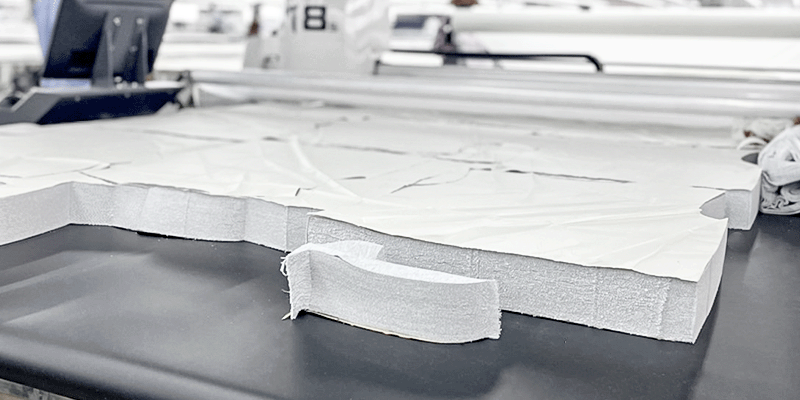
Lingerie manufacturing requires consistent cut-piece dimensions, stable fabric handling and reliable cutting quality. When garments are made from soft, lightweight or stretch-sensitive materials, dimensional variation during cutting can affect downstream sewing, product quality and production efficiency.
Babell, a Polish manufacturer of women's lingerie and loungewear, previously experienced inconsistent cut pieces, repeated recutting and fabric waste. To improve its cutting-room operations, the company implemented OSHIMA automatic fabric cutting equipment to support more consistent and efficient production.
According to OSHIMA's original customer case published in 2022, Babell achieved four times its previous cutting-room efficiency and reduced cutting-room manpower by 25% after introducing automatic cutting. The company also improved cutting consistency and reduced recutting and material losses.
Customer Background: Babell and Lingerie Manufacturing
Babell is a Polish manufacturer of women's underwear, nightwear, loungewear and related apparel products.
Cutting accuracy is important in these applications because the shape and dimensions of individual components can affect sewing quality and the appearance of finished garments.
When a manufacturer produces repeated patterns across multiple sizes, maintaining consistent cut-piece dimensions becomes particularly important.
If cutting results are inconsistent, operators may need to correct components before sewing or recut rejected pieces, increasing labor requirements and material consumption.
For lingerie manufacturers, selecting a suitable cutting process therefore involves more than cutting speed. Equipment must also support material handling, pattern requirements and production consistency.
Before Automation: Inconsistent Cutting, Rework and Fabric Waste
According to OSHIMA's original customer record, Babell experienced inconsistent cut-piece dimensions, repeated recutting and fabric waste when using its previous cutting equipment.
Some components required additional manual correction or replacement, increasing the workload in the cutting room and affecting production progress.
Inconsistent Cut Pieces Created Additional Work
Lingerie products often consist of multiple pattern pieces that must meet dimensional and shape requirements. When cut pieces vary from the intended pattern, additional correction or inspection may be required before sewing.
For manufacturers handling repeated styles and sizes, reducing these variations is an important part of improving production consistency.
Recutting Increased Material and Labor Requirements
When cut components need to be processed again, factories may spend additional time on cutting and consume more material than originally planned.
If recutting occurs frequently, its effect extends beyond individual cutting errors and can reduce overall cutting-room productivity.
Manual Corrections Occupied Production Resources
Operators who could otherwise focus on planned production tasks may need to spend time correcting or replacing cut pieces.
Babell therefore sought a more consistent cutting process that could reduce repeated corrections and support more effective workforce allocation.
The Solution: OSHIMA Automatic Fabric Cutting Equipment
To address its cutting challenges, Babell introduced OSHIMA automatic cutting equipment for lingerie and loungewear production.
Compared with manually guided cutting, automatic cutting systems can follow digitally programmed cutting paths, reducing certain variations associated with continuous manual blade guidance.
The original customer record also reported 97% cutting accuracy and a move-and-cut operating speed of up to 4,500 RPM for the installed cutting solution at that time.
However, the published record does not provide the complete accuracy calculation method, tested fabric conditions or measurement baseline. These figures should therefore be treated as historical equipment information rather than guaranteed performance for every material or application.
The original case does not clearly identify the exact machine model or full installed configuration. The system should not be attributed to a specific current OSHIMA model without further verification.
Results: Four Times Higher Cutting-Room Efficiency and 25% Less Manpower
According to OSHIMA's original case study, introducing automatic cutting helped Babell improve cutting consistency, reduce recutting and fabric waste, and use cutting-room personnel more effectively.
| Performance Area | Before Automation | After Automation |
|---|---|---|
| Cutting-Room Efficiency | Previous operating performance | Four times the previous level |
| Cutting-Room Manpower | Previous staffing arrangement | 25% reduction |
| Cutting Consistency | Inconsistent pieces requiring correction | Improved consistency |
| Recutting | Some components required recutting | Reduced recutting requirements |
| Fabric Waste | Material losses caused by cutting errors | Reduced waste; percentage not disclosed |
| Workforce Allocation | Labor required for corrective cutting | Some personnel reassigned to other production activities |
Source: OSHIMA's 2022 Babell customer case. Reported efficiency and manpower improvements are case-specific results, not guaranteed outcomes for other factories or machines.
Cutting-Room Efficiency Increased Fourfold
The original case reported that Babell's cutting-room efficiency increased to four times its previous level after automation, demonstrating a substantial improvement under the company's operating conditions at the time.
However, the published record does not specify the exact efficiency measurement, such as acceptable pieces per hour, cutting time per lay or total process cycle time.
The reported fourfold improvement should therefore not be interpreted as a guarantee that every cutting task or machine operating speed increased by the same factor.
Cutting-Room Manpower Was Reduced by 25%
Babell reduced its cutting-room manpower requirements by one-quarter following implementation. Some employees previously involved in corrective cutting were reassigned to other production activities.
This demonstrates the potential for automation to reduce repetitive tasks and improve workforce allocation.
However, a 25% reduction in cutting-room manpower does not necessarily mean the company's total payroll costs fell by 25%, particularly when employees were reassigned rather than removed from the workforce.
Improved Consistency Reduced Recutting and Fabric Losses
Automatic cutting helped Babell address the inconsistent cut pieces and recutting requirements experienced with its previous process.
The original case reported reduced fabric waste, but did not disclose an exact material savings percentage or annual financial value.
For this reason, the efficiency improvement should not be converted directly into fabric cost savings or investment ROI without additional production and financial records.
Why Does Cutting Consistency Matter in Lingerie Manufacturing?
Lingerie, underwear and loungewear may use knitted fabrics, stretch textiles, lightweight materials and other soft fabrics. Their behavior during spreading, handling and cutting can be affected by tension, extension and fabric stability.
As a result, lingerie cutting should not focus on cutting speed alone. Manufacturers also need to maintain material stability, accurate patterns and consistent cut-piece dimensions.
Fabric Stretch and Recovery Can Affect Dimensions
Some knitted and stretch fabrics can recover after tension is released during spreading. If fabric tension is not controlled properly, cut-piece dimensions may differ from the original pattern requirements.
Manufacturers should evaluate fabric relaxation, spreading tension, material positioning and cutting methods according to the properties of their fabrics.
Where appropriate, automatic fabric spreading equipment can be considered alongside the cutting system.
Repeatable Cutting Supports Downstream Sewing Quality
A lingerie design may involve multiple component shapes and garment sizes. Significant dimensional differences between corresponding pieces can increase the burden on sewing, assembly and quality inspection.
Digitally controlled cutting can reduce some variations caused by manual path guidance, but accurate patterns, suitable cutting parameters and stable fabric preparation remain essential.
These are general technical considerations for lingerie manufacturing. They should not be interpreted as confirmation that Babell used any particular spreading, tension-control or fabric-positioning technology.
What Can Other Garment Manufacturers Learn from Babell?
Babell's experience illustrates how cutting automation can provide operational benefits when inconsistent cutting, repeated corrections and material losses become persistent production problems.
However, other manufacturers should not assume they will achieve identical results. Fabric characteristics, order volume, equipment configuration, operating procedures and workforce allocation can all affect the outcome of cutting automation.
Before upgrading, factories should establish baseline measurements for cutting time, acceptable cut-piece output, recut rates, material losses and labor requirements.
For further guidance on throughput, utilization and cutting-room performance, read How Automatic Fabric Cutting Machines Improve Efficiency.
For an investment evaluation framework, explore Automatic Fabric Cutting Machine ROI: M8S vs TAC. Babell's published case does not contain sufficient financial data to calculate its actual investment payback period.
How Can OSHIMA Support Lingerie and Garment Cutting Automation?
OSHIMA offers fabric cutting equipment for different materials, cutting layers and production requirements. Manufacturers can evaluate suitable options according to fabric behavior, production volume, cutting specifications and existing workflows.
For sampling, small-batch production and selected lower-layer applications, manufacturers may consider the OSHIMA OneCut low-ply automatic cutting machine.
For multilayer production involving thin and lightweight fabrics, the OSHIMA TAC high-ply automatic cutting machine may be suitable, subject to fabric characteristics, compressed lay height and production requirements.
These recommendations describe available OSHIMA equipment categories and do not identify the model originally installed at Babell.
For manufacturers considering when to upgrade from manual processes, read Manual vs Automatic Fabric Cutting: When Should Garment Factories Upgrade?.
Conclusion: Cutting Automation Delivers More Than Speed
The Babell case demonstrates that, under suitable production conditions, automatic cutting equipment can improve cutting consistency, reduce recutting and material losses, and support better cutting-room efficiency.
According to OSHIMA's original customer record, Babell achieved four times its previous cutting-room efficiency and reduced cutting-room manpower by 25%. Some employees were also reassigned to other production activities.
For other lingerie, loungewear and garment manufacturers, the important first step is to identify the problems in their existing cutting processes, then evaluate materials, patterns, cutting layers and equipment configurations before selecting an automation solution.
Explore OSHIMA automatic fabric cutting machines and cutting-room solutions. Manufacturers can share their fabric types, cutting layers, daily production volumes and current workflows with the OSHIMA team to discuss suitable cutting equipment.


Article Classification
Recent Articles
- What Changes When Fabric Defect Data Reaches the Cutting Plan?
- How Can Food Factories Catch Problems Before Shipping?
- From Metal to Bones: How to Pick the Right Food Safety Machine
- Fabric Spreading Applications: Medical Nonwovens, Home Textiles & Automotive Interiors
- How Garment Factories Can Prepare for Smaller Orders?