
 0
0



- Home
- Blog
- Applications & Solutions
- From Nonwovens to Automotive Interiors: Choosing the Right Fabric Spreading Machine
From Nonwovens to Automotive Interiors: Choosing the Right Fabric Spreading Machine
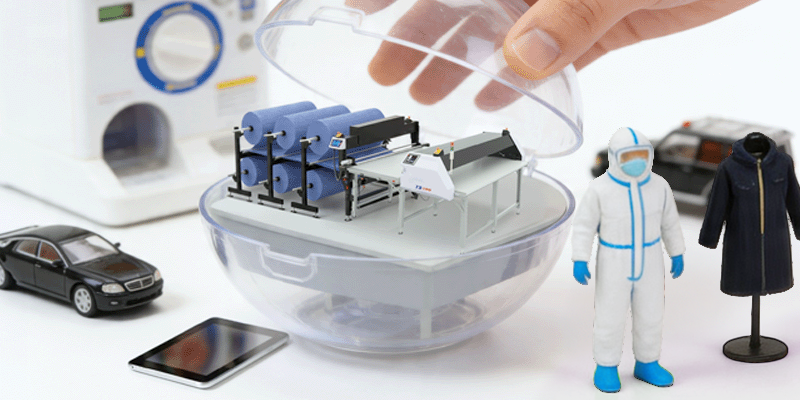
Automatic fabric spreading machines are often associated with garment cutting rooms. However, any production process involving rolled fabric, layered materials, and cutting preparation may benefit from a more stable spreading process.
Home textile manufacturers work with wide or heavy materials. Medical product manufacturers frequently handle large volumes of nonwoven fabrics. Automotive interior suppliers may process foam composites, multilayer structures, and technical textiles.
Although these industries produce very different products, they often face similar challenges before cutting: difficult material handling, inconsistent alignment, high manual workload, and the direct impact of spreading quality on later cutting results.
For this reason, selecting a fabric spreading machine is not only about speed. It is about whether the machine matches the material, roll weight, layer requirement, downstream process, and real factory workflow.
Want to compare spreading equipment for different materials and production needs? Explore OSHIMA fabric spreading machines →
Why Is Fabric Spreading the Starting Point of Cutting Quality?
Fabric and technical materials are commonly stored and delivered in rolls. Before cutting begins, the material must be laid evenly on the cutting table.
If spreading creates misalignment, wrinkles, uneven tension, or material distortion, later cutting processes may face:
- Panel position or dimension variation;
- Poor alignment across multiple layers;
- Lower material utilization;
- Increased rework or scrap;
- More manual adjustment before cutting.
For volume manufacturers, spreading is not simply a preparation step. It is a process that directly affects cutting efficiency, material cost, and final product quality.
What Are the Limits of Manual Spreading in Cross-Industry Production?
Traditional manual spreading often requires several operators to unwind, move, flatten, and align materials.
The difficulty increases when materials are wide, heavy, coated, adhesive, or spread in multiple layers.
Common challenges include:
- Higher physical burden when handling heavy rolls;
- Variation between operators;
- Alignment problems during multilayer spreading;
- More difficult handling of coated, sticky, or composite materials;
- Higher labor requirements in volume production.
Automatic spreading equipment helps make feeding, alignment, tension control, and layering more stable. This allows operators to focus more on monitoring and process control rather than repetitive physical handling.
How Different Industries Use Automatic Fabric Spreading Equipment
1. Apparel Manufacturing: From Knits and Wovens to Volume Cutting
In garment factories, automatic spreading machines prepare fabric before cutting. Since garments use many different fabric types, machine selection should reflect real material and production requirements.
For example:
- Knit and woven materials may use versatile spreading equipment according to production needs;
- Tubular knit fabrics, such as materials for T-shirts or underwear, require equipment suited to tubular fabric handling;
- Factories seeking production visibility may consider smart spreading equipment with IoT data functions;
- High-volume production or heavier materials require closer evaluation of roll capacity, spreading methods, and operator safety.
For apparel manufacturers, automatic spreading does more than improve output. It supports more stable cutting preparation and helps reduce later panel inconsistency and material waste risk.
2. Home Textiles: Handling Wide, Heavy or Coated Materials
Curtains, blackout blinds, zebra blinds, upholstery fabrics, mattress surfaces, and other home textile products often involve wide, heavier, or coated materials.
During manual spreading, these materials may create problems such as:
- Heavy rolls that are physically difficult to handle;
- Wide materials that are harder to align manually;
- Coated or adhesive surfaces that increase feeding resistance;
- Repetitive spreading workload for large orders.
For home textile production, multi-roll or heavy-material spreading equipment can help reduce loading burden and support more stable material laying during continuous operation.
The OSHIMA J3 Multi-Roll Woven Fabric Spreading Machine supports up to six rolls and, depending on configuration, rolls weighing up to 300 kg each. Its ground-level loading system, automatic edge alignment, and adjustable tension control make it suitable for evaluation in volume spreading, wide materials, and production environments with high roll-handling burden.
3. Medical Products and Nonwovens: Stable Spreading for Volume Production
Medical products such as isolation gowns, surgical gowns, bed sheets, mask materials, and other protective products commonly use nonwoven or functional materials.
These products often share several characteristics:
- High production volume;
- Roll-based material supply;
- Need for stable spreading before cutting;
- Strong production and delivery requirements.
In large orders, manual spreading can become a bottleneck before cutting and assembly. If the preparation stage cannot keep pace, overall output may be affected even when downstream capacity is available.
The J3 is positioned for medical textile and volume nonwoven spreading applications. It supports multi-roll spreading and uses stable feeding and automatic edge alignment to help maintain cutting preparation efficiency.
4. Automotive Interiors: Multilayer Technical Materials Require Different Control
Automotive interior materials differ significantly from standard garment fabrics.
Headliners, interior linings, foam composites, and other technical textile materials often require greater attention to layer stability, material distortion, and downstream bonding quality.
During spreading, these materials may involve:
- Foam or composite materials affected by tension;
- Multiple layers that must maintain stable relative positioning;
- Wider material dimensions;
- Higher spreading requirements before cutting or bonding.
For automotive interior production, a machine must do more than move fabric quickly. It must help reduce stretching and distortion during laying.
The OSHIMA F2 Dual-Flow Fabric Spreading Machine is specifically positioned for automotive interior materials. It handles woven, nonwoven, foam, and multilayer technical materials. Its feed-down delivery system helps reduce tension and distortion during spreading, while its dual-roll feeding system supports stable layering for headliners, linings, and foam composite applications.
5. Outdoor and Industrial Materials: Heavy, Coated and Water-Resistant Textiles
Tents, tarpaulins, outdoor covers, industrial protective materials, and selected technical textiles may use thicker, stiffer, or coated fabrics.
Manual handling may become difficult because of:
- Greater roll weight;
- More difficult material unfolding;
- Coated or water-resistant surfaces;
- Long cutting lengths requiring stable spreading preparation.
Equipment selection for these applications should be based on roll weight, width, coating characteristics, and layer requirements.
Where production involves high-volume multi-roll handling, J3 may be assessed. Where materials have multilayer structures or are particularly sensitive to tension and distortion, F2 or another technical-material configuration should be evaluated.
How Do J3 and F2 Differ in Application?
J3 Multi-Roll Woven Fabric Spreading Machine: For Multi-Roll, High-Volume and Heavy Material Handling
The main value of the J3 is its support for multi-roll material handling and volume production.
It may be evaluated for:
- Medical nonwovens;
- Home textile materials;
- Sticky or heavier fabric rolls;
- High-volume one-way spreading;
- Production lines seeking to reduce roll-loading burden.
The J3 supports up to six rolls and, depending on configuration, single rolls of up to 300 kg. Its ground-level loading system reduces operator burden during loading, while automatic edge alignment and stable feeding support continuous spreading quality.
F2 Dual-Flow: For Automotive Interiors and Multilayer Technical Materials
The main value of the F2 lies in handling automotive interior materials, foam, and multilayer technical textiles where tension and distortion control are especially important.
It may be evaluated for:
- Automotive headliners;
- Interior lining materials;
- Foam composites;
- Multilayer woven and nonwoven materials;
- Technical materials requiring stable dual-roll feeding.
The F2 features a feed-down system and dual-roll feeding system to help reduce stretching and distortion while maintaining more stable layering.
What Should Factories Confirm Before Choosing a Cross-Industry Spreading Machine?
Different industries use very different materials. Before selecting equipment, factories should prepare information on the following areas.
1. Material Type
Is the factory handling knit, woven, nonwoven, foam, coated fabric, composite material, or another technical textile?
2. Roll Weight and Width
What is the maximum roll weight and width? Does loading currently require several workers or additional handling support?
3. Production Method
Does production require single-roll, dual-roll, or multi-roll spreading? Is the factory using one-way spreading or another process?
4. Tension and Distortion Risk
Does the material stretch, curl, wrinkle, adhere, or change shape depending on feeding method?
5. Downstream Cutting or Bonding Requirements
After spreading, does the material enter automatic cutting, manual cutting, bonding, or another process? How important is layer alignment?
6. Labor and Safety Conditions
How many people currently handle spreading? Does the process involve heavy lifting, repeated bending, or other physical burden?
This information is often more important than comparing travel speed alone, because it determines whether the machine can genuinely fit the production process.
How OSHIMA Supports Fabric Spreading Across Industries
OSHIMA provides fabric spreading equipment for different materials and application needs. Its current product range includes the F2 Dual-Flow for automotive interior materials, SPro for real-time fabric management, J3 for multi-roll medical and sticky-fabric applications, K5 with IoT upgrade support, and T5 for tubular knit materials.
For manufacturers, the objective is not to select the machine with the most features. The objective is to identify the machine that matches material characteristics, production volume, operator workload, and future process requirements.
For example:
- Home textiles, medical nonwovens, or high-volume multi-roll spreading may be evaluated with J3;
- Automotive interiors, foam, and multilayer technical materials may be evaluated with F2 Dual-Flow;
- Garment factories seeking real-time fabric management and IoT data may consider SPro;
- General knit and woven production may consider K5 according to production needs;
- Tubular knit materials may be evaluated with T5.
With suitable equipment selection, manufacturers can reduce manual material-handling burden, strengthen cutting preparation, and support spreading processes suited to different industrial applications.
Conclusion
Automatic fabric spreading is no longer limited to garment factories.
From wide and heavy home textile materials to medical nonwovens and automotive foam composites, many industries need a stable, repeatable, and less labor-intensive material laying process before cutting.
When choosing a spreading machine, manufacturers should first evaluate material type, roll weight, spreading method, tension control, downstream cutting requirements, and operator safety rather than focusing only on machine speed.
The J3 Multi-Roll Woven Fabric Spreading Machine is suitable for evaluation in high-volume, multi-roll, and heavy-material spreading environments. The F2 Dual-Flow is more directly suited to automotive interior and multilayer technical-material applications where tension control is particularly important.
For a detailed comparison of spreading methods, fabric types and machine selection, read the Fabric Spreading Machine Selection Guide →


Article Classification
Recent Articles
- What Changes When Fabric Defect Data Reaches the Cutting Plan?
- How Can Food Factories Catch Problems Before Shipping?
- From Metal to Bones: How to Pick the Right Food Safety Machine
- From Nonwovens to Automotive Interiors: Choosing the Right Fabric Spreading Machine
- How Garment Factories Can Prepare for Smaller Orders?