
 0
0



- Home
- Blog
- Applications & Solutions
- How Can Food Factories Catch Problems Before Shipping?
How Can Food Factories Catch Problems Before Shipping?
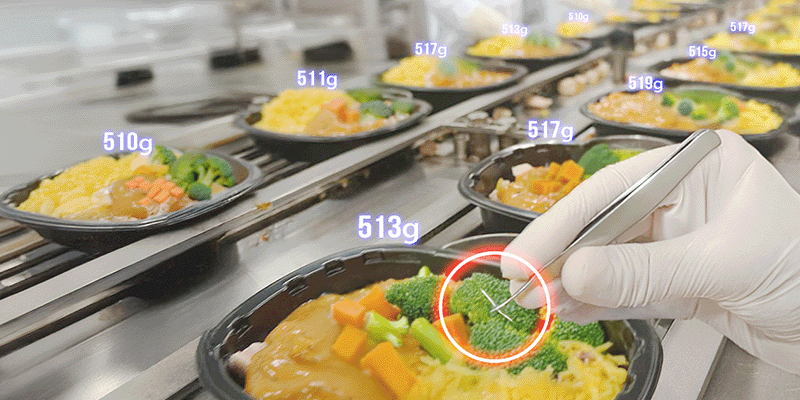
No food factory wants to see contaminants in the final product. It feels like something that should not happen. But on the real production floor, these risks are part of daily production, not unusual exceptions.
A cutting blade wears down over time. A conveyor part becomes loose. Stones come in with raw materials. Bone pieces remain after meat or seafood processing. Sometimes rigid plastic from packaging breaks and enters the line. These are not rare cases in food production. They are normal risks that need to be controlled before the product leaves the factory.
World Food Safety Day on 7 June is a good time for food factories to review whether their inspection processes still match actual production conditions. Food safety is not only about documents or certificates. It is also about what really happens on the line: what kind of unwanted material may appear, where it may enter the process, and whether the factory can detect, reject, and record the issue before shipment.
Before comparing a metal detector with X-ray inspection, look at the product first. Is it loose, frozen, wet, dry, boxed, bottled, or already sealed? What is the main risk: metal, bone, glass, stone, ceramic, or rigid plastic? Does the risk come from raw materials, equipment, packaging, cleaning tools, or maintenance?
Once these conditions are clear, choosing the right equipment becomes much easier.
Choose Equipment Based on Product Risk
When people think about food contamination, they usually think about raw materials first. Agricultural products can bring in stones, grit, or soil. Meat can contain bone pieces. Seafood may contain hard residues left from processing. These risks are real and should be part of the factory’s food safety review.
But raw material is not the only risk. The production line can also create problems.
Cutting blades can break. Mixing or grinding machines can wear down. Conveyors can lose small parts. Steel wire from cleaning tools, loose screws after maintenance, broken packaging, worn seals, and gasket pieces can all become sources of contamination.
These problems may not happen every day, but a food factory has very little room for error. One customer complaint can lead to returns, investigation, rework, product withdrawal, recall discussions, or loss of buyer trust. For factories supplying export markets or large customers, saying the product passed inspection is not always enough. The factory must also show how the risk was controlled, what was rejected, and what records were kept.
This is why equipment selection should not start with the machine model. It should start with a simple production question: what do we need to stop?
Map the Likely Contaminants Before Comparing Machines
Metal fragments and stainless steel particles are often linked to knives, mixers, conveyors, screens, or maintenance parts. Steel wire may come from cleaning tools or packaging materials. Glass can come from containers, lighting, packaging, or the production environment. Stones and grit are common concerns in grains, agricultural products, and frozen raw materials. Bones are a major issue in meat and seafood. Rigid plastic, rubber, and gasket fragments may come from packaging, scrapers, containers, seals, or conveyor wear.
The point is not to list every possible contaminant. The point is to avoid choosing a machine before the real risk is clear. A machine can work well in general but still be wrong for a specific line.
Metal Detection Works Best When Metal Is the Main Risk
Metal detectors are mainly used to detect ferrous metal, non-ferrous metal, and stainless steel fragments. In food production, these contaminants may come from broken cutting tools, worn mixing or grinding equipment, conveyor parts, damaged screens, loose screws, maintenance work, raw materials, or packaging.
If metal is the main risk, a metal detector is usually the first option to evaluate. It may not look like the most advanced inspection method, but it is practical for many packaged foods, frozen foods, bakery products, ready meals, snacks, and processed products.
A metal detector can work with a conveyor and automatic reject system to remove suspicious products from the line. This part matters. Finding the problem is not enough. The factory must decide where rejected products go, whether they are locked or separated, who checks them, and how records are kept. Without a clear reject process, the line still depends too much on supervisors or experienced workers.
Metal detection also needs regular management. Product effect is important, especially for wet, salty, frozen, or temperature-sensitive products. Packaging can also affect detection performance. Standard test pieces should be used as part of routine inspection, not only before an audit.
X-Ray Inspection Fits a Different Risk Profile
X-ray inspection is used for a different type of risk. It detects contaminants mainly by reading density differences between the product and the unwanted material. It can identify a wider range of high-density materials, including metal, glass, stone, ceramics, some bones, and certain rigid plastics.
For meat or seafood, bone residue may be a bigger concern than metal from equipment. For agricultural products, grains, or frozen ingredients, stones and grit may be more relevant. For products in glass containers, boxes, or special packaging, testing should be done with real packaging, not only with an unwrapped product.
Some X-ray systems can also check for missing items, irregular shapes, insufficient contents, or packaging problems. These functions can be useful, but real performance depends on the machine, product density, packaging format, contaminant size, contaminant position, and test result. Small contaminants, materials with density close to the product, overlapping positions, and thick products can all make detection harder.
Many factories think X-ray inspection is just a better metal detector. The decision is not that simple. If metal is the main risk, a metal detector is usually the most practical choice. If the product also carries risks from glass, stone, bone, ceramic, or other high-density materials, X-ray inspection should be tested with the actual product and packaging.
Match the Inspection Point with the Production Risk
Many factories place inspection equipment near the end of the line because the product is almost ready to ship. For many packaged foods, checking after packaging is practical. It allows automatic rejection and connects inspection records to finished products.
But not every risk should wait until the final stage.
If contaminants may enter with raw materials, such as stones in agricultural products or grit in grains, inspection after raw material intake or during early processing may be worth reviewing. If contamination is more likely to come from slicing, mixing, grinding, or conveying, placing inspection after that process can help the factory find the source faster and reduce the affected batch.
Inspection before packaging can serve as a check before sealing. Inspection after packaging is useful for final product control. Before case packing or shipping, inspection can also be combined with weight, barcode, label, and batch checks.
The inspection point should match the contamination source, production step, reject method, and traceability need. When the control point is closer to the real risk, it is easier for the factory to know where the issue started.
Reject handling should also be considered at this stage. Will the system use a pusher, air jet, flap, drop reject, or line stop? Where will rejected products go? Will they be locked, separated, and recorded? These details may look small, but they decide whether quality control really works on the floor.
Connect Inspection with Weight, Labels, and Traceability
Food quality control is not only about finding contaminants.
For packaged products, the factory may also need to check weight, label, barcode, and batch information before shipping. A product can pass the contamination check but still create a customer complaint if the weight is wrong, the label does not match, or the batch cannot be traced.
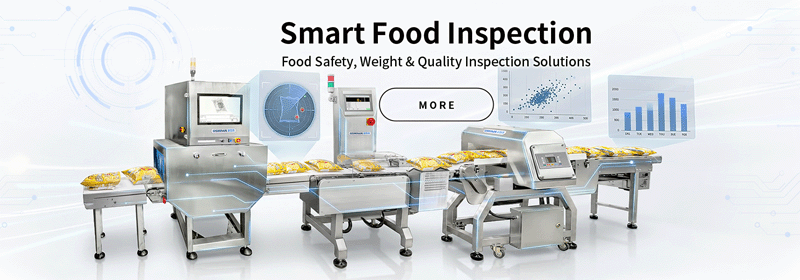
A complete inspection line can combine contaminant detection, checkweighing, barcode verification, labelling, and automatic rejection in a single flow. A metal detector or X-ray system controls contamination risk. A checkweigher checks whether the weight is within range. A barcode scanner checks the product and batch information. Labelling adds traceability. Conveyors and reject devices remove abnormal products from the line.
This setup is not just about adding more machines. It helps the factory check contamination, weight, and identification more easily before shipping.
Many quality problems occur between machines, not only inside a single machine. If inspection, weight, label, and batch data are not connected, the factory still depends on people to fill the gaps. When orders increase, shifts change, or shipment becomes urgent, these manual gaps become real risks.
Build the Inspection Flow Around the Actual Product
If metal is the main risk, a metal detector with automatic rejection is usually the first option to evaluate. If the product carries risks from bone, glass, stone, or other high-density materials, X-ray inspection should be tested. If the factory also needs to check weight, batch, or traceability, inspection can be combined with checkweighing, scanning, labelling, and conveyors in a single line.
Food safety is not about the equipment name. It must be tested with the real product. The right equipment controls the right risk. The right inspection point helps trace the issue. Good records help the factory answer when customers or auditors ask what happened.
OSHIMA offers solutions for metal detection, checkweighing, X-ray inspection, barcode scanning, labelling, and conveyor systems. A practical evaluation should start with the real product: real packaging, real contaminants, real line speed, real reject space, and real traceability needs.


Article Classification
Recent Articles
- What Changes When Fabric Defect Data Reaches the Cutting Plan?
- How Can Food Factories Catch Problems Before Shipping?
- From Metal to Bones: How to Pick the Right Food Safety Machine
- From Nonwovens to Automotive Interiors: Choosing the Right Fabric Spreading Machine
- How Garment Factories Can Prepare for Smaller Orders?