
 0
0



- Home
- Blog
- Applications & Solutions
- From Metal to Bones: How to Pick the Right Food Safety Machine
From Metal to Bones: How to Pick the Right Food Safety Machine
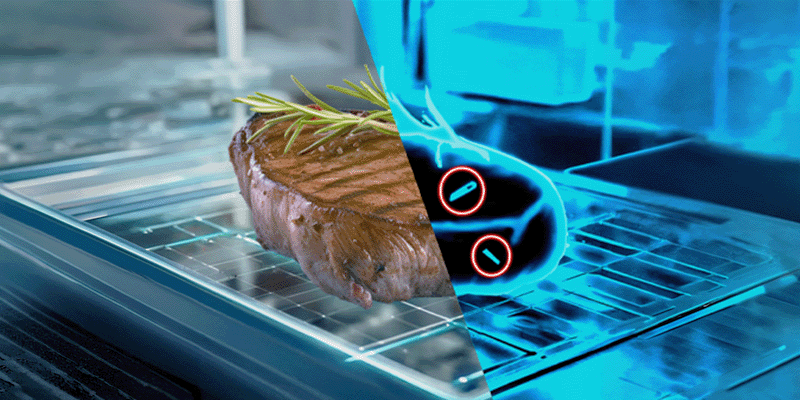
Each year, World Food Safety Day is observed on 7 June, reminding food factories to review their contamination risks and confirm whether their inspection processes meet actual production needs.
In food processing lines, physical contamination can directly affect product safety and shipment decisions. Metal fragments, stainless steel particles, broken blade pieces, glass fragments, stones, bones and rigid plastics may enter products through raw materials, processing equipment, packaging materials or maintenance work.
Manual visual inspection cannot consistently identify contaminants hidden inside products or passing through a high-speed production line. Food factories therefore need to evaluate metal detectors, X-ray inspection systems and other quality control equipment according to their product type, packaging format and primary contamination risks.
Under food safety management systems, metal, glass, stones, bones and other unwanted materials are generally classified as physical hazards. Systems such as HACCP require factories to identify possible contamination sources and determine suitable control measures. In practice, inspection equipment helps food factories detect, reject and record contaminated products before shipment.
Common Sources of Physical Contamination in Food Factories
Different food production lines face different contamination risks. Before selecting equipment, factories should first identify which contaminants are most likely to occur and where they may come from.
| Contaminant Type | Possible Sources |
|---|---|
| Metal fragments and stainless steel particles | Blades, mixers, conveyor systems, screens and maintenance parts |
| Steel wire or iron wire | Cleaning tools, raw material packaging and equipment components |
| Glass fragments | Containers, lighting, raw material packaging or the production environment |
| Stones and grit | Agricultural products, grains and frozen raw materials |
| Bones | Meat and seafood processing |
| Rigid plastic fragments | Packaging materials, scrapers, equipment parts or damaged containers |
| Rubber or gasket fragments | Seals, conveyor belts or equipment wear |
What Contaminants Can Metal Detectors Detect in Food Products?
Metal detectors are primarily used to identify metal contaminants in food products, such as ferrous metal, non-ferrous metal and stainless steel fragments.
Common sources of metal contamination in food production lines include:
-
Broken blades or cutting tools
-
Wear from mixing, grinding or conveyor equipment
-
Detached screens, screws or machine components
-
Metal material remaining after maintenance work
-
Metal fragments carried in by raw materials or packaging materials
Which Products and Contamination Risks Are Suitable for X-Ray Inspection?
X-ray inspection systems identify contaminants mainly through density differences between the product and the unwanted material. Compared with metal detectors, X-ray systems can be evaluated for a wider range of high-density contaminants, including:
-
Metal fragments
-
Glass
-
Stones
-
Ceramics
-
Certain bones
-
Certain high-density rigid plastics
For this reason, meat products, seafood products, frozen foods, bakery products, canned foods, boxed foods and products with certain complex packaging formats may be suitable for X-ray inspection evaluation.
For example, meat and seafood processing lines may need to manage bone residue in addition to metal contamination from equipment. Agricultural or grain-based products may carry stones or grit from incoming materials. Products packed in glass containers may require additional assessment for glass contamination risks.
Some X-ray inspection systems can also be configured to check for missing items, irregular shapes, insufficient contents or internal packaging abnormalities. Actual capability depends on the equipment specification, product density, packaging material, inspection setting and testing result.
X-ray inspection does not guarantee detection of every contaminant. Detection performance may be affected by contaminant size, density, position, product thickness, product composition and packaging conditions. Equipment should therefore be tested with the actual product, actual packaging and target contaminants before a final configuration is selected.
Metal Detector vs. X-Ray Inspection System: Which Should a Food Factory Choose?
A metal detector and an X-ray inspection system are not direct replacements for each other. The appropriate choice depends on the product, expected contamination sources and production requirements.
| Evaluation Factor | Metal Detector | X-Ray Inspection System |
|---|---|---|
| Main inspection target | Metal contaminants | Metal, glass, stones, bones, ceramics and certain high-density contaminants |
| Suitable application | Metal contamination is the primary concern | Non-metal high-density contamination is also a key concern |
| Packaging consideration | Packaging materials must be evaluated for their effect on detection | Can be evaluated for certain complex or metal-containing packaging formats |
| Common food applications | Packaged foods, frozen foods, bakery products and prepared foods | Meat, seafood, canned foods, boxed foods, frozen foods and higher-risk products |
| Key evaluation points | Detection sensitivity, reject method, line speed and testing procedure | Target contaminants, product thickness, inspection image result and packaging conditions |
For export products, higher-risk foods or production lines subject to stricter customer audits, multiple inspection points may be required. Depending on the production process, this may include raw material screening, post-processing inspection, final packaged-product inspection, weight checking and traceability record integration.
Where Should Contaminant Detection Equipment Be Installed?
The installation position affects which contamination risks can be controlled and how quickly the source of an issue can be traced. Food factories can evaluate inspection points according to their production process, product condition and expected contamination sources.
| Installation Position | Purpose |
|---|---|
| After raw material intake | Identify contaminants that may already be present in incoming materials |
| After processing equipment | Check whether cutting, mixing, grinding or conveying processes have introduced contamination |
| Before packaging | Inspect products before they are sealed or packed |
| After packaging | Inspect and reject products in their final shipment condition |
| Before case packing or shipment | Combine inspection with weight, barcode or traceability checks |
However, if a contamination risk mainly comes from a specific production process, such as slicing, grinding or mixing, an inspection point after that process may help the factory identify the affected product range and contamination source more efficiently.
What Should Be Confirmed Before Selecting Detection Equipment?
When selecting a metal detector or X-ray inspection system, food factories should not compare equipment type or price alone. The equipment must match the product, risk and production conditions.
1. Product Type
Loose products, bagged products, boxed products, bottled products, frozen foods, liquids, powders and solid items may require different inspection configurations. Product shape, density and movement on the conveyor can also influence detection performance.
2. Target Contaminants
Factories should clearly identify the contaminants that need to be controlled. Some production lines mainly face metal contamination risks, while others may also need to manage bones, glass, stones or ceramics. The target contaminants determine which inspection technology should be evaluated.
3. Packaging Material
Packaging material can affect equipment suitability. Products with special packaging formats should be tested using the actual finished package before the equipment selection is confirmed.
4. Production Line Speed and Product Size
Inspection equipment must match the existing conveyor speed, product height, product width, weight and handling method. A detection station that does not match production conditions may reduce line efficiency or require additional layout adjustment.
5. Reject Method
When a contaminated or suspicious product is detected, the factory needs a clear method for removing it from the production flow. Depending on the product and packaging format, reject options may include a pusher, air jet, flap, drop rejection or line stop arrangement. Rejected products should also be separated and recorded for further handling.
6. Inspection Records and Traceability Needs
Factories supplying export markets, large retailers or customers with specific audit requirements may need to retain inspection results, alarm records, weight data, barcode information or batch records. These requirements should be considered during equipment configuration rather than added after installation.
Integrating Contaminant Detection, Weight Checking and Traceability
For packaged food products, quality control may involve more than contamination detection. Before shipment, factories may also need to confirm product weight, labels, barcodes and batch information.
Depending on production requirements, an inspection line may include:
-
A metal detector or X-ray inspection system to identify contamination risks
-
Checkweighing equipment to confirm product weight
-
Barcode scanning equipment to verify product and batch information
-
Labelling equipment to apply traceability information
-
Conveyor and automatic reject systems to remove abnormal products from the normal flow
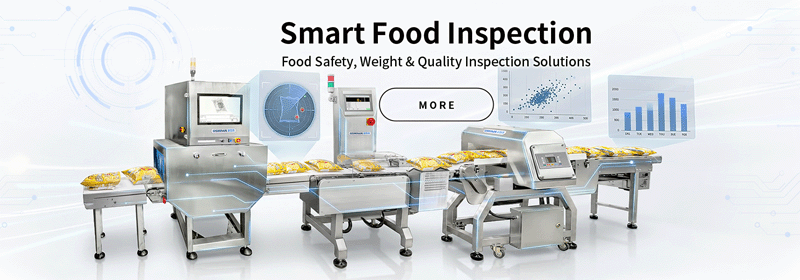
This type of integrated configuration allows food factories to check contamination, weight and identification information within one production flow. It also supports record retention where required for internal quality management or customer review.
How Can OSHIMA Support Food Factory Inspection Line Configuration?
OSHIMA provides equipment solutions for metal detection, checkweighing, X-ray inspection, barcode scanning, labelling and conveyor integration. The inspection configuration can be evaluated according to the food factory’s product type, packaging format, target contaminants, production speed, reject method and record requirements.
If metal contamination is the primary risk, a metal detector with automatic rejection may be prioritised for evaluation.
If products face risks from bones, glass, stones or other high-density contaminants, an X-ray inspection solution can be further assessed.
If a factory also needs to verify weight, batch details or traceability information, inspection equipment can be integrated with checkweighing, scanning, labelling and conveyor systems within the same production flow.
Before equipment is introduced, testing with the actual product, actual packaging and expected contaminants is recommended. This allows the factory to confirm detection performance, reject handling and line configuration before making an implementation decision.
Conclusion
Food contamination detection equipment should be selected according to the actual risks of each production line.
Metal detectors are suitable for managing metal contaminants such as stainless steel particles, broken blade pieces, wire fragments or loose equipment components. X-ray inspection systems can be further evaluated where products may contain glass, stones, bones, ceramics or certain high-density contaminants.
For food factories, effective inspection does not begin with purchasing a single machine. It begins with identifying likely contamination sources, confirming the product and packaging conditions, selecting appropriate inspection points, defining reject handling and determining which records need to be retained.


Article Classification
Recent Articles
- What Changes When Fabric Defect Data Reaches the Cutting Plan?
- How Can Food Factories Catch Problems Before Shipping?
- From Metal to Bones: How to Pick the Right Food Safety Machine
- From Nonwovens to Automotive Interiors: Choosing the Right Fabric Spreading Machine
- How Garment Factories Can Prepare for Smaller Orders?