
 0
0



- Home
- Blog
- Equipment Knowledge
- When Should Garment Factories Use Automatic Cutting Machines?
When Should Garment Factories Use Automatic Cutting Machines?
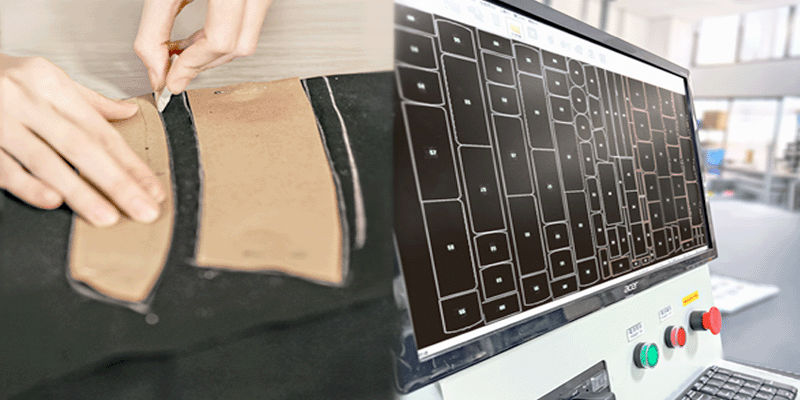
Fabric cutting is one of the most important processes in garment production. Cut-part accuracy, fabric utilization and sewing efficiency are all affected by cutting room performance.
As automatic cutting machines, CAD marker making and automatic spreading equipment become more common, many garment factories begin to ask the same questions. Is manual cutting still enough? Does every factory need an automatic cutting machine? Will traditional cutting skills be completely replaced?
In reality, automatic cutting is not something every factory needs to introduce immediately. It also does not solve every cutting room problem by itself. The real decision depends on order type, cutting volume, fabric cost, manual cutting variation, spreading stability and whether the factory already has a basic digital pattern and marker workflow.
In other words, cutting efficiency is not only about the cutting machine. It is about whether the whole cutting room is ready.
Cutting Efficiency Is Not Only About One Machine
When factories talk about cutting efficiency, they often think first of the automatic cutting machine. But cutting efficiency is usually not created by one machine alone. It is affected by the entire process from fabric arrival to finished cut parts.
Has the fabric been inspected? Has fabric tension been relaxed? Is spreading flat and stable? Is the CAD marker accurate? Does the factory know where fabric defects are before cutting? Are cut parts clearly sorted and transferred after cutting?
If the fabric condition before cutting is unstable, even a precise automatic cutting machine may still face problems such as shifting layers, uneven cut parts, size variation or sewing alignment issues.
This means an automatic cutting machine should not be viewed as a standalone solution. It needs stable spreading, accurate marker data, suitable cutting parameters and shop-floor judgement to perform well.
When Is Traditional Cutting Still Suitable?
Automation continues to improve, but manual cutting and semi-automatic cutting tools still have their place.
If a factory mainly handles small orders, samples, special fabrics, high-end custom garments or styles that are frequently adjusted, manual cutting still offers flexibility. For delicate fabrics, slippery materials, fabrics that deform easily or products that require experienced adjustment, human judgement remains important.
Silk, chiffon, high-value specialty fabrics, sample garments and made-to-measure products may not always justify a large automatic cutting machine, especially when order quantities are low.
Traditional cutting is not outdated. It is suitable for certain product types. If order volume is low, styles change frequently or the product requires strong manual judgement, factories do not need to rush into large automatic cutting equipment.
When Should a Factory Consider Automatic Cutting?
When the cutting room becomes a clear bottleneck, automatic cutting becomes worth evaluating.
First, the factory often produces large quantities of the same or similar styles.
If cutting is repetitive and order volume is high, automatic cutting can help improve cut-part consistency and reduce errors caused by long hours of manual cutting.
Second, manual cutting variation is affecting sewing.
If cut parts are inconsistent, sewing operators need more time for alignment, correction and rework. When cutting problems start affecting the whole production line, the cutting method should be reviewed.
Third, fabric cost is high and waste affects profit directly.
For factories using expensive fabrics, cutting errors and marker waste can add significant cost. If the factory already uses CAD marker making, an automatic cutting machine can help transfer the marker data more consistently into actual cutting.
Fourth, cutting room labour is difficult to hire or retain.
Skilled cutting workers require experience. If turnover is high, cutting quality may become unstable. Automatic cutting cannot fully replace judgement, but it can reduce dependence on one operator’s hand skill.
Fifth, delivery pressure makes cutting a bottleneck.
If spreading is complete but cutting cannot keep up with sewing demand, the cutting room may delay the entire line. In this case, automatic cutting can be evaluated as a way to reduce waiting time and supply cut parts more steadily.
Sixth, the factory already has a basic digital marker workflow.
Automatic cutting machines need CAD marker data. If a factory still relies fully on paper patterns and manual marker placement, it should first confirm whether digital patterns, marker files and data management can support automatic cutting.
Fabric Spreading Must Be Stable Before Automatic Cutting
Whether automatic cutting works well depends heavily on the stability of spreading. If fabric is not laid flat, tension is uneven, edges are misaligned or layers shift, even a precise cutting machine may still produce unstable cut parts. This is why automatic cutting usually needs to work with a stable spreading process.
For knitted fabrics, stretch fabrics, slippery fabrics or materials that deform easily, fabric condition before cutting is even more important. Factories need to confirm whether fabric has been relaxed, spreading tension is suitable, vacuum suction is enough and cutting height matches machine conditions.
Automatic Cutting Still Requires Shop-Floor Judgement
Automatic cutting machines can improve cut-part consistency and reduce some manual errors, but they cannot fully replace shop-floor judgement. Cutting room workers still need to confirm whether the marker file is correct, whether fabric direction matches product requirements, whether cutting parameters fit the fabric, whether the knife condition is normal and whether cut parts need checking after cutting.
This is especially important for stretch fabrics, thick fabrics, special materials and multi-layer cutting. Operators may still need to adjust pressure, speed, knife type or cutting height based on experience. After automatic cutting is introduced, the role of cutting workers does not disappear. It shifts from direct cutting to machine operation, cutting quality monitoring, parameter adjustment and abnormal handling.
Do Not Look Only at Machine Price
Many factories begin their evaluation with the price of the automatic cutting machine. But looking only at machine price may ignore the factors that truly affect return on investment.
Factories should also consider:
-
actual daily cutting volume;
-
main fabric types;
-
need for multi-layer cutting;
-
spreading stability;
-
whether CAD marker making is already in use;
-
cutting room space;
-
operator training;
-
after-sales service and spare parts support;
-
whether the machine fits current products and future order direction.
An automatic cutting machine is not simply a replacement for manual labour. It is part of the whole cutting room process. If earlier processes are not stable, improving fabric inspection, relaxing, spreading or marker management first may be more practical than purchasing a cutting machine immediately.
How OSHIMA Supports Cutting Room Planning
We provide fabric inspection, relaxing, spreading and automatic cutting-related equipment. These machines can be arranged according to fabric type, cutting volume, product category and factory space.
For factories evaluating automatic cutting, the first step is not to replace all manual cutting. The first step is to identify which part of the process affects efficiency and quality the most. If the problem is fabric defect management, fabric inspection should be strengthened. If the problem is fabric tension or spreading stability, relaxing and spreading should be reviewed. If cutting volume, manual variation and delivery pressure have become bottlenecks, automatic cutting becomes more meaningful.


Article Classification
Recent Articles
- The 30-90-180 Day Rule for Industrial Boiler Maintenance
- How Garment Machinery Supports Safety, Compliance and Environmental Management?
- What Happens Before Fabric Goes to the Cutting Table?
- Industrial Iron & Vacuum Table Care: How to Extend Their Lifespan
- Cutting Floor ROI: How the M8s and TAC Save $100K Annually