
 0
0



- Home
- Blog
- Equipment Knowledge
- Continuous Fusing Machine for Garment Factories: How to Choose the Right Size and Configuration
Continuous Fusing Machine for Garment Factories: How to Choose the Right Size and Configuration
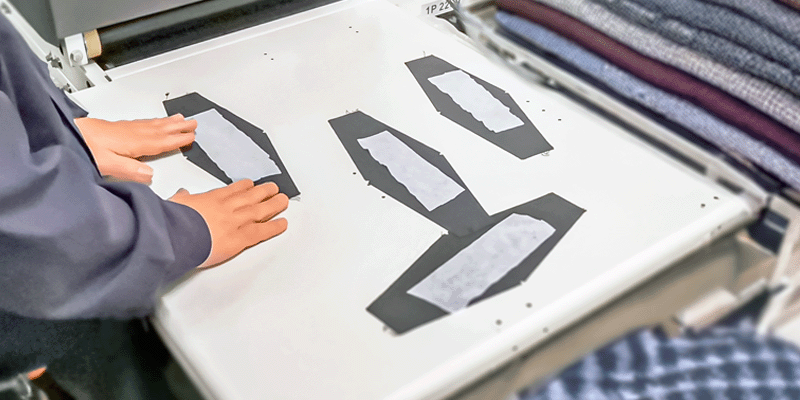
Fusing is an important process in garment manufacturing, especially for components that require additional structure, shape retention or reinforcement. Shirt collars, cuffs, plackets, waistbands and jacket panels are common examples where fusible interlining may be bonded to the outer fabric before sewing.
For factories processing these components repeatedly, a continuous fusing machine can provide a more efficient and consistent production flow than small stationary pressing methods.
However, selecting a continuous fusing machine should not be based only on machine size or price, working width, conveyor speed, temperature control, pressure, heating configuration, cooling and actual production volume all affect whether a machine is suitable for a particular factory.
This guide focuses specifically on how garment manufacturers should evaluate a continuous fusing machine.
What Is a Continuous Fusing Machine?
A continuous fusing machine uses a conveyor system to move fabric and fusible interlining through controlled heating and pressure zones.
During the process, the fabric and interlining are placed together and fed into the machine. Heat activates the adhesive on the fusible interlining, while pressure helps create an even bond between the two materials.
Unlike a stationary press, a continuous system allows components to enter and exit the machine continuously.
This makes it particularly suitable for garment factories handling repeated production batches.
Typical applications include:
- Shirt collars
- Shirt cuffs
- Front plackets
- Trouser waistbands
- Jacket components
- Uniforms
- Workwear
- Structured garment panels
- Selected knit or stretch applications, depending on fabric characteristics
The goal is not simply to apply heat. The objective is to create a stable and repeatable bonding process while maintaining fabric appearance, hand feel and production efficiency.
When Does a Garment Factory Need a Continuous Fusing Machine?
A continuous fusing machine becomes particularly useful when production volume increases and factories need more consistent processing conditions. A factory may consider continuous fusing when:
- The same garment components are processed repeatedly
- Production requires stable temperature and pressure
- Manual or small pressing methods create inconsistent results
- Output needs to increase without adding excessive labor
- Different operators need to achieve similar results
- The factory processes shirts, uniforms, jackets, trousers or other garments using fusible interlining
- Fusing becomes a bottleneck before sewing
For very small sampling quantities or occasional fusing work, a compact or stationary machine may be sufficient; for repeated production, continuous processing generally provides a more systematic workflow.
Small vs Large Continuous Fusing Machines
Not every garment factory needs the largest machine available. The correct machine size depends primarily on component dimensions, production volume and available floor space.
| Consideration | Small / Medium Continuous Machine | Large Continuous Machine |
|---|---|---|
| Typical application | Collars, cuffs, plackets, waistbands | Jacket panels, large garment parts |
| Production volume | Small to medium | Medium to high |
| Working width | Narrower | Wider |
| Factory space | Lower requirement | Higher requirement |
| Investment | Generally lower | Generally higher |
| Suitable users | Shirt, uniform and general garment factories | Larger factories and wide-component production |
A wider machine does not automatically mean better productivity.
If most components are narrow, purchasing an unnecessarily wide machine may increase equipment footprint, energy consumption and investment without creating meaningful production benefits.
The machine should therefore be selected around the factory's actual product mix.
1. Choose the Correct Working Width
Working width is one of the first specifications buyers compare.
However, it should be determined by the largest component actually being fused, not simply by choosing the widest machine available.
For example, a factory mainly producing shirts may process:
- Collars
- Cuffs
- Plackets
- Small reinforcement pieces
These components may not require a very wide conveyor.
A factory producing jackets or larger panels may require more working width.
Before selecting a machine, record:
- Maximum component width
- Typical component width
- Number of pieces placed side by side
- Whether future products are likely to require wider components
A small amount of additional capacity can provide flexibility, but excessive oversizing is usually unnecessary.
2. Match Conveyor Speed to Fusing Time
Conveyor speed affects both production output and the amount of time the material remains inside the heating zone.
Fusing quality depends on the relationship between:
Temperature + pressure + time
Increasing conveyor speed can raise throughput, but it also reduces heating time.
If the adhesive does not receive enough heat for enough time, bonding strength may be insufficient.
On the other hand, excessively slow processing can expose some fabrics to more heat than necessary.
Factories should therefore avoid evaluating conveyor speed as a standalone specification.
The correct setting depends on:
- Fabric
- Interlining
- Adhesive type
- Component thickness
- Required bonding strength
- Heating-zone length
- Production target
The best machine is not necessarily the one with the highest maximum speed. It is the one that can maintain suitable fusing conditions at the production speed the factory actually needs.
3. Temperature Stability Matters More Than Maximum Temperature
Many machine specifications emphasize maximum temperature.
In normal garment production, however, temperature consistency is often more important than the highest temperature the machine can reach.
If temperature varies significantly across the working width or during long production runs, the result may be uneven bonding.
Possible symptoms include:
- Weak adhesion
- Partial bonding
- Bubbling
- Surface marks
- Changes in fabric hand feel
- Inconsistent results between batches
Factories should therefore evaluate how the machine controls and maintains temperature during continuous operation.
When testing a machine, do not only ask:
What is the maximum temperature?
Also ask:
How consistently can the machine maintain the required temperature during production?
4. Evaluate the Pressure System
Pressure helps the activated adhesive bond evenly to the fabric.
Insufficient pressure can result in incomplete bonding, while excessive pressure may affect fabric appearance or push adhesive through sensitive materials.
The appropriate pressure depends on:
- Fabric construction
- Fabric thickness
- Interlining type
- Adhesive
- Garment application
A garment factory working with a variety of fabrics should prioritize a machine with stable and adjustable pressure control.
The machine supplier should also be able to explain which pressure system is suitable for the intended applications.
5. Consider Fabric and Interlining Characteristics
A machine should not be selected without considering the actual materials being processed.
Different combinations can respond differently to heat, pressure and conveyor movement.
Factors to evaluate include:
- Woven or knitted fabric
- Lightweight or heavyweight material
- Stretch characteristics
- Surface sensitivity
- Synthetic or natural fiber content
- Interlining structure
- Adhesive type
- Required finished hand feel
A machine that performs well with standard shirt fabric may require different settings or machine characteristics for delicate, stretch or heavier materials.
When possible, factories should provide actual fabric and interlining samples for testing before final machine selection.
6. Check Heating-Zone Design
The heating section is responsible for activating the adhesive before pressure bonding.
For continuous production, factories should consider not only the temperature setting but also how the heating zone supports stable processing.
Important considerations include:
- Heating-zone length
- Heat distribution
- Temperature recovery
- Stability during long production runs
- Compatibility with the expected conveyor speed
A longer or better-controlled heating process may allow the adhesive to activate more evenly at production speed.
This becomes particularly important in factories processing large quantities continuously.
7. Do Not Ignore Cooling After Fusing
The fusing process does not necessarily end when the component exits the heating and pressure section.
Cooling can help stabilize the bonded component before it is stacked, handled or moved to the next process.
Poor handling immediately after fusing may affect the finished result, particularly when components remain hot.
Factories should consider:
- How components exit the machine
- Whether cooling is provided
- Whether pieces are stacked while still hot
- How quickly components proceed to the next operation
For high-volume production, post-fusing handling should be considered part of the complete workflow.
8. Calculate Required Production Capacity
Machine capacity should be matched to actual factory demand.
Before comparing models, estimate:
- Pieces per hour
- Pieces per shift
- Number of production shifts
- Peak production requirements
- Product change frequency
- Average component size
A machine that is too small may become a bottleneck.
A machine that is excessively large may increase investment and operating costs without providing useful capacity.
The goal should be sufficient production margin without unnecessary oversizing.
9. Consider Operator Workflow
Continuous fusing equipment is part of a production line, not an isolated machine.
Factories should evaluate how operators will:
- Prepare fabric and interlining
- Position components on the conveyor
- Monitor production
- Receive fused pieces
- Stack or transfer components
- Respond to setting changes
Machine ergonomics and material flow can affect actual productivity significantly.
A theoretically fast machine may not deliver high output if loading and unloading are inefficient.
10. Maintenance and Cleaning Affect Long-Term Performance
Fusing equipment operates with heat, pressure, fabrics and adhesive materials.
Over time, adhesive contamination or accumulated residue may affect belts and other machine surfaces.
Factories should therefore understand:
- Belt cleaning requirements
- Routine maintenance intervals
- Replacement parts
- Heating-system maintenance
- Pressure-system maintenance
- Local technical support
- Availability of consumable or wear parts
For factories operating continuously, service availability can be as important as the original machine specification.
Continuous Fusing Machine vs Compact Fusing Machine
A continuous machine is not automatically the right solution for every factory.
Continuous fusing machine
Best suited for:
- Repeated garment production
- Medium to high output
- Consistent processing
- Continuous material flow
- Multiple operators or production shifts
Compact or stationary fusing machine
May be more appropriate for:
- Sampling
- Small production quantities
- Small garment components
- Limited floor space
- Occasional fusing requirements
If your factory is still deciding between different types of fusing systems, see our complete Fabric Fusing Machine Guide for a broader comparison of machine types and selection factors.
Common Mistakes When Selecting a Continuous Fusing Machine
Choosing Based Only on Price
A lower purchase price may not provide better value if the machine cannot support the required production conditions.
Buying More Width Than Necessary
Working width should reflect actual garment components.
Looking Only at Maximum Speed
Maximum conveyor speed is meaningless if suitable bonding cannot be maintained at that speed.
Ignoring Material Testing
Different fabric and interlining combinations may require different settings.
Ignoring After-Sales Support
For production equipment, long-term technical support and spare-parts availability should be considered before purchase.
Questions to Ask Before Buying
Before contacting a supplier, prepare the following information:
- What garments do you produce?
- What components will be fused?
- What is the maximum component width?
- What types of fabric are used?
- What type of fusible interlining is used?
- What production volume is required per day?
- Is the factory currently using another fusing machine?
- What problems occur with the current process?
- How much installation space is available?
- Is local technical support required?
Providing these details allows the supplier to recommend a machine based on actual production needs rather than general specifications.
FAQ: Continuous Fusing Machines
What is a continuous fusing machine?
A continuous fusing machine uses a conveyor to move fabric and fusible interlining through controlled heating and pressure zones. It is commonly used in garment factories for repeated production of components such as collars, cuffs, plackets, waistbands and jacket panels.
What is the difference between a continuous fusing machine and a heat press?
A continuous fusing machine processes components through a conveyor system and is designed for repeated garment production. A heat press typically processes materials in separate press cycles. The appropriate equipment depends on the material, application and required production flow.
What working width should I choose?
Choose a working width based on the largest garment component being fused and the number of components you want to place across the conveyor. Additional width can provide flexibility, but an unnecessarily large machine may increase cost and space requirements.
Does a faster conveyor always increase productivity?
Not necessarily. Conveyor speed must still provide enough heating time for the adhesive to activate correctly. The correct speed depends on fabric, interlining, heating-zone length and the required bonding conditions.
What garments commonly require fusing?
Common applications include shirts, trousers, uniforms, jackets, workwear and other garments using fusible interlining in collars, cuffs, plackets, waistbands or structured panels.
Can continuous fusing machines process different fabrics?
Yes, but suitable temperature, pressure and processing time can vary significantly between materials. Actual fabric and interlining testing is recommended when selecting settings or evaluating a machine.
Choosing the Right Continuous Fusing Machine
The best continuous fusing machine is not simply the widest, fastest or most expensive model.
It is the machine that matches:
- Your garment type
- Component dimensions
- Fabric and interlining
- Required production volume
- Fusing conditions
- Factory workflow
- Available space
- Service requirements
For garment manufacturers, selecting the correct configuration can improve production consistency while preventing unnecessary equipment investment.


Article Classification
Recent Articles
- The 30-90-180 Day Rule for Industrial Boiler Maintenance
- How Garment Machinery Supports Safety, Compliance and Environmental Management?
- What Happens Before Fabric Goes to the Cutting Table?
- Industrial Iron & Vacuum Table Care: How to Extend Their Lifespan
- Cutting Floor ROI: How the M8s and TAC Save $100K Annually