
 0
0



- Home
- Blog
- Equipment Knowledge
- Why Steam Matters More Than You Think in Garment Factories?
Why Steam Matters More Than You Think in Garment Factories?
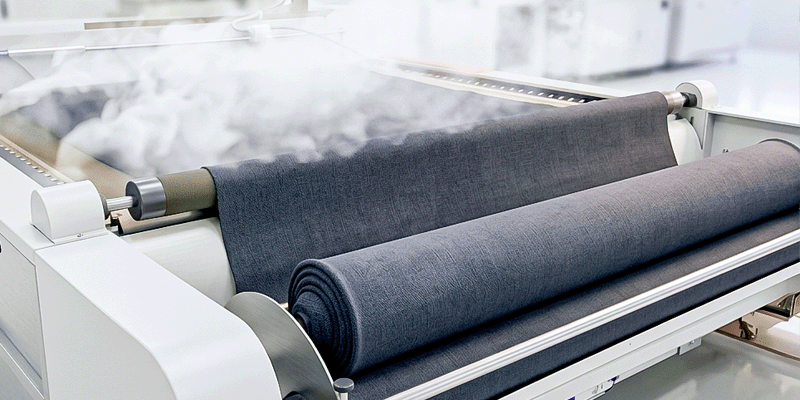
In garment factories, steam is not only used to remove wrinkles. Consumers often think of steam as a garment care tool. For manufacturers, however, steam is involved in fabric relaxing, preshrinking, pressing, shaping and finishing. From fabric preparation before cutting to final garment finishing before shipment, steam affects fabric condition and finished garment appearance.
Garment production works with soft materials that are affected by tension, temperature and moisture. If fabric is not properly relaxed before cutting, or if finished garments are not properly shaped and cooled after pressing, factories may face dimensional changes, returning wrinkles, unstable creases or untidy appearance. This is why professional garment factories value steam equipment. It is not only about making garments look smooth. It is about keeping fabrics and finished garments more stable throughout production.
How Steam Affects Fabric Stability
During weaving, dyeing, finishing, rolling, transportation and storage, fabric may carry different levels of tension. This is especially important for knitted fabrics, stretch fabrics and dimension-sensitive materials. If these fabrics enter cutting without proper preparation, they may shrink or change shape later during sewing, pressing or washing. Steam helps in fabric preparation by using heat and moisture to make fibres easier to relax. This allows fabric to return to a more stable condition before cutting. This is why many factories use relaxing, steam preshrinking or setting-related processes before cutting. For high-volume garment factories, stable fabric preparation is important. Once cut parts are produced, later shrinkage or distortion can affect size, sewing alignment and finished garment acceptance.
The Role of Steam in Pressing and Shaping
After sewing, garments usually need pressing. Pressing is not only about removing wrinkles. It uses steam, heat, pressure and cooling to help garments form a more stable appearance. Steam softens fibres and makes it easier for operators to shape collars, cuffs, plackets, trouser creases, pockets, jacket front panels and other parts that require finishing. When combined with pressure and vacuum suction, garments can be pressed and cooled more efficiently, making the shape easier to set.
Different garments require different pressing effects. Shirts need sharper collars and plackets. Trousers need clean creases and waistbands. Jackets need shoulder lines and front-panel shape. Uniforms and formal garments place greater emphasis on a neat appearance before shipment. If steam supply is unstable, pressing quality may also be affected. Insufficient steam makes fabric harder to shape. Steam that is too wet, or insufficient drying, may cause moisture rebound, pressure marks or wrinkles returning after cooling.
Steam Also Supports Dyeing, Bonding and Other Finishing Processes
Steam is also used in other textile and garment processes. In dyeing and printing-related processes, steam can support fibre treatment and colour fixation, helping fabrics reach a more stable processing result. Different dyeing and finishing processes require different temperature, timing and steam conditions, so stable steam supply affects processing quality.
In bonding, pressing or some finishing processes, steam and heat may also help condition materials before the next production step. However, steam requirements differ according to fabric, adhesive, pressure and temperature conditions. Factories still need to test and adjust according to actual materials and production methods. Steam is therefore not just an add-on function for one machine. It is a basic condition for many fabric preparation and finishing processes.
Why Industrial Boilers Matter
If a garment factory uses steam equipment at scale, it needs a stable steam source. An industrial boiler provides steam to support pressing, preshrinking, dyeing and other steam-related equipment. For factories, a boiler is not only a heat source. It is a foundation that affects production stability. If steam pressure is unstable, heating time is too long or steam output cannot support several machines at the same time, shop-floor efficiency will be affected. When choosing a boiler, factories usually need to consider:
-
required steam volume;
-
number of machines using steam;
-
fuel type;
-
steam pressure stability;
-
energy consumption and operating cost;
-
maintenance convenience;
-
local safety and regulatory requirements.
Different factory sizes and product types require different boiler planning. A small garment factory, a pressing line, a dyeing and finishing plant, and a larger integrated factory will not need the same steam system.
How Steam Equipment Affects Production Efficiency
When steam equipment is properly configured, fabric preparation and finishing can run more smoothly. More stable fabric preshrinking reduces dimensional problems before cutting. Stable steam supply helps pressing lines maintain more consistent finishing quality. Sufficient boiler capacity can reduce waiting time when several machines operate at the same time.
If the steam system is unstable, the problems appear on the production floor. Pressing may slow down. Garments may wrinkle again after cooling. Ironing tables may perform inconsistently. Operators may need to spend more time re-pressing garments. These may look like small issues, but in mass production they accumulate into time and quality management costs. The value of steam equipment is not only the machine itself. It is whether the system can support the rhythm of the production line.
Start Improving Finishing from Stable Steam Supply
For garment factories, steam equipment should be evaluated according to actual process conditions. Is steam mainly used for pressing, preshrinking, dyeing or several processes at the same time? How many machines use steam every day? Does the factory often face insufficient steam, unstable pressing results, returning wrinkles or long waiting time?
OSHIMA provides industrial boilers, steam preshrinking equipment and garment pressing-related machinery to support steam applications according to factory scale, fabric type and finishing needs. For factories that require stable pressing quality, fabric preparation or steam supply for multiple machines, the steam system should not be treated as only a back-end utility. It is an important foundation for production quality and efficiency.
Professional garment factories value steam equipment not because steam looks advanced, but because it supports fabric stability, pressing quality and finishing efficiency. When factories begin reviewing whether steam supply is stable and whether the equipment layout matches the production rhythm, finishing quality becomes easier to control.


Article Classification
Recent Articles
- The 30-90-180 Day Rule for Industrial Boiler Maintenance
- How Garment Machinery Supports Safety, Compliance and Environmental Management?
- What Happens Before Fabric Goes to the Cutting Table?
- Industrial Iron & Vacuum Table Care: How to Extend Their Lifespan
- Cutting Floor ROI: How the M8s and TAC Save $100K Annually