
 0
0



- Home
- Blog
- Equipment Knowledge
- Industrial Iron & Vacuum Table Care: How to Extend Their Lifespan
Industrial Iron & Vacuum Table Care: How to Extend Their Lifespan
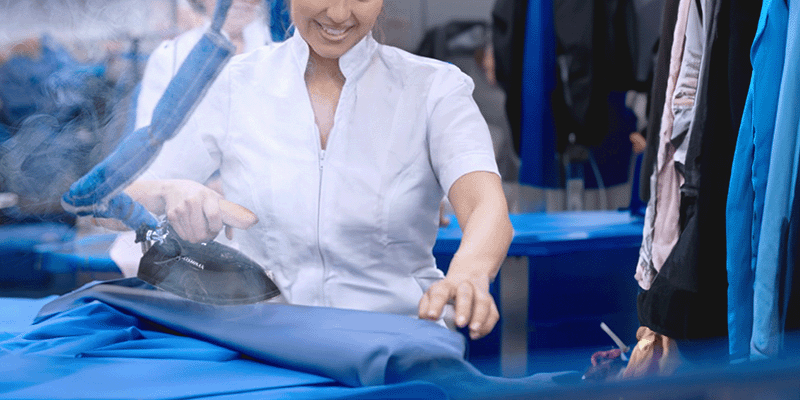
Industrial irons and ironing tables are used for many hours each day. Things like steam, water quality, suction, and daily cleaning all affect how well they work and how long they last. It is important to check certain parts regularly, from choosing the right equipment to keeping up with daily maintenance.
Many people think ironing quality depends only on iron temperature. In professional environments, the real factors include steam stability, suction performance, ironing table structure, soleplate condition, water quality, and operator technique.
If equipment is selected incorrectly, poorly maintained, or used improperly, it can affect garment quality and shorten the life of irons, ironing tables, steam hoses, and internal components.
For factories and laundries that use ironing equipment every day, correct equipment selection and maintenance help reduce downtime, repair cost, and rework.
The Role of Irons and Ironing Tables in Professional Finishing
Iron: Heat, Steam, and Pressure Control
An iron removes wrinkles through heat, steam, and pressure. Professional irons are not simply larger home irons. They must provide stable temperature and steam output under long operating hours.
Different fabrics react differently to heat and steam. Cotton and linen usually require higher heat and more steam. Wool, silk, lightweight fabric, and stretch materials need more careful temperature control.
If the temperature is too high, the fabric may become shiny, marked, discolored, or damaged. If steam is too weak, wrinkles may not relax properly.
Ironing Table: Holding, Drying, and Shaping
An ironing table is not just a flat surface. Professional ironing tables, especially vacuum ironing tables, may include suction, blowing, heating, and steam-assist functions.
Suction holds the garment in place and prevents movement during ironing. Blowing helps delicate or three-dimensional garments keep volume without being pressed flat. Heating helps remove moisture and set the fabric faster.
For garment factories, laundries, and central finishing operations, ironing table stability directly affects speed and quality consistency.
How Industrial Ironing Equipment Differs from Home Equipment
Home irons are designed for small-volume, low-frequency garment care. They focus on size, price, storage, and convenience.
Industrial ironing equipment focuses on durability, continuous operation, steam stability, operator efficiency, and consistent finishing results.
Industrial irons and vacuum ironing tables are used in garment factories, laundries, shirt factories, trouser factories, uniform factories, hotel laundry rooms, and central washing facilities.
Professional equipment usually offers a larger working surface, stronger steam output, more durable components, and special accessories for sleeves, shoulders, collars, cuffs, pockets, and other garment parts.
For high-volume production, home equipment cannot provide the same durability or consistency.
Common Iron Types and Applications
1. Dry Iron
A dry iron uses heat from the soleplate without much steam. It can be suitable for some heat-sensitive fabrics, lightweight materials, or garments that require drier ironing.
However, dry irons are less effective on deep wrinkles and may not be efficient for heavy cotton, linen, or bulk production.
2. Steam Iron
Steam irons are widely used in professional finishing. Steam penetrates fibers, helps relax wrinkles, and works with heat and pressure to smooth the fabric.
They are suitable for cotton, linen, shirts, uniforms, workwear, and many daily garments. When connected to a stable boiler or steam generator, steam irons can improve production efficiency.
3. Vertical Steamer
Vertical steam equipment is useful for hanging garments, large fabric pieces, coats, curtains, or items that should not be pressed heavily.
It can quickly improve surface wrinkles and reduce some odors.
However, vertical steam is usually a support tool. For flatness, shaping, and crease definition, professional irons and ironing tables are still needed.
4. Industrial Steam Iron
Industrial steam irons are designed for high-frequency, long-hour, and batch finishing environments. They usually connect to a boiler or steam generator to provide stable steam.
For garment factories and laundries, industrial steam irons offer high efficiency, stable steam volume, and compatibility with professional ironing tables.
Three Factors That Affect Industrial Ironing Quality
1. Steam Stability
Steam quality directly affects ironing results. If steam pressure is too low, wrinkles are difficult to remove. If steam carries too much water, it may create water stains, excessive moisture, or uneven finishing.
Factories should ensure stable steam supply and regularly check steam hoses, drainage, valves, and filters. If the steam comes from a boiler, water treatment and boiler maintenance are also important.
2. Suction and Blowing Function
The suction function of a vacuum ironing table holds garments in place so the fabric does not move when the iron passes over it. This reduces secondary wrinkles and improves accuracy.
Blowing is useful for delicate, soft, or three-dimensional fabrics that should not be flattened.
Stable suction and blowing performance improve both finishing quality and working efficiency.
3. Table Structure and Accessories
Different garment parts require different working surfaces. A flat table works for large panels. A sleeve arm is suitable for sleeves. A saddle table can help with trousers, shoulders, and three-dimensional areas. Special boards can support collars, cuffs, pockets, and details.
Choosing the correct table and accessories makes detailed finishing easier and reduces repeated handling time.
5 Ways to Extend Iron Life
1. Avoid Hard Objects and Rough Surfaces
A scratched soleplate can reduce smoothness and damage fabric surfaces. Operators should avoid pressing directly over zippers, metal buttons, rivets, and other hard objects.
The iron should not be placed flat on rough surfaces or unsuitable stands. Improper storage can damage or deform the soleplate over time.
2. Use the Correct Water Quality
Steam irons and steam systems are sensitive to water quality. Hard water can create scale, block steam holes, cause leakage, release impurities, or reduce steam output.
Different equipment may require different water types. Some can use treated tap water, while others may require softened or distilled water. Factories should follow equipment instructions and local water conditions.
3. Empty the Water Tank and Store Correctly
Water left inside the iron may cause scale, odor, corrosion, or leakage. After use, the tank should be emptied according to the equipment instructions, and the iron should be stored in a safe, dry, and stable position.
For industrial irons connected to steam hoses, operators should also follow proper drainage and shutdown procedures to prevent condensation from remaining in the system.
4. Clean the Soleplate Regularly
The soleplate may collect starch, fibers, adhesive, dirt, or chemical residue. If not cleaned regularly, it may become sticky and stain garments during ironing.
Cleaning should follow the equipment material and manufacturer recommendations. Rough or corrosive cleaning methods should be avoided.
A clean soleplate is essential for smooth and consistent ironing.
5. Descale and Use Self-Cleaning Functions
Steam hole blockage and internal scale are common problems in steam irons.
Factories should schedule descaling or self-cleaning according to usage frequency. If the equipment has a self-cleaning function, it should be used regularly.
For industrial steam systems, steam lines, filters, drainage, and boiler water treatment should also be checked.
3 Principles for Maintaining Ironing Tables
1. Clean or Replace the Cover and Padding
If the ironing table cover collects stains, steam moisture, adhesives, or fiber residue, it can affect garment surface quality.
Factories should remove and clean or replace the cover and padding regularly.
If the cover becomes hard, thin, damaged, or uneven, it should be replaced to maintain ironing quality.
2. Check Suction, Blowing, and Heating
Vacuum table suction and blowing systems should remain clear and stable.
Weak suction may come from clogged filters, fan problems, blocked airflow, or unsuitable covers. Unstable heating can affect drying and fabric setting.
Regular checks help prevent lower efficiency and reduce the risk of fan or heating system failure.
3. Keep the Table Dry and Flat
Long-term moisture can affect table structure and create odor or mold. After use, the surface should be kept dry, and the padding should not hold excessive moisture.
If the table surface becomes uneven, dented, or deformed, ironing quality may be affected. Repair or replacement should be arranged.
Choosing Between Home and Professional Equipment
For home use, handheld steamers, vertical steamers, or basic steam irons are often enough. The main considerations are storage space, usage habit, fabric type, and budget.
For laundries, central washing facilities, hotel laundry rooms, and garment factories, more durable professional equipment is needed.
Selection should consider daily volume, garment type, suction or blowing needs, built-in boiler requirements, accessories, operator habits, and after-sales service.
For example, shirt factories may need flat tables, sleeve arms, and stable steam. Trouser factories may need saddle tables and crease support. Laundries may need flexible equipment for many different fabric types.
Professional equipment is not always about choosing the biggest machine. It should match the real workflow.
How OSHIMA Supports Professional Ironing Workflows
OSHIMA provides industrial irons, vacuum ironing tables, and related finishing equipment for garment factories, laundries, central washing facilities, and hotel laundry rooms.
Different customers have different needs. Some focus on shirt flatness. Some handle trousers, uniforms, or special fabrics. Others need to improve high-volume finishing efficiency.
OSHIMA can help evaluate equipment based on garment type, output volume, factory space, and steam supply conditions.
With the correct equipment and daily maintenance, factories can reduce unstable finishing quality, machine failure, and downtime risk.
Conclusion
Ironing equipment does more than remove wrinkles. It helps maintain garment appearance, fabric feel, and final product quality.
In professional environments, industrial irons, vacuum ironing tables, steam supply, and accessories all affect the finishing result.
To extend equipment life, factories should focus on correct selection, stable steam, suction performance, soleplate cleaning, water quality, descaling, and ironing table maintenance.
When equipment is maintained properly and operators use it according to fabric characteristics, the ironing process becomes more stable and garment quality becomes more consistent.
For garment factories, laundries, and central finishing facilities, professional ironing equipment is not just a finishing tool. It is an important part of final product quality and customer satisfaction.


Article Classification
Recent Articles
- The 30-90-180 Day Rule for Industrial Boiler Maintenance
- How Garment Machinery Supports Safety, Compliance and Environmental Management?
- What Happens Before Fabric Goes to the Cutting Table?
- Industrial Iron & Vacuum Table Care: How to Extend Their Lifespan
- Cutting Floor ROI: How the M8s and TAC Save $100K Annually