
 0
0



- Home
- Blog
- Equipment Knowledge
- How Should Garment and Textile Factories Choose an Industrial Steam Boiler?
How Should Garment and Textile Factories Choose an Industrial Steam Boiler?
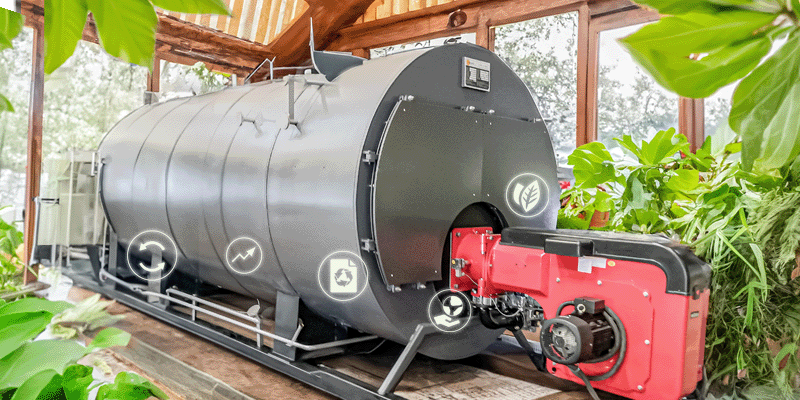
Garment and textile manufacturing belong to the same supply chain, but their steam requirements are not identical. Textile-processing mills may require thermal energy for dyeing, finishing, shrinking and fabric treatment. Garment factories more commonly use steam for ironing, pressing, garment finishing and selected preparation processes.
For this reason, a boiler is not simply a supporting utility. It can affect production stability, energy cost, on-site emissions, maintenance requirements and a factory’s longer-term decarbonisation planning.
The United Nations Environment Programme estimates that the textile industry accounts for approximately 2 to 8 percent of global greenhouse gas emissions. At the same time, the UN Climate Change Fashion Industry Charter for Climate Action sets a vision for the fashion sector to achieve net-zero emissions no later than 2050. These developments make thermal energy and steam-generation choices increasingly relevant to brands and manufacturing suppliers.
However, choosing a lower-impact boiler does not mean selecting one fuel type without further analysis. The appropriate steam solution depends on required steam capacity, available energy sources, local cost conditions, emissions regulations, facility limitations, maintenance capability and long-term energy strategy.
This article explains steam applications in garment and textile manufacturing and compares electric, gas-fired, biomass, oil-fired and coal-fired boiler options for factory evaluation.
Why Does Boiler Selection Matter for Garment and Textile Factories?
An industrial boiler converts energy into the steam or heat required by manufacturing processes. If steam supply is unstable, capacity is insufficient, operating cost is excessive or emissions requirements cannot be met, production may be affected.
Factories evaluating boilers typically need to consider:
| Factory Concern | Potential Production Impact |
|---|---|
| Whether steam capacity meets process demand | Insufficient capacity may affect pressing, finishing or fabric processing |
| Whether demand is stable or has peak loads | Influences boiler type, capacity and backup planning |
| Whether energy supply is reliable | Affects operating cost and downtime risk |
| Whether on-site combustion emissions are acceptable | Influences exhaust, environmental and installation requirements |
| Water quality and maintenance conditions | Affect boiler efficiency, service life and operating reliability |
| Buyer requirements for emissions information | Influence energy management and reporting preparation |
Where Is Steam Used in Garment and Textile Manufacturing?
Steam applications differ according to factory type. Dyeing and fabric finishing should not be presented as ordinary garment-factory operations when they generally belong to upstream textile processing.
Textile Processing: Dyeing, Finishing and Fabric Treatment
Textile-processing mills may use steam in dyeing, heat-related fabric finishing, shrinking, drying and other treatment processes. These factories often require greater steam capacity and place stronger emphasis on continuous operation, energy cost and emissions management.
Garment Manufacturing: Pressing and Finishing
A garment factory more commonly uses steam in operations such as:
- Garment ironing and appearance finishing.
- Pressing for shirts, uniforms, suits or other finished products.
- Steam supply for industrial irons and finishing equipment.
- Selected fabric or garment steam-treatment requirements.
Laundry, Medical Textile and Home Textile Applications
Uniforms, bedding, towels, medical textiles and commercial laundry operations may also require stable steam for cleaning, finishing, drying or pressing activities.
| Factory Type | Typical Steam Use | Boiler Selection Focus |
|---|---|---|
| Garment factory | Ironing, pressing and garment finishing | Start-up, stable steam, space and operation convenience |
| Textile-processing mill | Dyeing, shrinking, finishing and fabric treatment | Capacity, continuous running, fuel cost and emissions management |
| Home textile or laundry operation | Finishing, drying, cleaning and pressing | Steam stability, energy cost and maintenance |
| Medical textile-related facility | Cleaning, finishing and specified thermal processes | Clean operation, safety and reliability |
Steam Boilers and Hot-Water Boilers: What Is the Difference?
This article focuses on steam boilers because garment pressing and many textile-processing operations require steam rather than hot water alone.
| Boiler Type | Main Output | Typical Application | Suitability for Garment and Textile Steam Processes |
|---|---|---|---|
| Steam boiler | Steam | Pressing, finishing, dyeing and process heating | Suitable, subject to capacity and pressure requirements |
| Hot-water boiler | Heated water | Heating, washing, domestic or selected low-temperature processes | Not a primary solution where steam is required |
How Should Different Boiler Structures Be Understood?
Industrial boilers may be arranged as vertical, horizontal, fire-tube, water-tube or once-through systems. These structures affect space requirements, start-up characteristics, capacity, maintenance and response to load variation.
| Structure Direction | Common Characteristics | Relevant Evaluation Situation |
|---|---|---|
| Vertical boiler | Smaller footprint and flexible installation | Limited space or smaller steam requirements |
| Horizontal boiler | Supports broader capacity configurations | Medium- to larger-scale and longer-running applications |
| Fire-tube boiler | Hot gases flow through tubes to heat surrounding water | Stable steam requirements and common industrial uses |
| Water-tube boiler | Water flows within tubes heated externally | Higher-capacity or higher-pressure process needs |
| Once-through boiler | Faster start-up and compact arrangement | Applications with clearly defined steam demand and priority on rapid steam supply |
Comparing Five Common Boiler Energy Options
The selected energy source directly influences on-site emissions, operating cost, installation conditions and decarbonisation options.
| Boiler Energy Source | Main Advantages | Limitations to Consider | Factory Situations to Evaluate |
|---|---|---|---|
| Electric steam boiler | No on-site combustion emissions, flexible installation and quieter operation | Electricity cost and power-capacity requirements; total emissions depend on electricity source | Factories prioritising clean local operation, smaller to medium steam demand or access to lower-carbon electricity |
| Gas-fired steam boiler | Stable steam supply and suitability for longer operating periods | Direct combustion emissions remain; requires reliable gas supply and safety configuration | Medium- to large-scale factories with suitable gas infrastructure |
| Biomass boiler | May reduce reliance on fossil fuels where suitable fuel supply exists | Requires storage, ash and air-emission management; environmental performance depends on lifecycle conditions | Factories with stable biomass supply and sufficient operating capability |
| Oil-fired boiler | Flexible fuel-storage arrangement in some locations | Direct emissions, fuel-price variation and storage safety requirements | Facilities lacking suitable gas or electrical infrastructure |
| Coal-fired boiler | Can support very large, continuous steam demand | High carbon and pollutant burden, ash handling and increasing regulatory pressure | Specific existing high-capacity applications; not a priority option for lower-carbon transition |
Electric Steam Boilers: For Cleaner On-Site Operation and Flexible Installation
Electric steam boilers use electrical heating elements to convert water into steam. They do not require burners, chimneys or on-site fuel storage. For factories concerned with local air emissions, noise, limited space and installation flexibility, electric boilers can be relevant options.
OSHIMA’s published electric steam boiler information states that its equipment provides:
- No on-site combustion emissions.
- Thermal efficiency of up to approximately 99 percent.
- Compact dimensions and flexible installation.
- Quiet operation.
- Applications in garment manufacturing, textile processing, food production, laundry and medical facilities.
An electric boiler should not automatically be described as carbon-free. Factories still need to assess:
- Local electricity prices.
- Available electrical capacity at the facility.
- Whether electricity comes from grid supply or lower-carbon and renewable procurement.
- Whether the required steam capacity is compatible with operating cost.
- Water quality and routine-maintenance conditions.
Electric steam boilers are therefore especially relevant where factories prioritise no on-site combustion emissions, installation flexibility and stable small- to medium-scale steam requirements, with suitable electrical conditions available.
Gas-Fired Steam Boilers: For Factories with Reliable Gas Supply and Continuous Steam Needs
Gas-fired steam boilers use natural gas or another gaseous fuel to produce steam. They are frequently evaluated by medium- and larger-scale factories requiring stable steam supply over longer operating periods.
A gas-fired boiler may be relevant where:
- Reliable gas infrastructure is available.
- Production requires sustained steam use.
- The site can accommodate combustion, exhaust and safety requirements.
- The factory can manage emissions according to local regulations.
Although gas may be evaluated as an alternative to coal or certain oil-based arrangements, it remains a fossil-fuel combustion source with direct carbon emissions. A factory pursuing decarbonisation should therefore include fuel use, equipment efficiency and future energy transition options in its planning.
Biomass Boilers: Fuel Source and Operating Management Must Be Confirmed First
Biomass boilers use wood pellets, agricultural residues or other suitable biomass fuels to generate steam. Where a factory has access to a stable and suitable biomass supply, this technology may be evaluated as a way to reduce dependence on fossil fuels.
OSHIMA positions biomass boiler equipment as a renewable-energy industrial steam solution, while also identifying practical considerations including:
- Required fuel-storage space.
- Regular cleaning and ash removal.
- Potential variation in fuel supply and cost.
- Manual feeding needs in some systems.
- Lifecycle effects, including production and transportation.
- Potential air-quality effects if operation is not properly managed.
Biomass should therefore not be described simply as zero-emission or automatically greener. A more accurate evaluation asks whether a factory has stable, compliant and traceable fuel supply, can manage storage, ash and emissions, and can justify lifecycle and operating conditions.
Oil-Fired Boilers: Flexible Fuel Arrangements with Emissions Considerations
Oil-fired boilers may be evaluated in locations without suitable gas infrastructure or sufficient electrical capacity, where a stable steam source is still required. Fuel storage can provide operational flexibility, but factories must also manage fuel-price variation, combustion emissions and storage safety.
A garment or textile factory considering oil-fired steam should confirm:
- Whether local infrastructure limits electric or gas options.
- Whether fuel-storage and safety arrangements are available.
- Applicable emissions requirements and fuel costs.
- Whether a medium- or longer-term transition toward electricity, gas or biomass is intended.
Oil-fired boilers may be a practical steam option in specific infrastructure situations, but factories prioritising lower-carbon transition should also examine alternatives and future conversion planning.
Coal-Fired Boilers: High Steam Capacity with Higher Environmental and Regulatory Burden
Coal-fired boilers can support high steam capacity and long operating periods, and they may continue to be used in certain locations with established coal-based infrastructure.
However, coal-fired solutions also carry substantial environmental and compliance burdens. OSHIMA’s published coal-fired boiler page states that these boilers produce carbon dioxide, sulphur dioxide, nitrogen oxides and particulates, and commonly require ash-handling, desulphurisation, denitrification and dust-collection arrangements to manage emissions under increasingly strict requirements.
For garment and textile manufacturers responding to buyer decarbonisation expectations or planning longer-term energy transition, coal-fired boilers should not generally be positioned as a priority lower-carbon option.
Seven Conditions to Confirm Before Selecting a Steam Boiler
Before purchasing boiler equipment, a factory should organise its actual operating requirements rather than comparing individual prices alone.
| Evaluation Area | Information to Confirm |
|---|---|
| 1. Steam application | Is steam needed for pressing, finishing, dyeing, fabric treatment, laundry or another process? |
| 2. Steam capacity and pressure | How much steam is required per hour, and are there peak loads? |
| 3. Operating duration | How many hours per day will the system operate, and is backup capacity required? |
| 4. Available energy sources | Are electrical capacity, gas lines, oil storage or biomass fuel supplies reliable? |
| 5. Emissions and regulatory conditions | Are on-site combustion emissions limited, and are exhaust, ash or emission-control systems required? |
| 6. Site and maintenance capability | Are space, water quality, operators, servicing and fuel-storage arrangements adequate? |
| 7. Decarbonisation and buyer expectations | Does the factory need energy records, emissions planning or environmental information for customers? |
Energy Management Practices That Matter After Boiler Selection
Even a suitable boiler can use energy inefficiently if operation and maintenance are not well managed. After installation, a factory can review:
- Whether boiler capacity matches actual demand.
- Whether extended low-load running or unnecessary idling is avoided.
- Whether steam pipes are properly insulated.
- Whether leaks, unstable pressure or water losses are controlled.
- Whether usable condensate or heat recovery can be introduced.
- Whether water quality and scheduled maintenance are properly managed.
- Whether fuel or electricity records are retained for cost and emissions review.
For factories with decarbonisation objectives, boiler type is only one part of the plan. Load management, heat recovery, operating records and energy-source selection also influence actual results.
Initial Boiler Direction by Factory Situation
| Factory Situation | Initial Direction to Evaluate | Reason |
|---|---|---|
| Small or medium garment factory prioritising clean local operation and installation flexibility | Electric steam boiler | No on-site combustion emissions and flexible equipment installation |
| Medium or larger factory with reliable gas supply and sustained steam demand | Gas-fired steam boiler | Supports stable, continuous steam use |
| Factory located where suitable biomass fuel is consistently available | Biomass boiler | Can be evaluated for reduced fossil-fuel dependence, subject to fuel and emissions management |
| Factory lacking adequate gas or electrical infrastructure | Oil-fired boiler | May provide a steam option where fuel storage is manageable |
| Existing large coal-based system with exceptionally high steam demand | Coal-fired boiler or energy-transition review | Existing operation may continue, but emissions and regulatory pressure are significant |
How Can OSHIMA Support Industrial Steam Boiler Selection?
Steam requirements vary according to product, process, production capacity, location and energy availability. A garment pressing line does not require the same steam arrangement as a textile dyeing or large-scale fabric-processing mill.
OSHIMA provides multiple industrial steam boiler directions, including:
- Electric steam boilers for applications prioritising no on-site combustion emissions, flexible installation and stable smaller- to medium-scale steam demand.
- Industrial gas-fired steam boilers for factories with reliable gas supply and continuous steam requirements.
- Industrial oil-fired steam boilers for specific energy-supply conditions.
- Biomass boilers for factories with suitable fuel supply, space and operating-management capability.
- Coal-fired boilers for specific high-capacity steam requirements, subject to higher emissions and regulatory management needs.
A meaningful equipment evaluation begins with steam application, capacity, pressure, energy availability, installation conditions and decarbonisation requirements.
Conclusion
Textile and garment manufacturing are facing clearer expectations regarding energy and emissions management. For factories that depend on steam, boiler selection affects operating cost, on-site emissions, maintenance burden and flexibility for future energy transition.
No single boiler type can be described as the best environmental solution for every factory. Electric boilers require suitable electrical supply and consideration of the electricity source. Gas-fired and oil-fired boilers still produce direct combustion emissions. Biomass boilers require reliable fuel supply and proper lifecycle and air-quality management. Coal-fired boilers carry comparatively higher emissions and regulatory pressure.
A practical approach begins by confirming the factory’s steam demand, process use, energy conditions, site limitations and buyer-related decarbonisation requirements, then selecting a configuration able to support stable production while leaving room for longer-term energy management.
OSHIMA provides electric, gas-fired, oil-fired, biomass and coal-fired industrial steam boiler solutions, supporting garment and textile manufacturers in evaluating suitable steam systems according to production processes, energy conditions and long-term decarbonisation planning.


Article Classification
Recent Articles
- The 30-90-180 Day Rule for Industrial Boiler Maintenance
- How Garment Machinery Supports Safety, Compliance and Environmental Management?
- What Happens Before Fabric Goes to the Cutting Table?
- Industrial Iron & Vacuum Table Care: How to Extend Their Lifespan
- Cutting Floor ROI: How the M8s and TAC Save $100K Annually