
 0
0



- Home
- Blog
- Equipment Knowledge
- 2 Hours vs. 20 Minutes: What Happens to Your Output When You Automate the Cutting Floor?
2 Hours vs. 20 Minutes: What Happens to Your Output When You Automate the Cutting Floor?
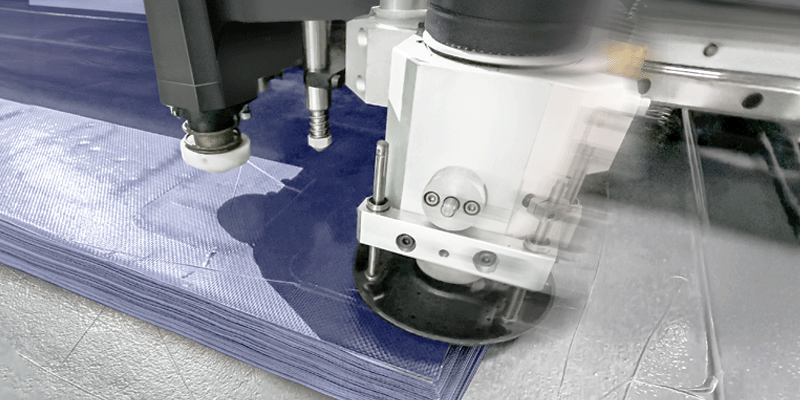
Fabric cutting has always been a critical process in garment production. Cutting quality directly affects sewing efficiency, size consistency, material utilization, and delivery schedules.
As manufacturing technology has evolved, fabric cutting has moved from manual cutting, round knife cutting, and straight knife cutting to CNC cutting and automatic cutting machines.
Each method has its place. Manual cutting still matters in high-end tailoring, special materials, sampling, and detailed craftsmanship. But in high-volume production environments, factories need stable, fast, and repeatable cutting performance.
This is where automatic cutting machines create value.
Their value is not only speed. Automatic cutting machines help factories reduce cutting time, lower labor dependency, improve material utilization, and make the cutting process easier to manage with data.
Why Automatic Cutting Machines Improve Production Efficiency
In garment production, fabric usually needs to go through inspection, relaxation, spreading, and marker planning before cutting. Once the fabric is prepared, cutting speed and accuracy affect the entire downstream workflow.
For example, when cutting 100 layers of fabric, manual or semi-automatic cutting may require two workers and 1 to 2 hours of work. Under suitable conditions, an automatic cutting machine may allow one operator to complete the cutting process in around 20 minutes.
Actual time depends on fabric thickness, number of layers, marker complexity, blade setting, vacuum performance, spreading quality, and workflow design. However, the comparison shows how cutting room automation can reduce repetitive cutting time significantly.
Automatic cutting machines improve efficiency in three major ways.
First, the machine follows digital cutting files, reducing manual variation.
Second, cutting paths and speeds are more consistent, improving batch-to-batch stability.
Third, the cutting process can connect with CAD-CAM, marker planning, and production data, making cutting part of a smarter manufacturing workflow.
Automatic Cutting Is Not Only for Apparel
Automatic cutting machines are common in garment production, but their applications are wider.
Any soft material that requires stable, repeatable, and high-volume cutting may benefit from automation.
Common applications include:
Garments and sportswear.
Home textiles.
Medical textiles.
Outdoor products.
Automotive interiors.
Industrial fabrics.
Technical textiles.
Different industries have different cutting requirements. Apparel factories may focus on speed and size consistency. Automotive interior suppliers may require accurate cutting for thicker materials. Medical textile manufacturers may need material stability and traceability.
This is why selecting an automatic cutting machine should not be based only on speed. Fabric type, cutting layers, vacuum system, blade control, software, and after-sales support all matter.
Three Economic Benefits of Automatic Cutting
1. Lower Labor Dependency and Better Workforce Allocation
Automatic cutting machines can reduce the need for manual cutting labor.
Tasks that once required multiple workers for long periods can be handled by equipment, while workers shift toward fabric preparation, machine operation, panel sorting, marker management, and quality checking. For factories facing labor shortages, high turnover, or pressure to increase output per worker, this is a strong operational advantage.
2. Lower Fabric Waste and Better Material Utilization
Fabric is often one of the largest costs in garment production. Even a 1% to 2% reduction in fabric waste can create meaningful cost savings for high-volume factories.
Automatic cutting machines support better material utilization through CAD-CAM integration, marker optimization, and stable cutting execution.
Lectra’s cutting room case study also notes that automated cutting solutions can optimize material utilization and improve efficiency. In the case reported, the factory experienced quality improvement and around 20% productivity increase.
Reducing fabric waste does not only lower cost. It also reduces excess material, cutting scraps, and rework-related environmental impact.
3. Shorter Lead Time and Higher Order Flexibility
If the cutting room is slow, sewing, finishing, and shipment are affected. Automatic cutting machines shorten cutting time and help factories move faster into the next process. For small-batch, multi-style, and short-lead-time orders, cutting efficiency becomes even more important.
When factories can cut faster, they can respond more flexibly to urgent orders, production changes, and multiple-batch planning. In a fast-changing market, speed becomes part of competitiveness.
ROI Example: How Automation Can Reduce Cost
The following is an example calculation. Actual results depend on each factory’s conditions. Assumptions:
Working hours: 8 hours per day.
Working days: 25 days per month.
Average wage: USD 275 per month.
Fabric cost: 100 TWD per meter.
Electricity cost: 5.5 TWD per kWh.
If a factory improves cutting efficiency by about 4 times after introducing an automatic cutting machine, and the process that once required 24 workers can be adjusted to 6 workers supporting the workflow, annual labor savings may reach around 1,930,500 TWD.
If automatic cutting and marker optimization also reduce fabric waste by 1% to 2%, annual material cost reduction may reach around 1,803,000 to 4,807,600 TWD.
Under these conditions, the payback period may be around 2 to 2.5 years.
However, this is not a fixed result for every factory. Each factory should calculate ROI based on its own fabric cost, production volume, labor setup, electricity cost, current waste rate, machine price, and maintenance cost.
ROI should not include only labor cost. Fabric savings, fewer cutting errors, shorter lead time, reduced rework, and higher capacity should also be considered.
Technology Does Not Replace Skill. It Upgrades Skill.
Automation is changing garment manufacturing, but it does not mean traditional cutting skill has no value. Manual cutting remains valuable for high-end tailoring, special fabrics, sampling, lingerie, draping, and complex craft processes.
The real value of automatic cutting is that it standardizes repetitive, time-consuming, and fatigue-sensitive cutting work, allowing skilled workers to focus on higher-value tasks.
These tasks include marker judgment, fabric behavior assessment, quality inspection, and special process handling.
In other words, technology does not remove skill. It places skill where it matters most.
How Automation Improved Lingerie Production
Babell is a Polish lingerie and homewear brand known for simple, comfortable, and classic products. For lingerie production, fabric elasticity, size stability, and panel accuracy are especially important.
Before adopting automatic cutting, common production challenges included insufficient cutting accuracy, unstable sizing, manual trimming, rework, and fabric waste. After introducing automatic cutting equipment, Babell improved cutting efficiency and panel consistency. Automatic cutting is not only for mass-market apparel. It can also support products that require stable size control and detailed cutting quality.
Smart Manufacturing: How Automatic Cutting Connects with Data
The value of modern automatic cutting machines is not only hardware performance. It also comes from software and data integration.
CAD-CAM Integration
CAD-CAM integration connects digital patterns, marker planning, and cutting paths. This reduces manual conversion work and lowers the chance of data errors.
Smart Marker Algorithms
Smart marker planning helps factories arrange pattern pieces more efficiently, improving material utilization and reducing fabric waste.
Real-Time Production Monitoring
If cutting equipment can provide production status, cutting time, machine operation data, and abnormal records, managers can understand cutting room performance faster.
Integration with Inspection and Spreading Data
If AI fabric inspection provides defect locations and smart spreading provides fabric length and layer data, the automatic cutting machine can become part of a connected cutting room workflow.
This is how an automatic cutter moves from being a standalone machine to becoming a core part of smart cutting room management.
How OSHIMA Supports Integrated Cutting Room Solutions
We provide more than automatic cutting machines. It continues to develop pre-cutting and data integration solutions for garment factories.
Before cutting, AI fabric inspection can help create fabric defect data. Smart spreading machines can provide spreading length, layer count, and production status. Projection systems can help display defect positions during spreading or inspection for manual confirmation. When inspection, spreading, projection, and cutting workflows are gradually integrated, factories can reduce material waste and additional cost caused by defects.
Managers can also gain clearer visibility into cutting room status and improve production planning and quality control.
Conclusion
Fabric cutting technology has evolved from manual cutting and round knives to CNC and fully automatic solutions. Each method has its own value.
For high-volume factories with tight delivery schedules and stable quality requirements, automatic cutting machines are now an important tool for efficiency and cost control.
The difference between 2 hours and 20 minutes is not only a speed difference. It reflects a change in cutting room management.
When cutting becomes faster, more consistent, and more traceable, downstream sewing, finishing, and shipment all benefit.
Automatic cutting machines help factories reduce labor dependency, lower fabric waste, improve cutting accuracy, and move toward smart manufacturing through CAD-CAM, marker optimization, and real-time monitoring.
For garment factories, choosing an automatic cutting machine should not be based only on machine price. Fabric type, production volume, cutting layers, current labor setup, waste rate, order pattern, and future scalability should all be evaluated.
Only when the equipment fits the factory’s real workflow can automation become real efficiency and competitiveness.


Article Classification
Recent Articles
- The 30-90-180 Day Rule for Industrial Boiler Maintenance
- How Garment Machinery Supports Safety, Compliance and Environmental Management?
- What Happens Before Fabric Goes to the Cutting Table?
- Industrial Iron & Vacuum Table Care: How to Extend Their Lifespan
- Cutting Floor ROI: How the M8s and TAC Save $100K Annually