
 0
0



- Home
- Blog
- Equipment Knowledge
- Garment Machinery Setup and Preventive Maintenance Guide
Garment Machinery Setup and Preventive Maintenance Guide
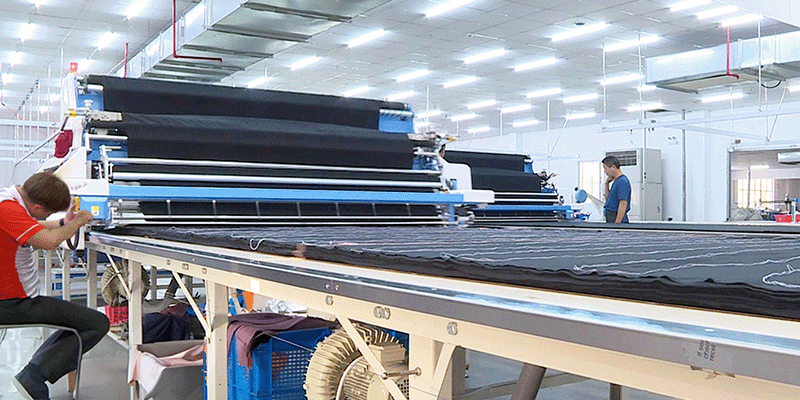
For garment factories, machinery is a major investment. Whether it is an automatic fabric spreading machine, automatic cutting machine, AI fabric inspection machine, needle detector, heat press machine, ironing equipment, or packing system, poor installation, incorrect operation, or weak maintenance can lead to downtime, unstable quality, delivery delays, and higher repair costs.
Many machine problems are not caused by poor machine quality. They often come from unprepared site conditions, insufficient operator training, or poor daily maintenance.
Garment machinery management should not begin only when a machine breaks down. It should begin with installation preparation, correct operation, daily maintenance, regular preventive maintenance, and safe troubleshooting.
What Should Factories Check Before Machine Installation?
Garment machinery is often large, heavy, and sensitive to power, air pressure, flooring, space, and environmental conditions.
If a machine arrives on-site before entrance size, floor loading, lifting conditions, or voltage requirements are confirmed, installation may be delayed and extra cost may occur.
Before shipment, factories should check the following items.
1. Entrance Size and Moving Route
Factories should confirm the full route from unloading area to installation location, including door width, elevator size, corridor width, turning space, stairs, floor height changes, and freight elevator load capacity.
If the machine must pass through narrow entrances or corners, the factory should confirm with the supplier whether partial disassembly or special handling tools are required.
2. Floor Load and Installation Space
Large machines need a stable and level floor. If the machine will be installed above the ground floor, the factory should confirm floor load capacity.
Uneven flooring may affect machine leveling, rail movement, cutting accuracy, or fabric alignment.
Factories should also reserve enough space for operation, maintenance, loading, unloading, and safety clearance. If the machine is too tightly placed, later maintenance and troubleshooting will become difficult.
3. Handling Tools and Lifting Equipment
If the machine does not have wheels, factories should prepare a flat trolley, forklift, or handling equipment that can support the machine weight.
If the machine must be lifted to a higher floor, cranes, lifting equipment, or professional movers should be arranged in advance.
These preparations should be completed before the machine arrives.
4. Voltage, Power Supply, and Grounding
Different machines require different voltage, phase, frequency, and current. Before installation, factories should confirm that the site power supply matches the machine specifications and that grounding is properly arranged.
Unstable power may cause machine malfunction, control system errors, or shorter component life. This is especially important for machines using computer control or servo systems.
5. Air Pressure Supply
Some garment machines require stable compressed air, such as automatic cutting machines, selected automation equipment, pneumatic fixtures, or heat press-related systems.
Factories should confirm compressor capacity, pressure, piping, drying, and filtration.
If air pressure is insufficient, the machine may not operate correctly or may become unstable during production.
6. Site Environment and Safety Conditions
The machine area should be dry, ventilated, clean, and free from excessive dust, fabric lint, moisture, or heat.
If the machine includes cutting blades, heating plates, conveyors, or moving mechanisms, safety guards, emergency stop buttons, and safe working zones should be confirmed.
Moving machine parts can cause serious injuries, including crushed fingers or hands, amputations, burns, or blindness, and that safeguards are essential for preventing these injuries. This is a reminder that machine installation is not only about making the equipment run, but also about making it safe to operate.
How to Keep Garment Machines Running Smoothly After Installation
After installation, production should not immediately begin at full speed. Factories should complete operator training, trial runs, parameter checks, and safety inspections to reduce early operation errors.
1. Complete Operator Training
Every operator should understand machine functions, startup and shutdown procedures, control interface, common alarms, daily inspection items, and the position of emergency stop buttons.
Emergency stop buttons and safety switches should not be known only by supervisors. Every operator should understand where they are and when to use them.
2. Confirm Manuals and Error Codes
For machines using Windows software or computer interfaces, the user manual may be stored inside the machine management system.
Operators should know how to access the manual, check error codes, and follow basic troubleshooting instructions.
If an error cannot be identified, operators should not disassemble or modify the control system by themselves. They should contact the manufacturer or qualified technical personnel.
3. Check Settings Before Startup
Before daily startup, key conditions should be checked according to machine type.
For automatic cutting machines, check air pressure, blade condition, grinding wheel status, cutting table, and vacuum performance.
For heat press equipment, check temperature, pressure, time settings, and platen condition.
For automatic spreading machines, check rails, fabric roll placement, side clearance, tension settings, and edge alignment devices.
For needle detectors, check test pieces, sensors, and conveyor movement.
Startup checks may seem simple, but they prevent many production interruptions and quality issues.
How to Maintain Garment Machinery and Extend Machine Life
Garment machinery maintenance can be divided into daily light maintenance and regular major maintenance.
Light maintenance can be performed by users or on-site personnel. Major maintenance should be performed by the manufacturer or qualified technicians.
1. Daily Cleaning: Prevent Dust and Fabric Lint Build-Up
Fabric processing areas produce lint, fibers, dust, and debris. If these materials accumulate on moving platforms, wheels, rails, gears, cutting tables, sensors, or air passages, machine accuracy and stability may be affected.
Automatic cutting machines should be cleaned daily with an air gun, especially around the cutting table, blade area, vacuum area, and air supply components.
Automatic spreading machines should also be cleaned daily around wheels, rails, moving platforms, and edge alignment parts.
2. Monthly Lubrication: Chains, Gears, and Moving Parts
Chains, gears, rails, and moving parts should be lubricated regularly.
Before monthly lubrication, old grease and dirt should be wiped away before applying new oil or grease.
Adding new grease on top of old grease can mix with fabric dust and lint, forming sticky residue that increases wear.
3. Check Blades, Grinding Wheels, and Motors
Automatic cutting machines should be checked regularly for blade sharpness, grinding wheel condition, blade fixing, motor lubrication, and air pressure supply.
A dull blade may cause rough cutting edges, fabric pulling, higher cutting resistance, and greater motor load.
Worn grinding wheels or unstable blade angles can also affect cutting quality.
4. Calibrate Sensors and Inspection Equipment
Machines with sensors, such as automatic cutting machines, AI fabric inspection machines, needle detectors, checkweighers, or scanning equipment, should be checked regularly.
Needle detectors should be tested with standard test pieces according to factory quality requirements and customer standards.
If calibration is required, it should be performed by trained staff or manufacturer technicians.
5. Software Updates and Data Backup
Machines using computer control, digital dashboards, or IoT functions should have software versions, system status, and data backups checked regularly.
Software updates may improve stability, correct issues, or add functions. However, factories should confirm whether updates may affect existing settings or production data.
Large factories should establish version control and update records.
Why Large Machines Need Regular Major Maintenance
For large machines such as automatic cutting machines, smart spreading machines, and AI inspection machines, daily maintenance only handles surface dust and basic component care.
After long-term operation, lint, dust, and component wear may still accumulate inside the machine.
For automatic cutting machines, major maintenance every six months is recommended. This may include disassembling and cleaning the bristle table, checking the vacuum system, removing internal dust, inspecting motors, checking component wear, and adjusting machine accuracy.
This type of maintenance may require two to three days, so production planning should be arranged in advance.
If technicians find worn motors, transmission parts, sensors, or other components, replacement should be evaluated.
Factories should not wait until the machine completely fails. Unexpected downtime usually costs more than preventive maintenance.
What to Do If a Machine Suddenly Stops
If a machine suddenly stops, on-site staff should first ensure safety. Do not rush to disassemble the machine or force a restart.
The following steps can help identify common issues.
1. Check Emergency Stop Buttons and Safety Switches
Confirm whether the emergency stop button has been pressed or whether a safety door or switch has been activated.
If so, identify the reason before resetting the machine.
Do not restart before confirming why the safety function was triggered.
2. Check the Screen and Error Codes
If the machine has a monitor, check whether it shows low air pressure, temperature error, sensor abnormality, motor alarm, or other error codes.
Follow the user manual and record the error code and time of occurrence for technician reference.
3. Check Air Pressure, Power, and Cables
Confirm that compressed air supply is normal, power is stable, and cables, plugs, buttons, and sensor lines are not loose or damaged.
If visible damage is found, stop using the machine and contact technical support.
4. Check for Foreign Objects
Fabric lint, cut pieces, tools, or foreign objects may block moving parts, conveyors, blade areas, or rails.
Before checking, stop the machine and follow safety procedures to confirm it cannot restart unexpectedly.
5. Contact the Manufacturer or Qualified Technicians
If the issue cannot be resolved through basic checks, or if it involves control systems, motors, pneumatic parts, sensors, blade structures, or safety devices, operators should not disassemble the machine on their own.
Contact the manufacturer or qualified technicians and provide error codes, photos, videos, machine model, time of occurrence, and operating conditions. This helps technical support identify the problem faster.
How OSHIMA Helps Factories Keep Machines Stable
OSHIMA has long supported garment factories and understands how machine stability affects production efficiency, delivery, and quality.
In addition to supplying equipment, OSHIMA supports pre-installation site checks, operator training, daily maintenance guidance, regular major maintenance, and troubleshooting support.
For large machines such as automatic cutting machines, smart spreading machines, and AI fabric inspection machines, factories should establish a maintenance schedule to prevent lint, dust, component wear, and setting problems from affecting production.
With correct installation, proper operation, and regular maintenance, many garment machines can remain stable for years.
For factories, maintenance is not an extra cost. It is a way to protect equipment investment, reduce downtime risk, and extend machine life.
Conclusion
Stable garment machine operation begins before the machine enters the factory.
Before installation, factories should confirm entrance size, handling conditions, floor load, voltage, air pressure, and site safety conditions.
After installation, factories should provide operator training, perform startup checks, and follow safe operation procedures.
During daily use, cleaning, monthly lubrication, blade and grinding wheel inspection, sensor calibration, software updates, and regular major maintenance all help extend machine life.
When a machine suddenly stops, staff should confirm safety first, then check emergency stops, error codes, air pressure, power, cables, and possible foreign objects.
If the problem cannot be resolved, the manufacturer or qualified technicians should handle the repair.
Machinery is a high-cost investment. Keeping it stable depends not only on machine quality, but also on factory maintenance discipline and operating management.
Correct installation, operation, and maintenance reduce downtime, extend equipment life, and support stable production quality.


Article Classification
Recent Articles
- The 30-90-180 Day Rule for Industrial Boiler Maintenance
- How Garment Machinery Supports Safety, Compliance and Environmental Management?
- What Happens Before Fabric Goes to the Cutting Table?
- Industrial Iron & Vacuum Table Care: How to Extend Their Lifespan
- Cutting Floor ROI: How the M8s and TAC Save $100K Annually