
 0
0



- Home
- Blog
- Industry Insights
- Key Trends from TITAS 2023: Sustainability, AI, and Textile Innovation
Key Trends from TITAS 2023: Sustainability, AI, and Textile Innovation
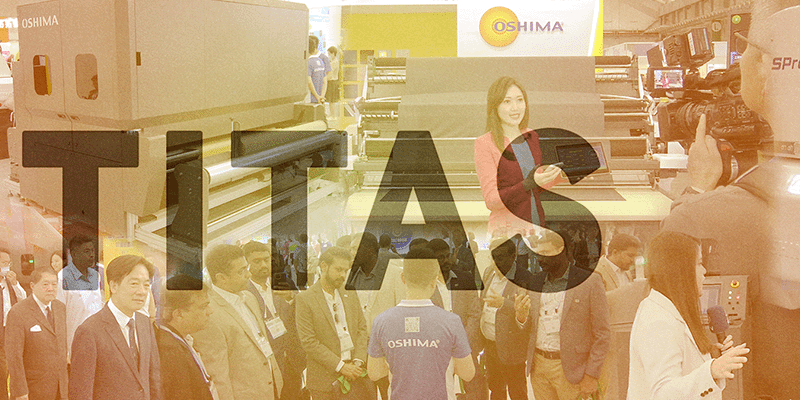
In the global textile industry, both TITAS and CISMA are important exhibitions, but they focus on different priorities.
CISMA is more centered on machinery, automation, and production efficiency, while TITAS focuses more broadly on the future of textiles, including sustainability, digitalization, and smart manufacturing.
TITAS 2023 reflected a clear shift in the textile industry.
Competition is no longer only about machinery speed or production capacity. Increasingly, brands and manufacturers are paying attention to sustainability, carbon reduction, traceability, energy management, and supply chain transparency.
Although TITAS may not be the world’s largest textile exhibition, it remains one of Asia’s most important indicators for future textile industry trends.
Key Highlights from TITAS 2023
1. Sustainability Became a Core Industry Focus
Sustainability is no longer only a marketing concept.
It is becoming a practical challenge for the global textile industry.
According to industry estimates, global textile waste may exceed 130 million tons by 2030. This makes waste reduction and material recycling increasingly important.
At TITAS 2023, topics such as carbon capture, recycled fibers, circular materials, and low-carbon manufacturing received significant attention.
For example, Far Eastern New Century showcased recycled fiber technologies developed from textile waste and recycled materials, highlighting how the industry is moving toward circular production models.
For manufacturers, sustainability is no longer only related to corporate responsibility. It is becoming part of long-term supply chain competitiveness.
2. Functional Apparel Continued to Grow
The market for sportswear, outdoor apparel, and functional garments continues to expand.
Consumers now expect clothing to provide not only style, but also comfort, breathability, stretch, water resistance, UV protection, and environmentally friendly materials.
At TITAS 2023, yoga wear and sports apparel made from 100% recycled PET bottles attracted strong attention, reflecting the growing combination of sustainability and functional textiles.
For textile and garment factories, this also means materials are becoming more complex.
Factories increasingly need the ability to process stretch fabrics, functional textiles, and specialized materials alongside traditional fabrics.
3. AI Is Becoming Part of Textile Production
AI is no longer only a concept.
It is beginning to enter real textile production environments.
At TITAS 2023, AI fabric inspection systems became one of the most discussed technologies.
Traditional manual inspection can be affected by fatigue, lighting conditions, and differences in inspector judgment. AI inspection systems use image recognition and data analysis to improve inspection consistency and efficiency.
Beyond defect detection, many systems now emphasize:
Color difference analysis
Defect classification
Traceability
Quality reporting
Production integration
This means fabric inspection is evolving from a simple quality control process into a larger production data management system.
For factories, these data systems may eventually support spreading, cutting, quality management, and customer communication.
4. Digitalization Is Moving from Concept to Real Production Use
In the past, many factories viewed digitalization as a technology showcase.
TITAS 2023 demonstrated that digitalization is increasingly becoming part of real production management.
Examples included:
Cloud-based machine management
Real-time production dashboards
Remote monitoring
Equipment data analysis
IoT production systems
These technologies are no longer limited to very large factories. They are becoming practical tools for improving production visibility and operational management.
For example, IoT-enabled smart spreading machines allow managers to monitor production status, machine performance, and operational data remotely.
This helps reduce communication gaps between factory floors and management teams, especially in multi-location production environments.
The Industry Is Moving from Machine Competition to Supply Chain Collaboration
One of the strongest messages from TITAS 2023 was that future competition will not only depend on individual factories or machines.
It will increasingly depend on supply chain collaboration.
In the past, brands, textile mills, garment factories, and machinery suppliers often operated separately.
Today, the market demands:
Faster delivery
Higher transparency
Lower carbon emissions
More stable quality
Greater production flexibility
This requires closer cooperation between all parts of the supply chain.
Machinery suppliers are no longer only machine vendors. They increasingly need to understand factory workflow, digital management, and future production strategies.
Factories themselves are also evolving from pure manufacturers into data-driven production partners.
Smart Manufacturing Is More Than Automation
Many people associate smart manufacturing only with automation.
However, TITAS 2023 showed that smart manufacturing includes much more:
Machine connectivity
Data visualization
AI analysis
Energy management
Production transparency
Quality traceability
Supply chain integration
Automation is only one part of the process.
The real value comes from whether factories can use data to make faster, more stable, and more efficient decisions.
What TITAS 2023 Revealed About the Industry’s Future
TITAS 2023 clearly reflected several major industry directions:
Sustainability
Digitalization
Smart manufacturing
Higher-value production
Supply chain integration
This does not mean every factory must complete a full upgrade immediately.
A more practical approach is to improve the areas that create the clearest operational value first, such as:
Fabric inspection
Fabric spreading
Cutting
Energy management
Quality tracking
IoT data systems
Factories can gradually build production systems that are more transparent, stable, and flexible.
Conclusion
TITAS 2023 was more than a textile exhibition.
It reflected the future direction of the textile and garment industry.
From sustainable materials and AI fabric inspection to smart equipment and digital production management, the industry is shifting beyond simple competition based on speed and price.
Future competitiveness will increasingly depend on flexibility, transparency, data capability, and stable quality management.
As global markets continue to change rapidly, smart manufacturing and sustainability are no longer optional trends.
They are becoming essential foundations for the future textile industry.


Article Classification
Recent Articles
- Why Are Garment Factories Struggling to Recruit Young Workers?
- What Does the World Cup Have in Common with Apparel Sourcing?
- Why Garment Factories Need Process Stability in a Slower Market?
- Why Scale and Low Cost Are No Longer Enough for Bangladesh Apparel Manufacturing?
- Why Extreme Heat Is Becoming a New Risk for Apparel Supply Chains?