
 0
0



- Home
- Blog
- Industry Insights
- The Future of Sewing Machinery: Key Takeaways from CISMA 2023
The Future of Sewing Machinery: Key Takeaways from CISMA 2023
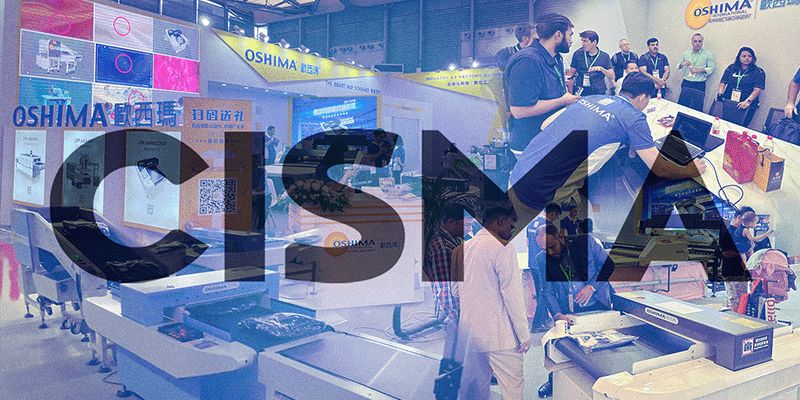
As the global manufacturing industry continues to recover from the pandemic period, CISMA 2023 returned to Shanghai and brought renewed attention to the sewing machinery industry.
As one of the leading exhibitions for sewing machinery and related accessories, CISMA has long been an important platform for observing the direction of garment manufacturing equipment.
From this year’s exhibition, it was clear that the sewing equipment industry continues to move toward automation, easier operation, and digital solutions.
However, the exhibition also raised several points worth reflecting on. Compared with some textile and smart manufacturing exhibitions, CISMA 2023 placed relatively limited emphasis on AI, sustainability, and deeper data integration.
This does not mean the industry is not progressing. Rather, it shows that the next stage of sewing machinery still has significant room for development.
Future sewing equipment cannot focus only on speed and labor saving. It also needs to connect with the wider garment production process, provide more transparent data, support real-time management, and help factories respond to sustainability and supply chain requirements.
Key Highlights from CISMA 2023
1. Automation Remains the Main Focus
CISMA 2023 showed that automation remains one of the most important directions in the sewing machinery industry.
Compared with previous years, however, the focus of automation is no longer only about whether a machine can complete an operation automatically.
The focus is increasingly on user experience and practical application.
Many machines now emphasize more intuitive interfaces, simpler settings, and lower training barriers for operators.
This is highly relevant to garment factories, where labor turnover, limited training time, and skill gaps are common challenges.
If a machine helps new operators learn faster and reduces dependence on a small group of experienced workers, it provides real management value.
The next step in automation is not only speed. It is making machines easier to use, maintain, and manage on the factory floor.
2. Digital Solutions Are Becoming More Important
Another clear trend at CISMA 2023 was that digitalization is gradually becoming a basic requirement rather than an optional feature.
In the past, sewing machines focused mainly on mechanical movement, stitch stability, and production speed.
Today, factories increasingly need to know how machines generate data, how the data is transferred, and whether it can be connected to management systems.
Machine running status, output, downtime reason, error messages, operation records, and maintenance history may all become important production management data.
This means the sewing machinery industry is moving from mechanical performance competition toward data capability competition.
For garment factories, the value of digitalization is not just having a screen on the machine. The value is helping managers understand production conditions faster and reduce manual records and information delays.
What Was Missing at the Exhibition?
1. AI Was Not a Strong Theme
AI has become a major topic in many industries. In textile and garment manufacturing, AI can be applied to defect inspection, color difference analysis, predictive maintenance, production scheduling, and data analysis.
However, from observations at CISMA 2023, AI did not appear to be a strong central theme.
This is worth noting.
The sewing machinery industry has traditionally focused on mechanical structure, operating speed, and durability.
But if the industry wants to move further into smart manufacturing, AI and data analysis will become increasingly important.
For example, sewing equipment that can analyze downtime reasons, stitch abnormalities, operator efficiency, or maintenance needs could help factories improve processes faster.
If AI can also connect with upstream fabric inspection, spreading, and cutting data, the entire garment production process becomes more complete.
AI still has significant potential in sewing machinery.
2. Sustainability Was Not Highly Visible
Another point worth reflecting on was the relatively limited visibility of sustainability solutions.
Global apparel brands are paying more attention to carbon reduction, energy efficiency, waste management, and supply chain transparency.
For garment factories, equipment is not only a production tool. It also affects energy use, labor allocation, material waste, and production efficiency.
Future sewing equipment should not only discuss output. It should also explain how it helps factories reduce waste, save energy, reduce rework, and provide better production records.
Sustainability is not a separate environmental topic. It is closely connected to equipment efficiency, quality stability, and cost control.
If the sewing machinery industry responds more actively to sustainability trends, it can increase its value in the global supply chain.
Three Future Directions for Sewing Equipment
1. From Automation to Digital Interaction
The future of sewing machinery will not stop at automated movement.
It will increasingly focus on digital interaction.
Machines should not only perform production tasks. They should also input data, output data, and communicate with other systems.
For example:
Operation parameters can be recorded.
Production data can be transferred.
Abnormal status can be reported in real time.
Maintenance history can be tracked.
Managers can monitor machine performance through dashboards.
When data can flow, factories can move from experience-based management toward data-based management.
2. AI Will Become a Major Upgrade Opportunity
Although AI was not strongly emphasized at CISMA 2023, this also shows that future opportunities remain open.
AI can help sewing equipment move from passive execution toward active support.
For example, machine data can be used to remind operators of possible abnormalities. Long-term maintenance data can support spare part replacement decisions. Production data can help supervisors identify bottlenecks.
AI does not need to be complicated at the beginning.
For factories, the most valuable AI applications are often those that solve clear problems, such as reducing downtime, improving quality, increasing efficiency, or lowering differences in human judgment.
3. Sustainability Will Influence Equipment Selection
In the future, garment factories will not evaluate machines only by price and output.
They will also consider whether equipment supports sustainability goals.
For example:
Can the machine reduce energy use?
Can it reduce material waste?
Can it lower rework rates?
Can it extend equipment life?
Can it provide production records and traceability?
Can it connect with factory digital management systems?
Sewing machinery suppliers that clearly communicate these values will be better positioned to meet the long-term needs of global brands and large manufacturers.
What CISMA 2023 Means for the Garment Equipment Industry
CISMA 2023 showed continued progress in automation and digitalization.
At the same time, it also reminded the industry that future development cannot remain only within the traditional logic of machinery.
As exhibitions such as TITAS and Texprocess increasingly discuss sustainability, AI, digital management, and integrated solutions, CISMA also needs to show more clearly how sewing equipment can respond to future supply chain needs.
This does not mean CISMA has lost its value.
It means the sewing machinery industry has an opportunity to move from being a machinery exhibition toward becoming a platform for smart manufacturing and sustainable production solutions.
Future sewing equipment suppliers that understand machinery, software, data, sustainability, and real factory workflows will have stronger advantages in the next stage of competition.
OSHIMA’s View: Equipment Upgrades Should Not Be Isolated
From the perspective of garment factories, sewing equipment is important, but it is only one part of the production flow.
If fabric quality is unstable, spreading data is unclear, or cutting variation is high, faster sewing equipment may still face rework and quality problems.
This is why garment factories increasingly need a complete workflow mindset.
From AI fabric inspection and smart spreading to automatic cutting, sewing, needle detection, packing, and data management, machines should gradually form clearer process connections.
OSHIMA has long focused on upgrading cutting room and quality control equipment, including AI fabric inspection, IoT smart spreading, automatic cutting, and needle detection systems.
These solutions help factories reduce quality risk before sewing and improve overall production visibility.
Future competition will not depend only on one machine being faster.
It will depend on whether the whole production line can become more stable, transparent, and efficient.
Conclusion
CISMA 2023 showed that the sewing machinery industry continues to move toward automation and digitalization.
User-friendly interfaces, machine data, and digital solutions are becoming increasingly important.
At the same time, the relatively limited visibility of AI and sustainability at the exhibition also reminds the industry that there is still significant room for growth.
Facing new demands in global garment manufacturing, the sewing machinery industry can no longer focus only on speed and labor reduction.
It must also consider how to help factories build better data flows, more stable quality management, and production models that respond to sustainability requirements.
CISMA 2023 was an important industry observation and a useful reminder.
The future of sewing equipment is not only automation. It is smarter, more transparent, and more connected to the changing needs of the global apparel supply chain.



Article Classification
Recent Articles
- Why Are Garment Factories Struggling to Recruit Young Workers?
- What Does the World Cup Have in Common with Apparel Sourcing?
- Why Garment Factories Need Process Stability in a Slower Market?
- Why Scale and Low Cost Are No Longer Enough for Bangladesh Apparel Manufacturing?
- Why Extreme Heat Is Becoming a New Risk for Apparel Supply Chains?