
 0
0



- Home
- Blog
- Industry Insights
- Why Is the Nonwoven Fabric Market Growing So Fast?
Why Is the Nonwoven Fabric Market Growing So Fast?
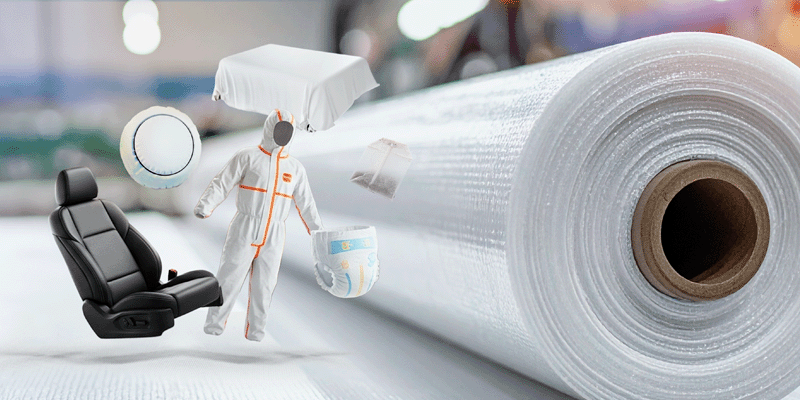
Nonwoven fabric, also called non-woven fabric or nonwoven textile, is a fabric-like material made without traditional spinning and weaving.
Instead of interlacing yarns, fibers are bonded into sheet form through mechanical, thermal, chemical, or other processes.
Because nonwoven fabric is fast to form, versatile, and cost-effective, it has expanded far beyond medical and hygiene products. Today, it is used in home goods, automotive materials, construction, agriculture, filtration, packaging, and industrial applications.
In recent years, global aging populations, higher hygiene awareness, growing medical protection needs, and expanding industrial applications have all supported the growth of the nonwoven fabric market.
Market reports differ in exact figures, but the overall direction is consistent: nonwoven fabrics remain a growing material market. Grand View Research estimated the global nonwoven fabrics market at USD 52.56 billion in 2023 and projected it to reach USD 75.74 billion by 2030. Allied Market Research reported a 2023 market value of USD 58.4 billion and a projected value of USD 104.1 billion by 2033.
What Is Nonwoven Fabric?
Nonwoven fabric is not made through traditional warp and weft weaving. Instead, fibers are bonded directly into a fabric-like sheet. Common raw materials include natural fibers and synthetic fibers, such as cotton, linen, rayon, polyester, polypropylene, and polyamide.
Nonwoven fabric can be adjusted for thickness, softness, breathability, absorbency, tensile strength, water resistance, and filtration performance. This flexibility allows it to support many different applications. That is one of the main reasons nonwoven fabric has expanded quickly into medical, hygiene, industrial, and consumer markets.
Three Key Drivers of Nonwoven Fabric Market Growth
1. Growth in Medical and Hygiene Demand
Medical and hygiene products are among the most important applications for nonwoven fabrics. Face masks, protective clothing, surgical gowns, surgical caps, medical bed sheets, diapers, sanitary pads, wet wipes, adult care products, and medical packaging all use large volumes of nonwoven material.
After the pandemic, global awareness of protection and hygiene increased. Even after peak pandemic demand, hospitals, care facilities, and personal hygiene markets continue to create stable demand.
Persistence Market Research notes that according to INDA and EDANA, wipes, medical, and hygiene applications were among the fastest-growing areas from 2013 to 2023, with global nonwoven production rising by about 5.4% annually.
Population aging further supports demand for adult incontinence products, healthcare materials, and hygiene products. This gives nonwovens a strong long-term market foundation.
2. Growth in Asia and Emerging Economies
Asia is one of the most important regions driving nonwoven growth. China, India, and Southeast Asia have large populations and growing demand in healthcare, hygiene, construction, automotive, packaging, and consumer products.
Toward Packaging’s 2026 market analysis stated that Asia Pacific held the largest regional share in 2025, at about 50%. IMARC also stated that Asia Pacific dominated the market in 2025 with a share of about 43%. This shows that nonwoven growth is not only coming from mature Western markets. It is also being driven by both manufacturing and consumption growth in Asia.
3. Expansion into Industrial and Functional Applications
Nonwoven fabric is no longer used only in medical and hygiene products. It is expanding into many industrial applications, including:
Automotive interiors
Airbags
Acoustic insulation
Construction waterproofing layers
Filtration materials
Agricultural covering fabric
Dust-free garments
Cleanroom products
Furniture and mattress materials
Packaging and protective materials
Nonwoven demand is supported by hygiene product consumption in India, China, and Southeast Asia, continued medical nonwoven demand, and wider use in construction and automotive applications. As applications expand, factories must handle more than just higher volume. They must also manage material weight, thickness, roll diameter, layer count, spreading method, and operator safety.
Three Advantages of Nonwoven Fabric
1. Flexible Material and Function Options
Nonwoven fabric can use natural fibers or synthetic fibers. Different materials can create different functions, such as absorbency, breathability, filtration, water resistance, softness, abrasion resistance, or high strength.
This material flexibility allows nonwoven fabric to be customized based on industry requirements.
Medical nonwovens focus on protection and hygiene. Diapers and hygiene products focus on absorption and skin comfort. Automotive materials focus on durability and formability. Construction materials focus on strength, separation, or waterproofing.
2. Fast Production
Because nonwoven fabric does not require full spinning and weaving processes, it can be produced quickly. This makes it suitable for high-volume manufacturing and faster product adjustment.
3. Cost Effectiveness
Raw material options are flexible and production processes are shorter, nonwoven fabrics are cost-effective in many applications. This is one reason they continue to expand in disposable products, filtration materials, packaging materials, agriculture, and industrial uses.
Main Applications of Nonwoven Fabric
1. Medical and Hygiene Products
Medical and hygiene products are the most representative markets for nonwoven fabric. Common products include masks, protective clothing, surgical gowns, medical bed sheets, diapers, sanitary pads, wet wipes, adult care products, and medical packaging. These products require protection, absorbency, breathability, and hygiene safety.
2. Daily Consumer Products
Nonwoven fabric is also widely used in daily life.
Examples include storage bags, shopping bags, slippers, hats, craft materials, tea bags, coffee filters, air purifier filters, bed sheets, curtains, pet training pads, and pet beds.
Stiff nonwoven fabric can be used for products that require shape stability. Water-resistant nonwoven fabric can be used for applications that need moisture or splash protection. These products have made nonwoven fabric a common material in everyday consumer life.
3. Automotive Industry
Automotive manufacturing is an important application area for nonwoven fabric. Car seats, headrests, floor mats, acoustic insulation, interior linings, airbags, and filtration materials may all use nonwoven or related composite materials. Automotive nonwovens usually need to balance durability, lightweight performance, formability, acoustic function, and stability.
4. Construction and Agriculture
In construction, nonwoven fabric can be used for waterproofing layers, separation layers, filter fabrics, liners, and protective materials.
In agriculture and horticulture, nonwoven fabric can be used as crop covering for warmth, insect protection, moisture retention, crop growth support, and seedling protection.
5. Industrial and Cleanroom Applications
Nonwoven fabric is also used in cleanroom garments, dust-free clothing, industrial wipes, filtration materials, and protective packaging. In electronics, medical, food, and high-end manufacturing environments, dust control, filtration, and hygiene management are critical. This creates more opportunities for functional nonwoven materials.
What Challenges Do Factories Face as Nonwoven Demand Grows?
1. Heavy and Thick Materials Are Hard to Handle
Many nonwoven rolls are large and heavy, especially industrial, medical, home textile, and automotive materials. If factories still rely on manual handling and spreading, production efficiency is limited and operator injury risk increases.
2. Multi-Roll Materials Need Stable Processing
Some nonwoven or industrial material production requires multiple rolls to be processed at the same time. If manual spreading or unstable equipment is used, layer shifting, poor edge alignment, and material waste may occur.
3. Production Speed Must Keep Up with Market Demand
When market demand increases, factories cannot rely only on more labor to manage front-end preparation. If spreading and material preparation cannot keep up, cutting, processing, and delivery will be affected.
4. Safety and Efficiency Must Improve Together
Heavy fabric handling places physical pressure on operators. If equipment design is not user-friendly, factories may face injury risks, lower efficiency, and higher turnover. This is why growth in the nonwoven industry also pushes factories to reconsider automation and equipment upgrades.
How OSHIMA J3 Multi-Roll Spreading Machine Supports Nonwoven Production
OSHIMA J3 multi-roll spreading machine is designed for heavy materials, multi-roll fabric handling, and high-volume production. It is suitable for nonwoven fabric, medical materials, home textiles, industrial fabric, and some automotive materials.
1. Supports Multi-Roll Fabric Spreading
J3 supports multi-roll fabric spreading and can handle up to 6 fabric rolls. This makes it suitable for high-output and multi-layer production conditions.
For nonwoven factories, multi-roll handling improves front-end preparation efficiency and reduces repeated manual handling and spreading time.
2. Handles Heavy Fabric Rolls
Nonwoven and industrial materials often have larger weight and roll diameter. J3 is designed for heavy roll handling and high-volume material preparation. This is especially important for medical nonwovens, home textiles, automotive materials, and large industrial fabrics.
3. Low Fabric Loading Design Improves Operator Safety
Handling heavy rolls can place stress on workers’ backs, shoulders, and hands. J3’s low loading design makes roll placement easier and reduces the need for high lifting.
4. Supports High-Volume Front-End Preparation
As nonwoven demand increases, front-end spreading efficiency directly affects overall production capacity.
J3 helps factories speed up spreading and material preparation, allowing downstream cutting or processing to run more smoothly.
Conclusion
Nonwoven fabric offers material flexibility, fast production, functional customization, and cost effectiveness. It has expanded from medical and hygiene products into daily consumer goods, automotive, construction, agriculture, cleanroom, and industrial applications. As global hygiene awareness rises, populations age, Asian markets expand, and industrial applications grow, the nonwoven market still has long-term growth potential.
However, market growth also means manufacturers need higher efficiency. For factories handling heavy, multi-roll, and high-volume nonwoven production, front-end spreading and material preparation can no longer depend entirely on manual work.
OSHIMA J3 multi-roll spreading machine provides a practical solution by helping factories improve nonwoven spreading efficiency, reduce material waste, improve operator safety, and support mass production needs.
If your factory processes nonwoven fabric, medical materials, home textiles, automotive materials, or other heavy industrial fabrics, J3 can be an important equipment option for improving front-end process efficiency.



Article Classification
Recent Articles
- Why Are Garment Factories Struggling to Recruit Young Workers?
- What Does the World Cup Have in Common with Apparel Sourcing?
- Why Garment Factories Need Process Stability in a Slower Market?
- Why Scale and Low Cost Are No Longer Enough for Bangladesh Apparel Manufacturing?
- Why Extreme Heat Is Becoming a New Risk for Apparel Supply Chains?