
 0
0



- Home
- Blog
- Industry Insights
- The Apparel Supply Chain Has Changed. Have Factories?
The Apparel Supply Chain Has Changed. Have Factories?
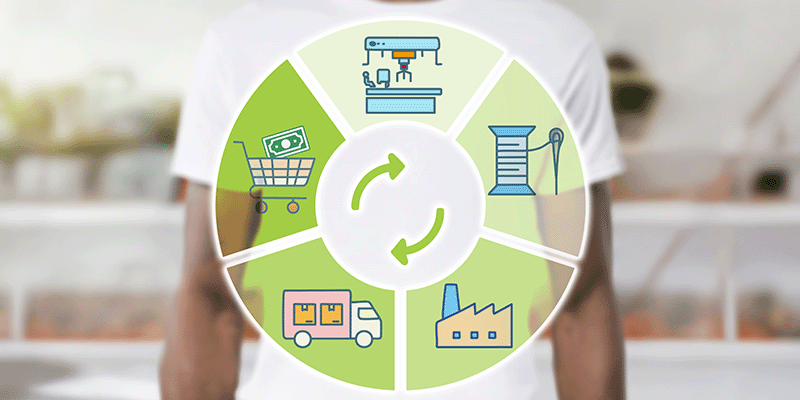
Apparel supply chains are no longer as predictable as they used to be. Orders still come in, but the timing, quantity, and delivery pressure can change quickly. Brands are more cautious with inventory, demand moves faster, and factories are dealing with costs that are harder to control, from fabric and labor to energy, logistics, and daily production overhead.
In the past, many factories mainly had to answer two questions: whether they could deliver on time and whether they could keep prices competitive. Those questions still matter, but they are no longer enough. Buyers now also want to know whether the factory can adjust when plans change, whether production data is available, whether sustainability requirements can be supported, and whether the process can be traced clearly.
This is the real pressure for apparel and textile factories now. The market outside the factory is less stable, but the factory floor still needs to stay under control. Orders can change quickly, but quality, delivery, and efficiency cannot break down every time the plan changes.
Factories can no longer rely only on past experience with large orders or compete mainly by lowering prices. The next stage of competitiveness will depend more on stable shop-floor processes, flexible operations, usable data, and the ability to meet brand requirements around transparency and sustainability. These may sound like big supply chain topics, but most of the work begins much closer to the production floor.
Order Changes Are Putting More Pressure on Production Planning
Many garment factories used to plan around large and relatively stable orders. When the style, quantity, and delivery date were clear, it was easier to arrange workers, machines, fabric, and cutting schedules. Production was still busy, but at least the rhythm was easier to predict.
That rhythm has changed. Brands may delay orders, reduce quantities, add new styles, or adjust delivery plans based on actual sales. For factories, this makes capacity planning much more difficult. If the schedule is packed too tightly, sudden changes are hard to absorb. If too much capacity is left open, the factory still has to pay for labor, machines, and overhead every day.
When demand rises quickly, the factory needs to respond without losing quality. When demand drops, idle lines, higher labor cost per unit, and inventory pressure can appear very quickly. A production model built only for large batches and fixed schedules becomes easier to disrupt in this kind of market.
Apparel supply chains now need more than low cost. Factories need a clearer view of what is happening on the shop floor: available capacity, machine status, fabric readiness, cutting progress, and where quality problems may start to appear. If this information still depends on phone calls, paper reports, or someone walking around the factory to ask, the response will always be slower than the market demands.
When orders move faster, visibility is not just for management reports. It helps the factory make better decisions before small changes become shipment pressure.
Hidden Process Costs Are Becoming Harder to Ignore
When costs rise, the first reaction is often to push purchase prices lower. It is a familiar response, and in some cases it may help for a short time. For apparel factories, however, the bigger cost problem is often hidden inside daily operations.
Labor, energy, materials, logistics, maintenance, and management costs are all harder to control. At the same time, brands and markets may not accept higher prices right away. If a factory tries to protect its margin only by squeezing suppliers or lowering purchase costs, the improvement is usually limited. It may also create new problems later in quality, reliability, or supplier cooperation.
Many costs that reduce profit do not show clearly on a quotation. Low machine efficiency, too many manual steps, fabric waste, unstable cut parts, rework, waiting time, and repeated quality issues happen inside the factory every day. At the end of the month, the issue may not be one expensive material, but a process that is not stable enough.
Cost control should not only ask whether a machine is expensive or whether the purchase price is low. A more useful way to look at cost is whether a process reduces rework, cuts mistakes, saves fabric, shortens waiting time, and makes work more stable for operators. Improvements that answer these questions are usually closer to long-term cost management than another round of price negotiation.
Sustainability Is Moving from Brand Message to Factory Requirement
Sustainability is no longer just a brand message. It is becoming part of supply chain management.
Large brands are looking more closely at material sources, emissions, energy use, labor conditions, and supplier transparency. For factories, future customers may not only ask whether the factory can make the product, how much it costs, and when it can ship. They may also ask whether material sources can be verified, whether production records are available, whether quality data can be traced, and whether machine or process data can support audits.
These requirements eventually return to daily factory management. Sustainability is not only about preparing one extra document after the customer asks for it. In many cases, buyers want to see whether the factory is already recording the right information during production.
If fabric records are unclear, quality checks depend mostly on verbal updates, or machine status cannot be tracked, the factory will spend a lot of time collecting information after the fact. Sometimes the data was never recorded properly in the first place, so the team can only rely on memory, manual notes, or reports stored in folders that are difficult to use.
That gap will become more important. Future competitiveness will not come only from production ability. Factories also need to show how production was managed. Data transparency is becoming part of supplier evaluation, not just an internal management issue.
Labor Shortage Is Also a Shop-Floor Stability Issue
Many manufacturing regions are facing recruitment difficulty and worker turnover. Apparel production still depends heavily on shop-floor work, but younger workers may be less willing to enter repetitive, labor-intensive, or physically demanding processes.
This is not only a headcount problem. When it is hard to find workers, factories that depend heavily on manual work will have a harder time keeping production stable. Fabric inspection, spreading, cutting, quality checks, handling, and production data recording can all be affected when there are not enough workers or when skill levels vary from person to person.
When people talk about automation, they often think about reducing labor first. In garment factories, however, one of the main values of automation is stability. It helps standardize repetitive, error-prone, and skill-based processes, so workers do not spend the whole day fixing the same problems. Instead, they can focus more on monitoring, decision-making, and improvement.
Machines cannot solve every labor issue. But when machines make work more stable, data clearer, and training easier, the production floor becomes easier to manage. For many factories, this is more important than simply reducing the number of workers.
Stable Front-End Processes Make Flexible Production Possible
Supply chain improvement is not only about buying one machine or cutting one cost. Factories are being asked to keep production stable while also staying flexible enough to adjust when orders, fabrics, styles, or delivery schedules change.
Stability means quality, delivery, equipment, workflow, and data remain consistent. Flexibility means the factory can still adjust when the plan changes. These two ideas may seem to pull in different directions, but this is how the factory floor works now. Too much rigidity makes it hard to respond. Too much flexibility without structure creates confusion.
A strong factory is not one that never changes. It is one that can change without losing control.
This is why front-end processes such as fabric inspection, spreading, cutting preparation, and production data management are becoming more important. If the front end is unstable, sewing, pressing, packing, and shipping will all feel the impact later. Fabric defects found too late may lead to recutting. Unstable spreading can affect cut-part quality. Unclear cutting preparation can make the schedule messy before sewing even begins.
When the factory understands fabric condition, machine status, and cutting preparation earlier, later production is less likely to be interrupted by surprises.
Automation Should Start Where Rework and Waiting Happen Most
Many factories think about automation when they talk about upgrading, but automation does not need to cover the whole factory at once. A more practical starting point is to look at where waiting, rework, quality problems, and manual judgment happen most often.
The cutting room is a good example. Fabric inspection, spreading, and cutting are all front-end processes that affect everything after them. If fabric defects are found too late, the factory may need to recut. If spreading is unstable, cut-part quality can drop. If cutting relies too heavily on manual work, output and accuracy can vary from operator to operator.
AI fabric inspection can help identify defects more consistently and convert defect records into useful information for cutting and quality management. Automatic spreading machines make fabric laying more stable and reduce the need for manual adjustment. Automatic cutting machines produce more consistent cut parts, reduce cutting errors, and help control material use.
These machines are not there just to make the factory look more advanced. The real goal is to make troublesome processes easier to control. The more unstable the supply chain becomes, the less room factories have to leave their own internal processes unstable.
Usable Data Matters More Than Building a Full Platform Immediately
When factories hear terms like IoT, AI, or smart factory, the first reaction is often hesitation. The concern is understandable. A full digital platform can sound too big, too expensive, or too difficult to introduce all at once.
For most garment factories, the first step does not need to be a complete smart factory project. A more realistic starting point is to record, organize, and use important information from key processes.
In many factories, machines still operate as separate islands. The fabric inspection machine has its own data. The spreading machine has its own records. The cutting machine has its own files. Needle detection, scanning, sorting, and packing may each have separate records as well. If this information is scattered across machines, paper reports, and workers’ experience, managers cannot easily see the full production picture.
The factory may not actually lack data. The problem is that the data is not easy to use.
When fabric inspection, spreading, cutting, needle detection, scanning, and packing processes can leave usable records, factories can better understand production progress, machine status, abnormal conditions, and quality results. This information helps managers adjust production earlier and also supports customer requirements for transparency and traceability.
Data integration can start from key equipment. A factory may begin by making fabric inspection, spreading, or cutting data clearer, then add needle detection, scanning, sorting, and warehouse management step by step. This is often more realistic than building a full platform from the beginning. A complete system may sound impressive, but what matters is whether the factory can use the information every day.
Global Brands Are Raising Expectations for Speed and Transparency
Large brands are taking different approaches, but the direction is becoming clear. Apparel supply chains are moving away from competing only on price and toward transparency, speed, coordination, and long-term adaptability.
H&M continues to disclose supply chain information, showing how major brands value supplier transparency. Nike reports progress related to operational and supply chain emissions, making environmental performance more concrete in brand management. Inditex, the parent company of Zara, has long emphasized an integrated value chain and fast market response, showing that competitiveness also comes from coordination and speed.
Small and medium factories do not need to copy global brands directly, but they should read the direction carefully. Future buyers will care more about whether factories can deliver consistently, adjust quickly, provide clear data, and meet higher expectations for sustainability and transparency.
If a factory uses low price as its main advantage, business will become harder. Customers are not only looking for cheaper production. They are looking for suppliers who can handle change with them.
Daily Factory Processes Are Where Supply Chain Improvement Begins
In an uncertain market, garment factories do not need another slogan about digital transformation. They need to know which part of the operation should improve first.
If fabric defects are found too late, the factory can start by reviewing fabric inspection and quality records. If spreading and cutting are unstable, the cutting room process should be reviewed first. If managers cannot see machine status clearly, key equipment data can be the starting point. If labor is insufficient, repetitive and error-prone processes should be standardized earlier. If customer audit data is difficult to prepare, production and quality records should be made easier to search and use.
These improvements may not sound fancy, but they are practical. Supply chain problems always come back to the production floor. The real questions are where the process gets stuck, which data is unclear, which step causes rework, and which problem happens so often that everyone has already gotten used to it.
OSHIMA’s equipment direction starts from the front-end and quality management processes in garment factories, including AI fabric inspection, smart spreading, automatic cutting, quality inspection, and data applications. The goal is not to force every factory into one fixed model. It is to help factories build a more stable, flexible, and manageable production process based on their products, order types, shop-floor conditions, and future needs.
Supply chain improvement does not need to happen all at once, and it should not be reduced to technical terms. What matters is finding a practical way to upgrade step by step, based on the factory’s current resources, people, equipment, and customer requirements.
Market uncertainty will not disappear soon. But factories can start by making their own operations clearer, more stable, and easier to adjust. In the future, the strongest factories may not be the ones with the most machines. They may be the ones that can produce steadily, adjust quickly, understand their data, and keep improving the processes that matter most.


Article Classification
Recent Articles
- Why Are Garment Factories Struggling to Recruit Young Workers?
- What Does the World Cup Have in Common with Apparel Sourcing?
- Why Garment Factories Need Process Stability in a Slower Market?
- Why Scale and Low Cost Are No Longer Enough for Bangladesh Apparel Manufacturing?
- Why Extreme Heat Is Becoming a New Risk for Apparel Supply Chains?