
 0
0



- Home
- Blog
- Industry Insights
- Why Scale and Low Cost Are No Longer Enough for Bangladesh Apparel Manufacturing?
Why Scale and Low Cost Are No Longer Enough for Bangladesh Apparel Manufacturing?
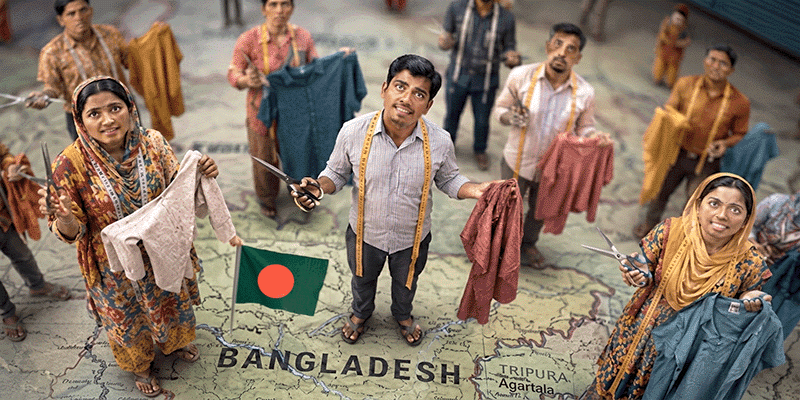
For years, Bangladesh has been a key player in the global apparel supply chain. Many brands have chosen the country for its large production capacity, competitive prices, and strong track record in exports. Factories here are skilled at making T-shirts, denim, knitwear, sweaters, and other basic clothing. When brands needed reliable, high-volume production, Bangladesh was often their first choice.
However, recent developments show a different side. The industry remains large, but its challenges are now more visible.
Bangladesh has not lost its place in the apparel sourcing market. It still has experienced factories, a large production base, and an important role in global garment making. What has changed is the market itself. The old strengths of high volume, low prices, and large basic-apparel programs are now being tested by tougher conditions. Orders are less steady, prices are tighter, costs keep rising, and buyers are paying closer attention to compliance, traceability, and production management.
For factories, upgrading is more than just buying new equipment or increasing capacity. It often begins with a closer look at the production floor. Where does waste occur? Which quality problems are found too late? Which records are created but never used to improve production? These steps may not seem as exciting as getting a big order, but in a tougher market, they can help protect a factory’s margin.
Low Cost May Open the Door, But It Is No Longer Enough
Bangladesh’s apparel industry grew thanks to its large workforce and lower wages. This was a big advantage at first, and many brands chose Bangladesh for its low costs. But viewing Bangladesh only as a “cheap” sourcing base overlooks the bigger picture.
A country is not a reliable apparel producer just because it has people who can sew. It also needs enough factories, a steady workforce, export experience, managers who understand buyers, a supply chain that supports production, and experience with audits and compliance. It must also be able to repeat orders every season. Bangladesh developed these strengths over time, which is why its industry is so large today.
When the market is strong, having a large capacity helps factories. It gives buyers confidence, allows factories to take more orders, and makes the country more appealing to big brands. But when the market slows down, that same scale becomes a challenge. Production lines may not be full, but wages, electricity, bank interest, compliance costs, and management overhead still have to be paid.
Bangladesh’s garment export earnings dropped by 3.41% this fiscal year, average unit prices fell by 1.55%, and back-to-back L/C openings for raw material imports went down by 7.93%. About 400 factories have reportedly closed in the last three years. These numbers show that the pressure is not just a short-term issue. Factories are feeling it in capacity planning, cost control, and cash flow. In the past, big orders helped cover fixed costs. Now, with unstable orders, the whole system feels more exposed.
Having Orders Does Not Always Mean the Business Is Healthy
No factory wants to lose orders. Empty production lines, unused capacity, worker scheduling, and fixed costs become immediate problems that management notices right away.
But low-priced orders can be even harder to manage. From the outside, the factory may look busy. Lines are running, containers are shipping, and buyers keep placing orders. But after all the work, there may be very little margin left. It can feel like the factory is busy for nothing. This pressure may not show up right away, but over time it hurts both profit and financial health.
From 2015 to 2025, the nominal unit price of Bangladeshi apparel shipped to the U.S. went up by only about 6.4%, while U.S. inflation rose by about 35.8%. In real terms, the price Bangladesh received dropped by around 22%. Factories now pay today’s wages, electricity, financing, compliance, and material costs, but their revenue has not kept up. This leaves much less room for mistakes on the factory floor.
In the past, some fabric waste, a few reworks, or an extra round of overtime to fix a shipment were seen as normal in factory life. With thinner margins, these small issues now directly add to costs. Buyer pricing still needs to be negotiated, and policy support still matters. But factories cannot ignore internal losses. Which defects keep coming back each month? Which problems are only found after cutting, sewing, or final inspection? Which reports are made but never used by the next team? If these issues are not fixed, more orders may just make the factory busier, not stronger.
Policy Can Reduce Pressure, But the Factory Floor Still Needs Work
Bangladesh’s garment industry is asking for policy support because factories have been carrying cost pressure for a long time. Export source tax, deductions on cash incentives, subcontracting tax, duties on imported materials, and corporate tax all affect a factory's competitiveness. Recent proposals include reducing the export source tax from 1% to 0.65% and keeping it stable for five years, removing double source tax on subcontracting value, maintaining corporate tax rates for garment and green factories, and withdrawing additional import duties on key man-made fibre inputs such as polyester staple fibre, PVC resin, and PET resin.
These policy issues matter. For a country that relies on garment exports, every extra cost makes it harder for factories to operate. But policy support only gives factories some breathing room. It does not automatically fix weak processes inside the factory.
If fabric waste is high, a lower tax rate will not solve the problem. If defects are found too late, financial relief will not remove the risk to shipments. If fabric inspection reports are completed and filed away but never used for cutting or production, they remain documents instead of becoming management tools.
Some problems need government support. Others require negotiation with buyers. Many are factory-floor issues that factories must handle themselves. Bangladesh needs a fairer cost environment, but factories also need better control over quality, waste, records, and production decisions. Better outside conditions can buy time, but if process gaps remain, the same pressure will return.
Compliance Is Moving Closer to Production
Bangladesh is not only facing price pressure. Issues like forced labour, material origin, subcontracting, and supply chain transparency once seemed like compliance or paperwork matters. Now, they are much more connected to actual production.
In trade measures about forced labor and supply chain transparency, Bangladesh is among the countries that could face an extra 10% duty. For factories, this is not just about tariffs. It also means buyers will likely ask more detailed questions. Where did the fabric come from? Was subcontracting used? Where are the production records? Can inspection records be matched to batches? Can shipment documents be traced back to the actual production process?
Many factories used to see traceability as something to prepare before an audit. When information was needed, each department would help fill in the gaps. This approach is harder now that buyers want more detail. Factories need to know which fabric roll was used for each shipment, who supplied it, when it was inspected, what defects were found, where it was cut, which line produced it, and what final inspection or needle-detection results were recorded. This does not have to start as a big, complex system, but records need to be clearer, and information cannot stay scattered among different people.
In the past, buyers mostly cared about on-time shipment. Now, they also want to know how the goods were made. A factory that can clearly show its process and provide reliable records will be in a better position than one that only competes on price and capacity.
Margin Is Not Decided Only on the Cost Sheet
When people talk about factory margin, they usually look at buyer price, fabric cost, wages, manufacturing cost, and overhead. These are all important. But some margin is not lost on the cost sheet. It slowly disappears inside the process.
For example, a fabric defect might be found during inspection, but the information does not always reach the cutting team. There may be a defect map, but it does not actually change how cutting is done. One fabric roll might have repeated problems, but production only notices after sewing has started. Once the fabric is cut, it is hard to recover the cost. Replacing panels means losing fabric and time. Finding defects after sewing increases rework costs. If problems are only found at final inspection, it often means working overtime. If the buyer finds the issue first, it can lead to claims, lost trust, and fewer future orders.
Final inspection is important, but it should not be the first time serious problems are found. By then, fabric, labor, and production time have already been used. For Bangladeshi factories facing price pressure, quality control needs to happen earlier. Fabric inspection, spreading, cutting, sewing, finishing, needle detection, packing, and shipment records should not work separately. Quality information needs to follow the product, so the factory can act before losses grow.
Moving quality control earlier is not just about adding more inspections. The goal is to make early information useful for later decisions. If fabric inspection finds a problem but the cutting team never hears about it, much of the value is lost. If final inspection finds an issue but the lesson never goes back to earlier steps, the same problem will keep happening.
Before Upgrading, Find the Blind Spots
When factories talk about upgrading, many first think of digital transformation or installing a new system. These are not bad ideas. But often, factories find out after buying equipment that it is hard to integrate, or after bringing in a system that staff cannot use in their daily work. In the end, the investment can become another kind of waste. Sometimes the factory blames the equipment supplier, but the real problem may be that it never clearly defined what it wanted to fix.
Factories should first check where rework happens most and where quality problems get stuck. Was the issue already seen during fabric inspection, or only found after cutting, sewing, finishing, or final inspection? Once the problem was found, did the information reach the next department, or did it stay in a report, a message, or just in someone’s head?
These questions may seem simple, but they reveal a lot about how a factory really works. Many factories are not short on effort. The inspection team checks, the cutting team adjusts, production moves quickly, and final inspection tries to protect shipment quality. The real problem is often in information gaps. What the front end knows does not always reach the back end, and what the back end finds does not always get back to the front for improvement.
That is why equipment replacement or system implementation should not be the first step. First, identify where the loss begins, then decide which part of the process needs improvement. For one factory, the answer may be better fabric inspection. For another, it may be clearer defect marking. Some may need RFID or better batch records. Others may simply need to connect fabric inspection information properly with cutting. Different factories will need different solutions.
Improvement Does Not Have to Wait for the Market to Recover
Bangladeshi factories do not have to wait for the whole market to recover before making improvements. A more practical way is to start with losses that are already clear.
The link between fabric inspection and cutting is a good place to start. Many factories inspect fabric, but the information does not always affect cutting. If inspection only leads to a report, its value is limited. Defect information should help cutting avoid problem areas, reduce panel replacement, lower rework, and show management which fabrics cause the most loss. Only then does the information really become part of the process.
Traceability does not have to start with a full-factory rollout. A factory can begin with one buyer with higher requirements, or with one high-volume product. Fabric roll number, supplier, inspection result, defect location, cutting batch, production line, final inspection, needle detection, and shipment record can all be connected for one clear path first. Once that works, it can be expanded to other products or customers.
Rework should not be seen only as a quality problem. A defect rate alone does not show the full cost. Management needs to know how many labor hours rework takes, how much fabric is wasted, how delivery is affected, how much overtime is needed, and how much buyer claim risk goes up. Once these costs are clear, the question is not just whether to buy equipment. It becomes whether leaving the loss alone is already more expensive than fixing it.
Automation should follow the same logic. If fabric defects are the main problem, improve inspection and defect marking first. If cutting cannot effectively use inspection data, strengthen the link between inspection and cutting. If buyers want better shipment proof, RFID, needle detection records, or batch tracking may be needed. If managers cannot see where delays happen, collecting production data and improving process visibility may be the best place to start.
Automation is not just about looking modern. It should help remove repeated costs and risks. If the goal is not clear from the start, even a good system can end up as another tool that no one really uses.
The Next Stage Is About Whether Factories Can Stay in Control
Bangladesh will not lose its place in the apparel industry because of these current challenges. It still has scale, skilled workers, export experience, strong supply chains, and years of production knowledge. These strengths will not go away soon.
But the next stage will not be decided just by who can offer the lowest price. Buyers want more proof even as prices stay tight. Factories need better systems to protect themselves. Compliance rules are getting more detailed, so documents and traceability cannot be prepared only before audits. They need to be part of daily production. If factories continue to rely solely on low-priced orders, they will become increasingly passive over time.
The most competitive factories will be those that understand their own processes best. They need to know where fabric is wasted, which defects keep coming back, whether inspection information reaches cutting and production, and which records are strong enough to answer buyer questions. They also need to know where automation can truly cut costs, instead of becoming another unused system.
What Bangladesh is facing now is similar to what China and Vietnam have already experienced. These countries first built their position with scale, low costs, and export ability. Later, they had to focus on efficiency, management, compliance, and upgrading. Bangladesh may not be at that turning point yet, but the direction is clear.
The next chapter for Bangladesh’s apparel industry will not just be about who can take more orders. It will be about which factories can better manage their operations, run more efficiently, and give buyers greater confidence. The sooner factories understand this shift, the better their chances are of staying ready, or even becoming stronger, as supply chains continue to change.



Article Classification
Recent Articles
- Why Are Garment Factories Struggling to Recruit Young Workers?
- What Does the World Cup Have in Common with Apparel Sourcing?
- Why Garment Factories Need Process Stability in a Slower Market?
- Why Scale and Low Cost Are No Longer Enough for Bangladesh Apparel Manufacturing?
- Why Extreme Heat Is Becoming a New Risk for Apparel Supply Chains?