
 0
0



- Home
- Blog
- Industry Insights
- Why Garment Factories Need Process Stability in a Slower Market?
Why Garment Factories Need Process Stability in a Slower Market?
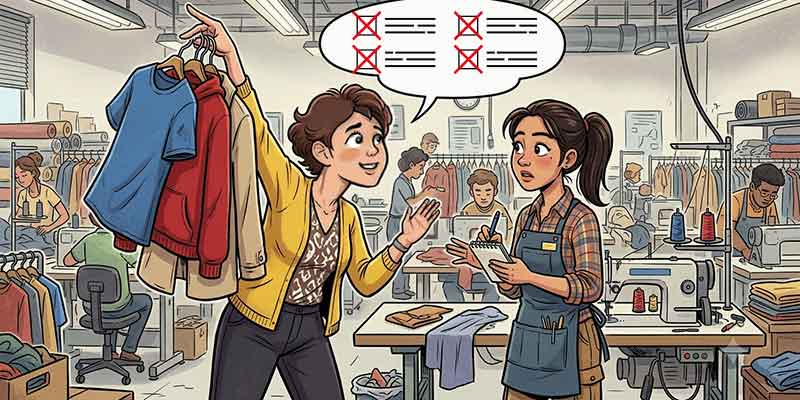
In recent years, many garment factories have faced similar challenges. Winning orders is still tough, and customer expectations remain high.
Factories must keep prices competitive, deliver on time, and maintain quality. There are more styles, smaller orders, and frequent last-minute changes. Brands may order more cautiously, but their expectations for suppliers remain just as high.
This is not just one factory’s experience. It reflects the challenges across the entire fashion industry.
According to McKinsey and BoF’s State of Fashion 2026 report, the global fashion industry is expected to grow at only low single digits. Consumers are more careful and focused on value. For brands, slower growth means that every cost, inventory mistake, discount, return, and delivery delay has a bigger impact.
When brands feel more pressure, it often gets passed down to their suppliers.
For garment factories, it’s not just about whether customers want lower prices. The more practical question is whether brands will expect better prices, faster responses, steadier quality, and fewer mistakes all at once.
In a slow market, factories can’t just wait for orders to return. They need to find out where they are losing time, fabric, labor, and profit within their own operations.
When Brand Growth Slows, Factory Pressure Often Remains High
When the market grows quickly, brands are more willing to place orders. They can better handle cost changes, forecast errors, or small supply chain issues. As long as sales are strong, some production problems may go unnoticed for a while.
A slow-growth market is different.
Brands manage inventory more carefully, keep a closer eye on sourcing costs, and worry more about demand forecasts and markdowns. Instead of placing big orders, they may buy in smaller batches or adjust orders more often.
For factories, this makes work harder. They face shorter response times, more style changes, tighter delivery schedules, and less room for mistakes.
Relying on large order volumes to spread costs is no longer as effective. Future profits will depend not just on order numbers, but also on how well a factory can cut waste, reduce waiting, avoid rework, and keep quality steady.
“Improving Efficiency” Needs Real Action
Most factories know they need to be more efficient. The real challenge is figuring out where efficiency is being lost.
Some factories have enough workers, but still lose time waiting. If fabric isn’t ready, later steps are delayed. If cutting is late, sewing lines don’t get pieces on time. When quality problems are found too late, the factory must rework, rush, or make last-minute changes before shipping.
Some factories have enough machines, but they aren’t used consistently, or the workflow hasn’t changed. Equipment may be there, but production information is scattered. Data might be recorded, but it isn’t used for daily decisions. The floor looks busy, but too much time goes into searching for fabric, checking status, fixing mistakes, and catching up after delays.
For some factories, the main problem isn’t output, but unstable quality. Fabric issues aren’t recorded early, and defects show up during cutting or sewing. Final inspection then becomes the stage where earlier mistakes have to be fixed.
Simply repeating “improve efficiency” won’t solve these problems. Real progress starts by tackling the issues that happen most often, cause the biggest delays, and lead to the highest rework costs.
Start by Checking the Cutting Room
If a garment factory wants to get more efficient, the cutting room is often the best place to begin.
This is because the cutting room is at the start of production. If it’s unstable, it’s hard to keep later steps steady.
Steps like fabric inspection, relaxing, spreading, cutting, and handling cut pieces all impact sewing efficiency. If fabric defects aren’t found early, problems can show up after cutting and require replacements, recutting, or schedule changes. Unstable spreading affects layer control and cutting accuracy. If cutting isn’t accurate, sewing lines spend more time making adjustments.
In a slow market, brands watch costs closely. Factories can’t afford to let fabric waste and rework become routine. Automatic spreading, cutting, and AI fabric inspection aren’t just for show, they help stabilize the early stages, making it easier to keep later processes steady.
For many factories, efficiency does not begin on the sewing line. It begins when fabric first enters the production process.
The Later You Find a Quality Problem, the More It Costs
In a low-growth market, brands focus more closely on cost. But cost does not come only from labor and materials. It also comes from mistakes.
If a quality issue is found during fabric inspection, the factory still has options. It can mark the defect, avoid that area, adjust the cutting plan, or talk to the customer before the problem grows.
If the problem is found during sewing, costs are already higher. It can affect cut pieces, labor, schedules, and line efficiency. If it’s found just before shipping, costs go up even more. The factory might need to reinspect, rework, delay shipment, or deal with complaints and returns.
That’s why factories shouldn’t leave all quality control until the end. Tools like AI fabric inspection, in-process checks, needle detection, barcode scanning, and pre-shipment QC help catch problems earlier. The sooner a problem is found, the easier and cheaper it is to fix.
When brands want more stable quality, factories can’t rely only on final inspection. It’s better to start tracking quality earlier, before small issues become bigger problems.
Small Batches and Urgent Orders Expose Internal Confusion
When consumers are more cautious, brands avoid holding too much inventory. This leads to more small-batch orders, more styles, split deliveries, and last-minute changes.
For brands, this reduces inventory risk. For factories, it increases management difficulty.
Small batches are not always simpler. More styles mean more changeovers. The factory floor becomes more exposed to confirmation mistakes, material waiting, cut-piece mix-ups, packing label errors, and schedule changes.
If factory workflows still depend heavily on verbal confirmation, paper records, and manual tracking, the floor can become disorganized as orders become more complex. At this point, the factory may not only need more capacity. It needs clearer processes.
Which fabric roll has passed inspection? Which order is being spread? Which cut pieces are finished? Which process is delayed? Which batch is ready for shipment?
When this information can be seen earlier, managers do not need to wait until small issues become delivery problems before they respond.
Data Is Not Just a Report for Management
When factories hear the word digitalization, many think it means more reports. But useful data is not about giving management more numbers. It is about helping the production floor make fewer guesses.
Machine status data can show which equipment is running, which is stopped, and when output drops. Production data can compare actual progress with the schedule. Abnormal records can show whether the same issue keeps happening in the same process. Fabric use data can help the factory understand material loss more clearly.
If this information stays on paper or is scattered across different people, managers cannot respond quickly. By the time the monthly report is completed, the problem has already happened.
In a low-growth market, factories need to know problems earlier, not only review results later. This is the value of smart equipment and digital dashboards. They are not meant to make the factory look high-tech. They help make shop floor conditions visible sooner.
Automation Doesn't Have to Replace People
When factories think about automation, they often worry about high costs, complexity, or replacing workers. A better approach is to start with the most repetitive, physically demanding, error-prone, or delay-prone processes.
Spreading is repetitive and needs consistency. Automatic spreading reduces manual variation and makes progress easier to track. Cutting needs accuracy and speed. Automatic cutting lowers errors and manual work. Fabric inspection relies on human skill and focus, but AI fabric inspection helps create more consistent defect records.
These machines aren’t meant to make factories fully automated. They reduce repetitive, tiring, and error-prone work, so people can focus on tasks that need judgment, like handling problems, confirming quality, coordinating schedules, and managing equipment.
Where Should Factories Start Improving?
If a factory isn’t sure where to start, it can focus on four key areas.
First, check for waste. Fabric, time, waiting, and rework waste all cut into profits. If a factory doesn’t know where waste happens most, efficiency improvement can become just a slogan.
Second, focus on the front end. If fabric inspection, spreading, and cutting aren’t stable, later steps will suffer. Many delivery problems start early and build up over time.
Third, look at data. A factory doesn’t need a full system right away, but should at least track output, downtime, problems, fabric use, and schedule gaps.
Fourth, focus on quality. The later a problem is found, the more expensive it is to fix. Quality management should start early, not just at the final inspection.
These changes may not seem dramatic, but they decide whether a factory can protect profits, meet delivery goals, and keep customer trust in a slow market.
Upgrading Processes, Not Just Equipment
OSHIMA has worked with the garment industry for many years and understands the real pressures factories face with cost, delivery, and quality.
In a slow-growth market, factories don’t always need to start with a big system. They can begin with the process that most affects efficiency.
AI fabric inspection helps factories find defects earlier. Automatic and smart spreading equipment improves spreading stability and tracks progress and fabric use. Automatic cutting supports accuracy and efficiency at the front end. Needle detection, barcode scanning, sorting, and pre-shipment QC equipment help reduce errors before shipping.
The purpose of these machines is not simply to replace labor. It is to help factories stabilize workflows, keep useful records, and see problems earlier.
When market growth slows, the most competitive factories aren’t always the biggest, cheapest, or most automated. They are the ones that finish orders with less waste, steady quality, and clear shop-floor visibility.
Low growth doesn’t mean there are no opportunities. It means factories can’t just wait for orders while doing things the old way. The most competitive factories will be those that improve efficiency, quality, and process stability before the pressure gets worse.


Article Classification
Recent Articles
- Why Are Garment Factories Struggling to Recruit Young Workers?
- What Does the World Cup Have in Common with Apparel Sourcing?
- Why Garment Factories Need Process Stability in a Slower Market?
- Why Scale and Low Cost Are No Longer Enough for Bangladesh Apparel Manufacturing?
- Why Extreme Heat Is Becoming a New Risk for Apparel Supply Chains?