
 0
0



- Home
- Blog
- Industry Insights
- Beyond Apparel: Garment Machines in Automotive, Medical, and Tech Textiles
Beyond Apparel: Garment Machines in Automotive, Medical, and Tech Textiles
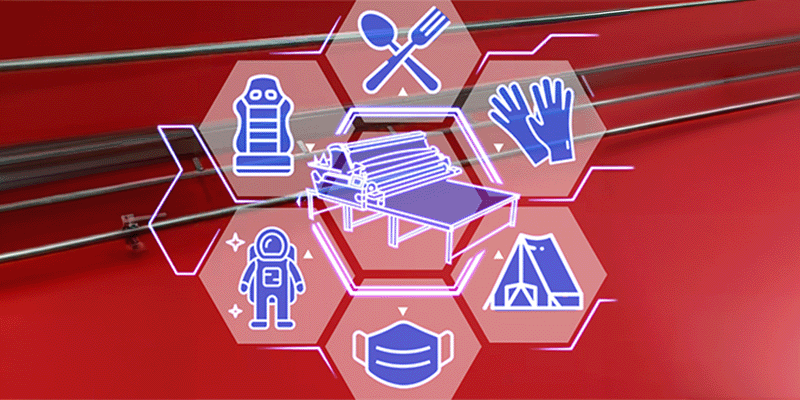
Garment machinery is no longer used only in traditional apparel manufacturing. As technical textiles, functional materials, and industrial fabrics become more widely used, equipment originally designed for garment production is now being applied in home textiles, outdoor gear, automotive interiors, medical protection, aerospace, and military applications.
These industries may produce very different products, but they share one common need: stable processing of fabric, leather, nonwovens, composite materials, or high-strength fiber materials.
This is why the value of garment machinery is not limited to making clothes. It helps different industries complete material preparation, accurate cutting, quality inspection, bonding, sealing, and product assembly.
For equipment suppliers, future competitiveness will depend not only on understanding apparel production, but also on understanding different materials, processes, and industry standards.
Why Can Garment Machinery Be Used Across Industries?
Apparel manufacturing may look like one single industry, but its core technologies can be applied far beyond clothing.
Fabric spreading machines handle roll unwinding and multi-layer material laying. Cutting machines cut soft materials according to patterns or digital files. Fusing and bonding machines join materials through heat, pressure, and time. Hot air seam sealing and ultrasonic machines can seal, weld, or bond functional materials.
These technologies are not only useful for shirts, jackets, or trousers. They can also support curtains, sofa covers, tents, backpacks, car seats, airbags, medical gowns, and technical fabrics.
As materials become more complex, equipment requirements also become higher. Machines must not only run. They must handle different thicknesses, elasticity, tension, hardness, and surface conditions with stability.
How Digitalization and Automation Improve Cross-Industry Production
Modern garment machinery is becoming more digital and automated. This is especially important for cross-industry applications.
Different industries have different specifications, quality requirements, and material characteristics. If production relies only on manual experience, consistency may be affected by operator skill, fatigue, and work habits.
Digital equipment helps factories control speed, tension, temperature, pressure, cutting path, and processing time more consistently.
If machines are equipped with IoT or data output functions, managers can also monitor output, machine status, abnormal records, and maintenance needs.
For example, in cutting, automatic cutting machines can follow digital files to cut different material shapes and reduce manual cutting variation.
In spreading, smart spreading machines can adjust speed and tension according to fabric behavior.
In bonding and sealing, digital temperature and pressure control can improve process stability.
In quality management, AI or sensor systems can help record abnormalities and make quality data easier to trace.
These capabilities allow garment machinery to move from traditional apparel production into more demanding industrial applications.
Main Cross-Industry Applications of Garment Machinery
1. Home Textiles: Curtains, Sofas, Bedding, and Decorative Fabrics
Home textile products include curtains, sofa covers, cushions, mattress fabrics, bedding, and decorative fabrics. These materials are often large, heavy, and thick. Some use woven fabric, nonwoven fabric, velvet, or composite materials.
In this industry, spreading and cutting equipment are very important.
If fabric is not laid flat, cutting and sewing may create size variation. If cutting is unstable, product edges, pattern matching, assembly, and appearance may be affected.
For home textile factories, automatic spreading and cutting machines can improve large-format material handling, reduce manual handling and cutting errors, and increase material utilization.
2. Outdoor Gear: Tents, Backpacks, Windproof Jackets, and Functional Fabrics
Outdoor products often use abrasion-resistant, waterproof, windproof, tear-resistant, or multi-layer composite materials.
Examples include tents, hiking backpacks, outdoor clothing, sleeping bags, rainwear, and shading products.
The challenge is that these materials are often stiff, thick, or coated. Manual cutting may create unstable shapes, uneven edges, or material movement.
Automatic cutting machines, hot air seam sealing machines, ultrasonic welding machines, and bonding equipment help outdoor product manufacturers improve process consistency.
For waterproof products, seam sealing and bonding quality directly affect product performance.
3. Automotive Industry: Seats, Airbags, and Interior Materials
The automotive industry is one of the most important cross-industry applications for garment machinery.
Car seats, headliners, carpets, door panel linings, airbags, and insulation materials all use textiles, leather, nonwovens, or composite materials.
Automotive interiors require high dimensional accuracy, stable appearance, and consistent material handling. Safety-related products such as airbags have even stricter requirements.
In automotive seat and interior production, automatic cutting machines can process leather, foam, composite materials, and technical textiles. Multi-roll or dual-flow spreading systems can support heavy, thick, or multi-layer materials.
For automotive suppliers, machine stability, repeatability, and after-sales service are critical because downtime may affect delivery and customer trust.
4. Medical Industry: Protective Clothing, Surgical Gowns, and Medical Textiles
Medical textiles require protection, sealing performance, stability, and hygiene.
Common products include surgical gowns, protective clothing, isolation gowns, mask materials, medical sheets, and medical packaging materials.
These products often use nonwoven fabric, laminated materials, or functional fabrics. The process needs to reduce needle holes, gaps, and liquid penetration risk. Traditional sewing may not always be the best method.
Hot air seam sealing machines, ultrasonic welding machines, and edge sealing equipment can be used to seal seams, join materials, and improve protection performance.
Through temperature, pressure, speed, and energy control, these machines can create more stable bonding results.
For medical applications, equipment must not only improve efficiency. It must also support product protection and quality requirements.
5. Aerospace and Military Applications: High-Strength Materials and Functional Textiles
Aerospace and military products often use high-strength fibers, composite materials, fire-resistant fabrics, abrasion-resistant materials, or coated technical textiles.
These materials may be stiff, thick, or require high processing accuracy.
Examples include protective clothing, parachute materials, military backpacks, tactical gear, shielding materials, and special industrial fabrics.
High-ply cutting machines, automatic cutting machines, and special material cutting equipment help factories improve cutting accuracy and batch production capability.
For these industries, equipment must handle special materials, maintain repeatable precision, and reduce material waste.
Three Values of Cross-Industry Garment Machinery Applications
1. Better Material Handling Efficiency
Different industries produce different products, but they all need stable processing of soft materials.
Automatic spreading, automatic cutting, bonding, and welding equipment reduce manual handling and repeated operations, improving material processing efficiency.
2. More Consistent Quality
Cross-industry applications often require higher quality stability than general apparel.
Through digital control, factories can manage cutting paths, temperature, pressure, speed, and bonding conditions more consistently.
3. Sustainability and Waste Reduction
Precise cutting and digital marker planning can reduce fabric waste.
Machine data management can also help factories track energy use, downtime, and material utilization, supporting better sustainability performance.
How OSHIMA Supports Multi-Industry Applications
OSHIMA has long supported the garment and textile industry with equipment for fabric inspection, spreading, cutting, fusing, heat press, ultrasonic processing, ironing, needle detection, packing, and boilers.
These machines are not only suitable for traditional garments. Depending on material and production requirements, they can also support home textiles, outdoor gear, automotive interiors, medical textiles, and technical textile applications.
For example, automatic spreading machines can support large-format fabric or multi-layer material laying. Automatic cutting machines can process soft materials of different thicknesses and types. Hot air seam sealing and ultrasonic equipment can be used for products that require sealed or seamless joining. AI inspection and IoT equipment can help factories improve quality management and production visibility.
For cross-industry customers, equipment selection should not be based only on machine names. It should be based on material characteristics, product use, quality requirements, production volume, operator capability, and after-sales support.
Conclusion
Garment machinery applications now reach far beyond traditional apparel production.
From home textiles and outdoor gear to automotive interiors, medical protection, aerospace, and military textiles, many industries require stable, accurate, and sustainable material processing.
With digitalization, automation, and smart manufacturing, garment machinery is no longer only a production tool for one industry. It is an important equipment category for soft materials and technical textile applications.
In the future, understanding material needs, quality standards, and production pain points across different industries will become an important competitive advantage for equipment suppliers.
For factories, choosing the right garment machinery is not only about improving efficiency. It is also about extending production capability into more markets and application scenarios.


Article Classification
Recent Articles
- Why Are Garment Factories Struggling to Recruit Young Workers?
- What Does the World Cup Have in Common with Apparel Sourcing?
- Why Garment Factories Need Process Stability in a Slower Market?
- Why Scale and Low Cost Are No Longer Enough for Bangladesh Apparel Manufacturing?
- Why Extreme Heat Is Becoming a New Risk for Apparel Supply Chains?