
 0
0



- Home
- Blog
- Industry Insights
- Garment Manufacturing in 2023 Was About More Than Capacity
Garment Manufacturing in 2023 Was About More Than Capacity
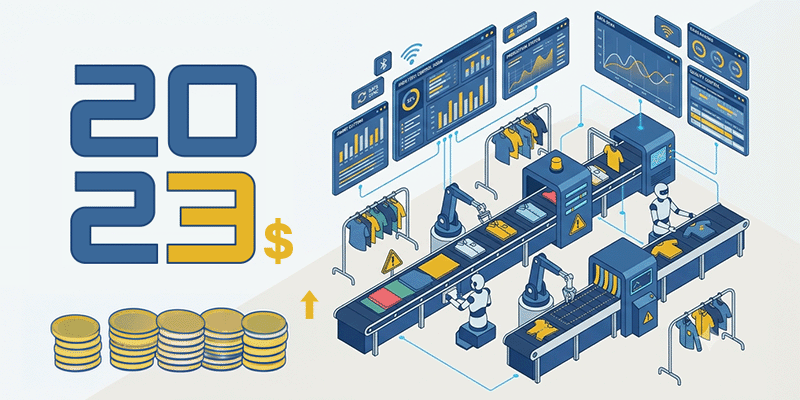
For the apparel and garment manufacturing industry, 2023 was a year of market pressure and supply chain adjustment. The production and logistics changes left by the pandemic continued to affect sourcing decisions. Global inflation and cost-of-living pressure made consumers more cautious about spending on general apparel. At the same time, brands and manufacturers also had to face growing expectations around sustainability, materials and supply chain transparency.
According to IMF data released in 2023, global inflation was expected to decline from 8.7% in 2022 to 6.9% in 2023, but core inflation was falling more slowly. This meant both companies and consumers were still under cost pressure. For the fashion market, McKinsey and Business of Fashion also noted in The State of Fashion 2023 that growth performance was divided between luxury fashion and non-luxury fashion.
For garment factories, these changes were not only about whether orders increased or decreased. When brands became more cautious with buying, adjusted sourcing locations and requested clearer quality and sustainability information, manufacturers also needed to review their product focus, material management, cutting flexibility and equipment setup.
In an uncertain market, factories cannot rely only on output. The real question is whether processes are stable, quality can be managed, data can be traced and production lines can respond to different batch sizes and material conditions.
Inflation and Weaker Demand Made Volume Alone Less Reliable
Inflation affects brands, consumers and manufacturers at the same time. When consumers become more cautious about general apparel spending, brands may reduce inventory risk, place smaller initial orders or arrange replenishment more often according to market response. For factories, this means that large orders of one repeated style are no longer the only production model.
As small-batch, multi-style and replenishment orders increase, factories face not only a capacity issue, but also questions of changeover ability, fabric preparation, cutting arrangement and quality confirmation. If fabric information is unclear, the cutting room waits too long, rework increases or quality issues are found only before shipment, these costs may directly affect profit when demand is slower and price pressure is higher.
The 2023 market environment therefore reminded garment factories that increasing capacity alone does not always create competitiveness. The ability to handle different fabrics, shorter runs and more frequent order changes became more important.
Market Segmentation Made Product Positioning More Important
In 2023, not all fashion categories grew at the same pace. Luxury fashion showed stronger resilience, while mass apparel faced more price and demand pressure. For garment manufacturers, this means one set of production capabilities cannot serve every product equally well.
High-quality fashion apparel may focus more on fabric appearance, hand feel, fusing quality, pressing and quality consistency. Sportswear and close-fitting apparel may require better handling of stretch fabrics, comfort, stable cutting and local bonding. Uniforms and workwear may focus more on supply stability, durability and batch management. Home textiles may need to handle large rolls, multi-layer cutting and higher volume. Medical and protective products may place more emphasis on material control, stable output and required inspection processes.
Factories do not need to chase every market trend. But they do need to understand their main product direction, materials and customer standards. The clearer the product positioning, the more focused equipment investment and process improvement can be.
Sustainability Became a Process and Data Issue
In 2023, sustainability was no longer only a brand marketing topic. It was gradually becoming part of supply chain preparation. The EU Strategy for Sustainable and Circular Textiles, released in 2022, set a direction for textiles to become more durable, repairable, recyclable, to use more recycled fibers and to provide clearer product information. Although not every measure had become a full obligation in 2023, the strategy already pushed brands and suppliers to care more about materials, waste, quality and production data.
For garment factories, sustainability should not be simplified into buying one machine or switching to one material. A more practical approach is to check where unnecessary waste is happening in the process.
Are fabric defects found too late?
Does the fabric need relaxing or shrinking before cutting?
Are spreading and cutting creating avoidable loss?
Can quality inspection results be saved?
Can production data support customer communication and internal improvement?
Sustainable manufacturing is not only a statement on a website. It requires clearer material use, quality control and production records.
New and Recycled Materials Still Need Stable Processing
In 2023, the market talked more about natural materials, recycled fibers, recyclability and traceable sourcing. But for manufacturers, material changes are not only purchasing decisions. They also affect production.
Different materials may have different tension, shrinkage, elasticity, surface condition, defect standards and processing requirements. Some materials may need more attention during relaxing or shrinking. Some fabrics deform more easily during spreading. Some materials require new tests for temperature, pressure and time during fusing, heat pressing or seamless bonding.
Sustainable materials should therefore not remain only as sourcing claims. Once the material enters the factory, whether it can be inspected, spread, cut, processed and checked consistently becomes the real manufacturing question.
If factories begin to handle more new materials, recycled materials or fabrics from different sources, they should also review whether their front-end processes can respond properly. Otherwise, a material may look more sustainable on paper, while production creates more rework and loss.
Supply Chain Adjustment Created Both Opportunity and Pressure
Factory shutdowns, logistics instability and geopolitical risks during the pandemic made brands more aware of overreliance on single sourcing locations. In 2023, China remained one of the world’s major textile and apparel export economies, while Bangladesh, Vietnam, Türkiye and other manufacturing bases also continued to play important roles. A more accurate view is not that one country completely replaced another, but that brands became more interested in diversified sourcing and suppliers that could deliver stable quality, reliable lead times and better sustainability management.
For Asian garment manufacturers, this created both opportunity and pressure. If factories want to capture orders from shifting sourcing strategies, capacity alone is not enough. Brands also care whether factories can handle material changes, keep cutting and production stable, provide quality records and support more transparent supply chain management. The factories that gain more attention in the future may not be only the lowest-price factories. They will be the factories that customers can trust for quality, delivery and process control.
Garment Factories Can Start from the Processes That Affect Orders Most
Facing inflation, divided demand, sustainability pressure and supply chain adjustment, factories do not need to replace full production lines immediately. A more practical approach is to start with the processes that most affect orders, delivery and quality.
First, factories should clarify their product and customer direction. Different products require different equipment capabilities. The main products, fabrics, order types and quality requirements should guide equipment planning.
Second, factories should improve fabric information before cutting. Fabric inspection and fabric data management help identify defects, length, batch and quality condition earlier, reducing the risk of rework caused by late discovery.
Third, factories should review whether the cutting room has become a bottleneck. Spreading and cutting directly affect material use, changeover ability and front-end preparation. When orders become more fragmented and lead times shorten, the cutting room deserves attention.
Fourth, factories should build quality and production records. As brands pay more attention to supplier management and sustainability information, factories need clearer inspection, process and abnormal records.
Fifth, worker training should keep up with equipment. After automation or data equipment is introduced, operators still need to understand settings, material conditions, quality standards and abnormal handling. Equipment investment cannot be separated from people capability.
Equipment Is Not the Answer by Itself but It Can Support a More Stable Process
Equipment alone cannot solve market risk or automatically guarantee sustainability. But in specific processes, suitable equipment can help factories manage practical problems.
Fabric inspection and AI fabric inspection can help factories build defect information, inspection reports and quality communication before cutting. Fabric relaxing and shrinking equipment can help prepare different fabrics before cutting. Automatic spreading equipment can support fabric laying, edge alignment and material use management. Automatic cutting equipment can help build a more consistent cutting process. Fusing, heat pressing, seamless or ultrasonic equipment can support certain product processing needs. Needle detection and checkweighing can support required pre-shipment safety and quality checks. Machines with data functions can help managers understand production status and quality information.
The point is not to buy every machine at once. The point is to identify the bottleneck first: Are fabric problems found too late? Is the cutting room waiting too long? Is material use missing information? Is quality confirmation difficult to trace? When equipment investment is connected to these questions, it is more likely to become part of process improvement instead of simply adding more machines.
When the Market Is Uncertain Processes Need to Be Stable
In 2023, garment manufacturing faced inflation, divided consumer demand, sustainability policy direction and supply chain adjustment at the same time. For manufacturers, market opportunities did not belong only to factories with the lowest price or highest capacity. They also belonged to suppliers that could handle materials consistently, maintain quality, respond to customer requirements and adjust production according to order changes.
As brands reduced overreliance on single production sources and looked for partners with stronger quality, delivery and sustainability management, manufacturers needed more stable and expandable internal processes.
OSHIMA provides equipment solutions for fabric inspection, fabric preparation, spreading, cutting, fusing and heat pressing, finishing and quality inspection. These machines can be planned according to fabric type, product direction, capacity needs and quality standards.
In a changing market and supply chain environment, factories do not need a single equipment promise. They need equipment planning and technical support that fit their own production conditions and help build stable processes step by step. When fabric information becomes clearer, the cutting room becomes more stable and quality records become more complete, factories are better prepared to stay competitive in an uncertain market.



Article Classification
Recent Articles
- Why Are Garment Factories Struggling to Recruit Young Workers?
- What Does the World Cup Have in Common with Apparel Sourcing?
- Why Garment Factories Need Process Stability in a Slower Market?
- Why Scale and Low Cost Are No Longer Enough for Bangladesh Apparel Manufacturing?
- Why Extreme Heat Is Becoming a New Risk for Apparel Supply Chains?