
 0
0



- Home
- Blog
- Smart Manufacturing
- How Real-Time Equipment Data Helps Garment Factories Improve Scheduling?
How Real-Time Equipment Data Helps Garment Factories Improve Scheduling?
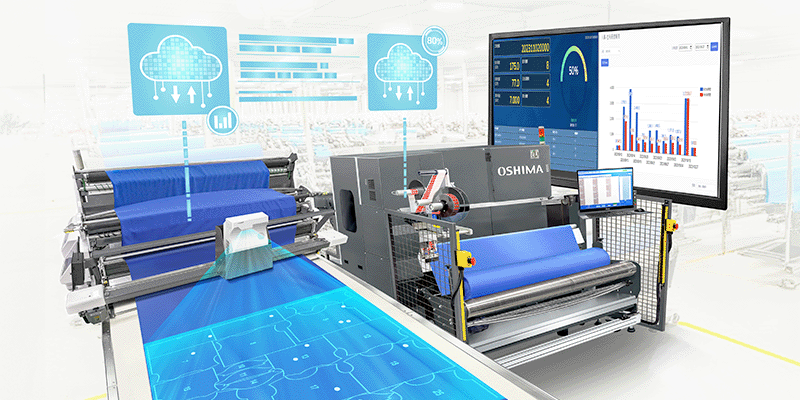
Most garment factories have production plans, and supervisors check progress every day. But in many cases, even when the schedule is already planned, delays still happen on the factory floor. The problem is not always poor planning. It is often that the factory floor changes too quickly, while data returns too slowly. An order can be affected by late fabric arrival, spreading delays, machine downtime, cutting rework, quality inspection issues, urgent inserted orders or canceled orders. When these changes happen, and managers only find out through manual reports, handwritten records or shift handover, scheduling decisions are already one step behind.
For garment factories, the real challenge is not only creating a production plan. It is making the schedule keep up with what happens on the factory floor every day.
Scheduling Problems Are Not Always Planning Mistakes
Garment production is not a single straight-line process. It is a sequence of connected operations. Fabric preparation, inspection, relaxing, spreading, cutting, sewing, pressing, needle detection and packing can all affect the next step.
If the front-end process is delayed, the next process waits.
If the cutting room cannot provide cut parts, the sewing line cannot be arranged properly.
If fabric defects are not found early, cutting plans may need to change.
If machine downtime is not reported in time, the schedule may still assume normal production.
In many cases, scheduling becomes inaccurate not because the original plan was wrong, but because the plan did not receive factory floor changes in time. Traditional scheduling depends on experience, past capacity, order deadlines and manual reporting. These remain important. But if shop floor conditions keep changing and data only reaches managers hours later, the schedule becomes difficult to adjust accurately.
Why Manual Reporting Is Often Too Slow
Manual reporting is common in garment factories. Supervisors walk the line, team leaders give verbal updates and workers fill in daily reports. Many factories have used these methods for years. These methods are not useless. But when orders change quickly, when there are many production lines, multiple shifts or overseas factories, information gaps become more obvious.
First, the production floor usually handles the problem before reporting it. When a machine fails, fabric is short or cutting progress falls behind, workers often try to solve the issue first. By the time the supervisor hears about it, the delay may already have affected the next process.
Second, handwritten reports are usually organized after the fact. Spreading quantities, cutting progress, downtime and abnormal records are often summarized at the end of the shift or the next day. By then, managers are looking at past conditions, not current conditions.
Third, shift handover information may be incomplete. Different shifts and different workers may record information differently. Some issues are written in detail, while others are only mentioned verbally. When information is incomplete, scheduling staff cannot easily judge which order will really be affected.
Fourth, each department often sees only its own process. The cutting room sees cutting progress. The sewing line sees sewing schedules. Quality control sees inspection results. If this information is not connected, managers cannot quickly see which process is affecting the overall delivery schedule.
The biggest problem with manual reporting is not that people are irresponsible. It is that the speed of information transfer cannot keep up with production changes.
Equipment Data Does Not Replace Scheduling, It Brings Scheduling Closer to Reality
When many factories hear “real-time data,” they immediately think of large systems, full platforms or complex smart factory projects. But for most garment factories, the first step does not need to be fully automated scheduling. A more practical approach is to start by recording the status of key equipment. Equipment data will not automatically solve every scheduling problem, but it can help managers see earlier where production is slowing down, which machine has stopped and which order is not yet complete. For example, managers can see earlier:
whether the machine is running;
whether current output meets expectations;
whether a process has stopped for too long;
whether spreading has been completed;
whether the front-end cutting process is ready;
which order is already behind schedule;
which machine may need maintenance or inspection.
When this information is visible earlier, scheduling staff can adjust earlier instead of discovering the delay only after the next process is already waiting. The role of equipment data is not to replace scheduling experience. It is to prevent scheduling decisions from depending only on experience and after-the-fact reports.
What Data Do Garment Factories Need to See First?
Not all data needs to be digitized from the beginning. For garment factories, the most valuable data to capture first is the data that directly affects scheduling and delivery.
The first is machine status. Whether the machine is running, stopped or abnormal is the most basic information managers need. If the machine has stopped but the schedule still assumes normal capacity, later planning will be inaccurate.
The second is production progress. Factories need to know how much has been completed and how far the order is from the target. If output information is only summarized after work, supervisors cannot adjust on the same day.
The third is operation time. How long a batch took to spread, how long a cutting process took and where waiting time is too long all affect scheduling decisions.
The fourth is fabric use and front-end preparation status. Whether fabric has been spread, whether it is still waiting for inspection, whether there is leftover fabric or whether rework has occurred can all affect cutting and later sewing arrangements.
The fifth is abnormal records. Machine issues, fabric abnormalities, quality problems and waiting time should all be recorded. Without abnormal records, managers can see only the result, but not the cause of delay.
When these data points are gradually recorded, scheduling no longer depends only on experience. It becomes closer to real factory conditions.
Production Visibility Is Not More Numbers, It Is Earlier Problem Detection
Production visibility is often described as seeing more data. But for factories, the point is not having more numbers. The point is seeing problems earlier.
If a machine stops for half an hour and managers know immediately, the response is completely different from finding out the next day. If spreading progress for an order is behind, adjusting before cutting is more useful than discovering the issue when the sewing line is already waiting. If a process is often slower than the schedule, the factory can review whether the issue comes from equipment, fabric, workers, marker planning or workflow arrangement.
The value of real-time data is that scheduling becomes more than a fixed plan. It can be continuously adjusted according to factory floor changes. This is especially important for factories with multiple processes, multiple shifts or factories in several countries. When managers are not on site, decisions are slower if they depend only on reports or verbal updates. Equipment data helps managers understand factory conditions faster and gives departments a clearer basis for communication.
Start with Key Machines Instead of a Full System
When factories hear real-time scheduling, they often think of ERP, MES, APS, PLM or large smart factory systems. These systems all have value, but for many garment factories, introducing a complete system at once may not be the most practical first step. A more workable method is to start with the process that most affects progress and record key data there.
In front-end production, inspection, spreading and cutting directly affect later sewing. If data from these stages can be recorded first, the factory can know earlier whether fabric is ready, whether spreading is complete and whether cutting may be delayed. The same applies to pre-shipment quality control. If needle detection, checkweighing, barcode or packing data can be recorded, the factory can understand which products have completed inspection and which are still waiting.
Digitalization does not need to happen all at once. Starting with key machines, key processes and key data is more practical than trying to build a complete platform from the beginning.
Start Seeing Front-End Progress Through Spreading Data
OSHIMA has continued to develop smart manufacturing-related equipment in recent years. The focus is not to make factories fully automated all at once, but to make data from key processes easier to record and view. Taking the SPro smart spreading machine as an example, the equipment can provide machine status, output, fabric usage and operation records, helping managers understand spreading progress. When spreading data no longer depends only on handwritten records, scheduling staff can know earlier whether the front-end process is running normally. If spreading for an order falls behind, managers can adjust earlier instead of discovering the problem only when cutting or sewing is already waiting.
When combined with AI fabric inspection data, factories can further understand fabric defect locations and make fabric information clearer before cutting. If cutting, needle detection, checkweighing or barcode data is gradually connected later, the factory can build a more complete shop floor data foundation.
For garment factories improving scheduling management, the first step does not have to be buying a complete large system. It can begin by checking which processes most often make schedules inaccurate. Starting from inspection, spreading, cutting or pre-shipment quality control and making machine status, output and abnormal records clearer is often more practical for the production floor.
Better Scheduling Starts with Faster Factory Data
The biggest scheduling problem in garment factories is often not the absence of a plan. It is that the factory floor changes too quickly and data returns too slowly.
By the time managers see the report, the machine may already have stopped.
By the time supervisors know the front-end process is delayed, the next process may already be waiting.
By the time a customer asks about delivery, the factory may still be organizing information.
The role of equipment data is to help managers see which process has already moved away from the original schedule before the delay grows larger. It does not replace the experience of scheduling staff, and it does not automatically solve every production issue. But it helps scheduling decisions become closer to the real factory floor.
For garment factories, useful smart manufacturing does not always mean building a large platform at once. It can start from the areas that are most often delayed and most closely watched every day, making shop floor data faster, clearer and more traceable. When factory data returns faster, scheduling has a better chance of keeping up with the production floor.


Article Classification
Recent Articles
- If Every Machine Is Running, Why Does the Factory Still Feel Stuck?
- AI Fabric Inspection: Turning Fabric Defects into Cutting Room Decisions
- Where Does a Garment Factory Lose Energy During Production?
- What Changes When Garment Factory Data Becomes Connected?
- How Garment Factories Can Boost Fabric Utilization and Cut Waste?