
 0
0



- Home
- Blog
- Smart Manufacturing
- AI Fabric Inspection Is More Than Defect Detection
AI Fabric Inspection Is More Than Defect Detection
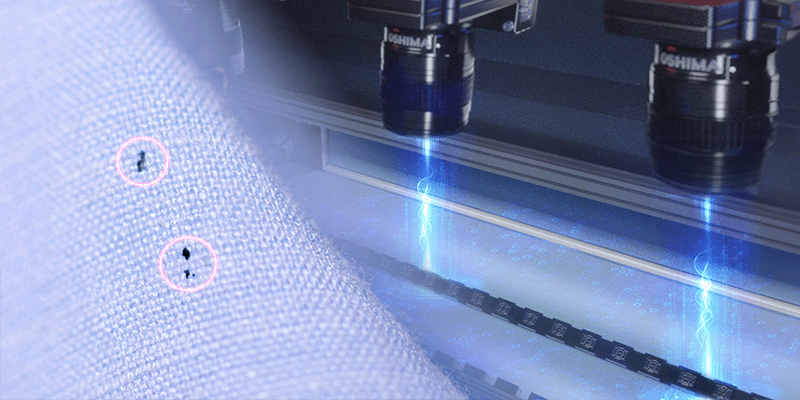
A fabric defect becomes more expensive the farther it travels into production.
Once a problem reaches spreading, cutting or sewing, it may result in rejected panels, rework, material loss and shipment delays. The purpose of AI fabric inspection is therefore not simply to replace an inspector’s eyesight. Its greater value is detecting variation early, recording it consistently and turning the inspection result into information that can support the next production stage.
Inspection Should Protect the Processes That Follow
Fabric inspection confirms whether each roll is suitable for spreading and cutting. Depending on the material, inspectors may be looking for shade variation, stains, holes, yarn faults, printing irregularities, wrinkles or distortion caused by uneven tension.
A traditional fabric inspection machine controls unwinding, lighting, inspection speed and rewinding, while the inspector identifies and records the defects. This remains an effective process, especially when experienced inspectors understand the fabric and the customer’s quality standard.
The limitation is not that manual inspection has no value. The limitation is that the result can vary with fatigue, inspection speed, lighting conditions and individual judgment. Defects may be marked on the fabric or written on a report, but the information is often difficult to standardize, analyze or transfer to the cutting room.
When inspection records cannot be used by the next process, the same defect may need to be found again during spreading or after the fabric has already been cut.
AI Changes the Output of Fabric Inspection
An AI fabric inspection machine combines image capture, machine vision and trained detection models to identify and record defects while the fabric is running.
The system may retain the defect image, category, location, roll information, inspection time and defect distribution. This creates a more consistent inspection record and reduces the amount of manual recording required from the operator.
However, the main difference is not only how the defect is detected. It is what the factory can do with the result.
Inspection data can support internal quality reports, fabric-roll management and communication with customers or suppliers. When defect locations can be transferred to spreading, projection or cutting-room systems, operators can verify the affected area before cutting and decide how it should be handled.
This turns fabric inspection from an isolated quality-control station into part of the cutting-room workflow. A defect found during inspection is useful, but a defect prevented from becoming a rejected panel is more valuable.
Consistent Detection Depends on Stable Fabric Handling
AI performance cannot be evaluated by the model alone.
The fabric must move through the inspection area at a stable speed and under controlled tension. The surface must remain sufficiently flat for the camera to capture a consistent image, while the lighting must make the relevant defects visible without creating unnecessary reflections or shadows.
This becomes more important with knitted and stretch fabrics because changes in tension can alter the fabric surface and defect appearance. Dark, glossy, printed, translucent or heavily textured fabrics may also create different imaging challenges.
If the fabric is stretched, wrinkled or moving unevenly, the system receives unstable images. Even a well-trained model will have difficulty producing consistent results when the mechanical and imaging conditions are not controlled.
AI fabric inspection is therefore not only a software application. Fabric feeding, tension control, lighting, image capture, mechanical stability and defect recognition must operate as one system.
Inspection Models Must Follow Actual Production
An AI inspection system is not automatically complete after installation.
Detection performance depends on the fabric types, colors, surface structures and defect categories included in the training data. When the factory introduces a different material or encounters a defect the model has not learned, additional samples and model adjustment may be required.
For this reason, evaluation should be based on the factory’s actual fabrics rather than only standard demonstration samples. The test should reflect normal production speed, tension and operating conditions so the factory can understand how the system performs on the materials it regularly processes.
Detection rate is only one part of the evaluation. Factories should also review whether the output includes usable defect images and location data, whether operators can understand the reports, and whether the supplier can support future model adjustment as fabric requirements change.
Long-term support for AI inspection includes more than mechanical repair. It may also involve data review, model optimization, system updates and operator training.
Human Judgment Remains Part of Quality Control
AI can handle repetitive inspection, maintain a consistent initial standard and reduce the effect of fatigue. It can also give quality teams a clearer record of what was detected on each fabric roll.
People are still required to define the acceptance standard, confirm unusual findings and decide how to handle defects that are difficult to classify. Special fabrics, new defect types and customer-specific requirements may continue to depend on experienced quality personnel.
The practical role of AI is therefore not to remove inspectors from the process. It is to make inspection more repeatable, reduce differences between operators and preserve quality information in a form that the factory can use.
Conclusion
AI fabric inspection creates the most value when inspection results are connected with the processes that follow.
Stable fabric handling, controlled imaging, suitable training data and experienced quality judgment must work together. Without these elements, the system may produce a report without materially reducing cutting-room problems.
OSHIMA combines garment-machinery experience with AI inspection technology so that fabric movement, tension control, image conditions and defect records can be considered as part of the same production process.
For a factory, the practical question is not only whether the machine can identify a defect. It is whether the information helps prevent that defect from becoming material loss, rework or a delivery problem later in production.


Article Classification
Recent Articles
- If Every Machine Is Running, Why Does the Factory Still Feel Stuck?
- AI Fabric Inspection: Turning Fabric Defects into Cutting Room Decisions
- Where Does a Garment Factory Lose Energy During Production?
- What Changes When Garment Factory Data Becomes Connected?
- How Garment Factories Can Boost Fabric Utilization and Cut Waste?