
 0
0



- Home
- Blog
- Equipment Knowledge
- How to Plan Shirt Pressing and Shaping Equipment for Better Production Consistency
How to Plan Shirt Pressing and Shaping Equipment for Better Production Consistency
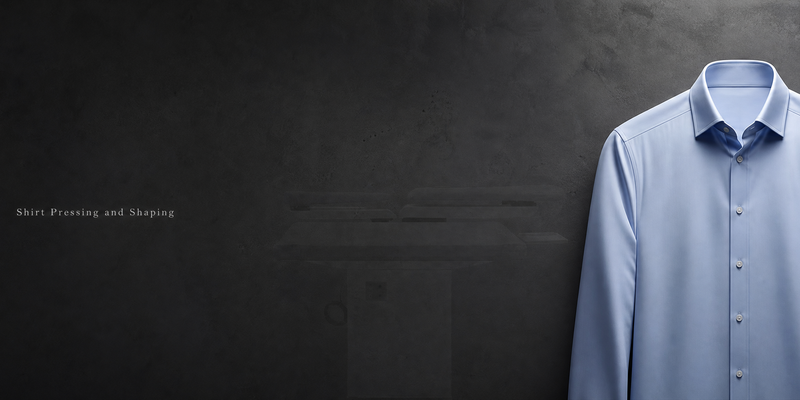
A well-sewn shirt can still look poorly made if the pocket, collar, cuffs or seams are not pressed and shaped correctly.
In shirt production, cutting and sewing determine the construction, but pressing and shaping determine how the finished garment looks. Pocket edges, cuff forms, collar points, shoulder seams and side seams are all visible to the buyer, and small differences between operators can quickly become noticeable across a production batch.
The purpose of shirt pressing equipment is therefore not simply to add more machines. It is to control the processes where appearance, dimensions and handling are difficult to keep consistent by hand.
This guide explains the main pressing and shaping processes used in shirt manufacturing and the practical points factories should review before selecting equipment.
Pocket Pressing Keeps Pocket Shapes Consistent
The pocket is positioned prominently on the shirt front, so uneven edges, different dimensions or irregular folding lines are easy to notice.
In manual production, an experienced operator may produce good results, but maintaining the same pocket shape throughout a large order can be difficult. Differences become more obvious when several operators are working on the same style or when production changes between fabrics.
Automatic pocket pressing equipment forms and folds the pocket before sewing. It is most useful when a factory produces repeated pocket specifications in medium or large quantities.
It is commonly used for:
- Business shirts and uniform shirts
- Orders requiring consistent pocket dimensions and folding lines
- Production lines using several pocket molds for different styles
When comparing equipment, factories should check how quickly molds can be changed, whether temperature and pressing time can be adjusted, and whether the machine supports the required pocket shapes and dimensions. Testing with the actual production fabric is also important because folding and pressing results can change according to fabric thickness, coating and construction.
Cuff Shaping Controls the Finished Cuff Form
Cuffs are highly visible and are handled frequently when the shirt is worn. Poor shaping can result in uneven edges, different left and right cuffs or insufficient structure after washing and wearing.
Cuff shaping equipment helps factories maintain a repeatable form before the cuffs move to the next production stage. Depending on the mold configuration, the equipment can support square, rounded and other specified cuff designs.
It is particularly suitable for formal shirts, uniform shirts and higher-quality casual shirts where cuff appearance must remain consistent throughout the order.
The main evaluation points include supported cuff shapes, pressure and temperature adjustment, mold-changing procedures and operator handling. The factory should also test different fabric thicknesses because a setting that works well for a lightweight shirt fabric may not produce the same result on a heavier material.
Sleeve Placket Shaping Reduces Manual Folding Differences
The sleeve placket is a small component, but it affects the appearance of the sleeve opening and the connection between the sleeve and cuff. If the placket is folded differently from piece to piece, the finished shirt may show uneven lines or mismatched left and right sleeves.
Sleeve placket shaping equipment presses the component into the required contour before sewing. This helps operators maintain consistent dimensions and reduces the amount of manual adjustment needed during assembly.
This process is most useful for long-sleeve shirts, uniform shirts and orders with fixed sleeve-placket specifications.
Before selecting equipment, factories should confirm that the mold matches the required placket design and that pressure is distributed evenly across the component. It is also important to consider how the pressed placket will move into the following sewing process. A technically accurate pressing operation may still slow production if loading, unloading or material transfer is inconvenient for the operator.
Collar Processing Creates Cleaner Points and Fold Lines
The collar is one of the first areas a buyer notices. The shape of the collar points, the condition of the edges and the position of the fold line all influence the appearance of formal and uniform shirts.
Collar-processing equipment can assist with trimming, turning, pressing and shaping. These operations reduce the differences that may occur when collars are handled completely by hand.
The appropriate automation level depends on production conditions.
Semi-automatic equipment is generally more suitable for factories with medium production volumes, frequent style changes or a greater need for operating flexibility. Fully automatic equipment is more suitable when collar specifications are standardized and similar shirt styles are produced repeatedly over longer periods.
Factories should not select automation based only on machine speed. Collar shape, fabric behaviour, style-change frequency and the stability of incoming components should also be reviewed. A highly automated machine is most effective when the production conditions around it are equally stable.
Shoulder and Back Seam Shaping Improves the Yoke Area
Many shirts use a back yoke or split-yoke construction to achieve the required fit and shoulder appearance. If this area is not shaped properly, the shoulder line or back seam may look uneven after sewing.
Shoulder and back seam shaping equipment uses dedicated molds to press the joining area into a controlled form. It is commonly used for business shirts, uniforms and styles with defined shoulder or back-yoke details.
When evaluating equipment, factories should confirm that the mold matches the shirt pattern and allows the operator to position the component accurately. Pressure and temperature ranges should also be suitable for the fabrics normally used by the factory.
The position of the machine within the production line is equally important. The process should support the sewing sequence rather than create extra handling, storage or unnecessary movement between workstations.
Side Seam and Sleeve Seam Pressing Improves Long Seam Appearance
Long seams can develop wrinkles, twisting or uneven lines after sewing, especially around side seams, sleeve seams and underarm joining areas.
Side seam and sleeve seam pressing equipment is designed to press longer garment sections more evenly. It can be used for shirts, uniform tops and selected casual garments where seam appearance is an important quality requirement.
Factories should review the supported seam length, the garment areas that can be handled and the available pressure and temperature controls. Vacuum or cooling functions may also be useful for stabilizing the pressed area before the garment is removed.
Operator safety and handling should not be overlooked. Large garment sections must be loaded and removed repeatedly, so the working height, positioning method and protection around heated areas directly affect daily production efficiency.
Heat Transfer Equipment Applies Logos and Graphic Details
Casual shirts, uniforms and branded garments may require logos, graphics, names or identification marks. These applications are normally completed with heat transfer equipment.
The correct configuration depends on the transfer size, required output, number of pressing stations and the way operators load and remove the garments.
| Equipment configuration | Suitable Application |
|---|---|
| Single-station heat press | Smaller orders, frequent style changes or graphics applied in one location |
| Multi-station heat press | Repeated designs and continuous production |
| Rotary configuration | Production lines requiring smoother loading and pressing flow |
| Cold and hot pressing or special configurations | Specific decorative, branding or technical applications |
Factories should test the transfer material together with the garment fabric. Temperature, time and pressure must suit both materials; otherwise, the transfer may peel, the fabric surface may change or the final appearance may vary across the order.
How to Decide Which Equipment to Add First
Not every shirt factory needs a complete range of pressing equipment. Planning should begin with the products being made, the order volume and the processes where quality differences occur most often.
| Factory requirement | Equipment to evaluate first |
|---|---|
| Business shirts or uniform shirts are the main products | Pocket pressing, cuff shaping and collar processing |
| Collar and cuff specifications are fixed and production volume is high | Automatic pocket pressing and automated collar equipment |
| Styles change frequently or orders are produced in smaller batches | Semi-automatic equipment or machines with quick-change molds |
| Shoulder and seam appearance requires closer control | Shoulder and back seam shaping, side seam and sleeve seam pressing |
| Casual shirts, uniforms or branded garments are produced | Heat transfer equipment |
A factory experiencing inconsistent pockets does not necessarily need to automate the entire shirt line. Improving the pocket-forming process may already reduce rework and make sewing easier. In the same way, a factory producing stable collar styles in large quantities may benefit more from automated collar processing than from investing first in other finishing equipment.
The priority should be the process that creates the largest quality variation, production delay or dependence on individual operator skill.
Plan the Process Before Selecting the Machine
The purpose of shirt pressing and shaping equipment is not to increase the number of machines on the factory floor. It is to control the specific production steps that affect garment appearance, repeatability and operator handling.
OSHIMA provides equipment for pocket pressing, cuff and sleeve-placket shaping, collar processing, shoulder and back seam shaping, side and sleeve seam pressing, and heat transfer applications. Equipment can be planned for one process that requires improvement or as part of a broader shirt-production configuration.
Before selecting equipment, prepare three basic pieces of information: the shirt style, the fabric specification and the required production output. These details make it easier to determine the appropriate mold, operating method and automation level, and help avoid choosing a machine that does not match the factory’s actual production conditions.


Article Classification
Recent Articles
- The 30-90-180 Day Rule for Industrial Boiler Maintenance
- How Garment Machinery Supports Safety, Compliance and Environmental Management?
- What Happens Before Fabric Goes to the Cutting Table?
- Industrial Iron & Vacuum Table Care: How to Extend Their Lifespan
- Cutting Floor ROI: How the M8s and TAC Save $100K Annually