
 0
0



- Home
- Blog
- Equipment Knowledge
- Why Shirt Production Depends on More Than Sewing?
Why Shirt Production Depends on More Than Sewing?
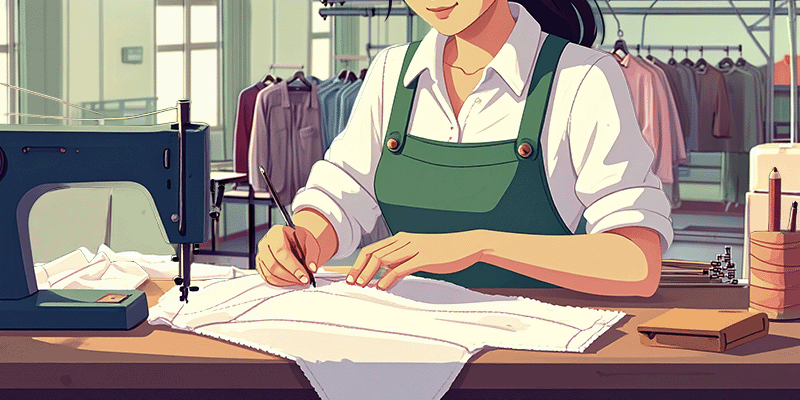
Building a stable shirt production line is not only about sewing machines. A shirt may look like a basic garment, but producing it consistently requires strong control over many details. The collar must stay firm, the cuffs must be flat, the placket must be straight, the pocket must be aligned and the size must remain stable. These results do not start only at the sewing stage, and they cannot be solved by sewing skill alone.
High-quality shirt production begins when the fabric enters the factory. Fabric relaxing, shrinking, spreading, cutting, fusing, shaping, pressing, needle detection and packing all affect the final garment. This is why shirt factories should not only ask how many sewing machines they need. They should look at whether the whole process can support stable quality.
Stable Fabric Comes First
Shirt quality begins with fabric. Many fabrics hold tension during weaving, dyeing, finishing and rolling. If fabric is cut before it is properly relaxed, the final shirt may face shrinkage, twisting, size variation or deformation after sewing.
These problems are especially visible in shirts. Shirt structure is clear: the placket, collar, cuffs, front panels and back panels are all easy to see. Even a small cutting variation can affect the finished appearance.
A fabric relaxing machine helps fabric release tension before cutting, allowing it to return to a more natural condition. For fabrics that are sensitive to tension or orders that require stable sizing, relaxing can reduce the risk of deformation after cutting.
A shrinking machine helps control shrinkage before production. Through steam, heat, pressure or cooling, fabric can be prepared before cutting. For formal shirts, uniform shirts, branded shirts and export orders, shrinking helps reduce the risk of size change, twisting or deformation after washing. When fabric preparation is done well, cutting and sewing have a more stable foundation.
Accurate Cutting Makes Sewing Smoother
A shirt has many cut parts: front panels, back panels, sleeves, collar pieces, cuffs, plackets and pockets. Each part needs to be accurate. If the size is unstable, sewing becomes harder and the finished shirt may look uneven.
An automatic spreading machine lays multiple layers of fabric flat on the cutting table while controlling tension, speed and edge alignment. Compared with manual spreading, automatic spreading helps reduce fabric stretching, wrinkles and layer shifting. This is especially useful for mass shirt production.
A CNC automatic cutting machine cuts according to digital patterns and improves cut-part accuracy. For shirts, where there are many parts and details, cutting precision directly affects sewing efficiency. When cut parts are stable, sewing operators spend less time trimming, pulling or adjusting alignment.
For factories, automatic cutting is not only about speed. It also reduces cutting errors, lowers rework and improves fabric utilization.
Shirt Quality Often Shows in the Collar, Cuffs and Placket
The quality of a shirt is often judged by its details. Is the collar firm? Are the cuffs flat? Is the placket straight? Is the pocket angle consistent? These details affect the first impression of the garment. For formal shirts, uniform shirts and branded orders, they cannot rely entirely on manual adjustment.
A fusing machine is one of the most important machines in shirt production. It uses temperature, pressure and time to bond interlining with fabric. It is commonly used for collars, cuffs, plackets and other parts that need structure.
Fusing quality affects whether the shirt looks crisp, whether bubbles appear and whether the fused parts deform after washing. If temperature, pressure or time are unstable, the result may be weak bonding, delamination, fabric marks or uneven shrinkage.
Pocket forming machines, collar shaping equipment, cuff and sleeve placket forming equipment help make small parts more consistent. A pocket may be a small component, but it sits at the front of the shirt. If the fold is not clean, the angle is off or the left and right sides are uneven, the shirt will immediately look less refined. The value of these preparation machines is not to make shirt production more complicated. It is to keep details consistent and reduce variation between operators.
Sewing Is a Sequence of Assembly Work
Shirt sewing requires different machines working together, including lockstitch machines, overlock machines, double-needle machines, coverstitch machines, buttonhole machines, button attaching machines and other special sewing machines. Different parts require different processes, from side seams and shoulders to cuffs, collar stands, hems, plackets and buttons.
The focus of sewing is stable stitches, firm seams, accurate sizing and clean appearance. If fabric preparation, cutting and fusing are unstable, the sewing line needs to spend more time correcting problems.
This is why more sewing machines do not always mean better efficiency. The processes before and after sewing must work together. When cut parts are accurate, fused parts are stable and small components are consistent, sewing becomes much smoother.
Pressing Gives the Shirt Its Final Shape
After sewing, pressing is the step that gives the shirt its finished form. Industrial steam irons, ironing tables and pressing equipment remove wrinkles, fix lines, shape collars and cuffs and give the shirt a clean appearance.
For formal shirts, pressing quality directly affects the first impression. Even if sewing quality is acceptable, poor pressing can make the shirt look loose, soft or unfinished. Pressing should not be treated as simply flattening the garment at the end. It is part of finishing quality and an important process before shipment.
Final Quality Control Should Not Be Skipped
At the final stage, shirt production is not only about checking appearance. It also includes safety inspection, size confirmation, quantity management and packing. Needle detectors are important quality control machines in garment factories, especially for children’s wear, uniforms, branded garments and export orders. A conveyor needle detector checks finished garments for broken needles or metal fragments, helping reduce returns, complaints and brand risk.
For factories with large shipment volumes, conveyor systems, scanning, sorting and packing-related equipment can also help manage products by size, color, style, carton number or order. These systems reduce manual sorting errors and make inventory and shipment information more accurate. If final-stage management is unstable, the efficiency created in earlier production can easily be lost during packing, sorting or shipment.
Equipment Planning Should Start from Product Positioning
Different shirts require different equipment planning. Formal shirts focus more on collars, cuffs, plackets and pressing. Casual shirts may emphasize fabric hand feel and washing stability. Uniform shirts often require mass production, durability and consistent sizing. Children’s shirts also require stronger attention to needle detection and safety inspection.
Production volume also affects automation level. If output is not high, some processes may use semi-automatic equipment or manual assistance. If the factory produces large quantities every day, automatic spreading, automatic cutting, fusing, forming, needle detection and packing systems become more valuable.
Fabric characteristics also matter. Different fabrics have different shrinkage, tension, thickness and elasticity. Factories should decide whether relaxing, shrinking, special spreading or different cutting settings are needed according to fabric type. Equipment planning is not about buying every machine. It is about building a process that fits product positioning, fabric conditions, production volume, quality standards and shipment requirements.
Make Shirt Quality Stable from Fabric to Shipment
A stable shirt production line is not built by sewing machines alone. It depends on the full process from fabric preparation to final quality control. OSHIMA has long provided garment and textile equipment covering fabric relaxing, shrinking, inspection, spreading, cutting, fusing, heat pressing, ironing, needle detection and packing. For shirt factories, these machines can be planned according to product type, fabric characteristics, output and quality requirements.
Fabric relaxing and shrinking equipment can reduce shrinkage and deformation risks. Automatic spreading and cutting equipment can improve cut-part consistency. Fusing and forming equipment can improve collars, cuffs, plackets and pockets. Industrial pressing equipment improves final appearance. Needle detection and conveyor systems support shipment safety and management efficiency.
For shirt factories that want to increase output, reduce manual errors, stabilize quality and handle branded or export orders, the right equipment setup is not about buying more machines at once. It is about making each process support the next process. When fabric is stable, cut parts are accurate, details are crisp, pressing is clean and final inspection is complete, shirt quality becomes much easier to control.


Article Classification
Recent Articles
- The 30-90-180 Day Rule for Industrial Boiler Maintenance
- How Garment Machinery Supports Safety, Compliance and Environmental Management?
- What Happens Before Fabric Goes to the Cutting Table?
- Industrial Iron & Vacuum Table Care: How to Extend Their Lifespan
- Cutting Floor ROI: How the M8s and TAC Save $100K Annually