
 0
0



- Home
- Blog
- Smart Manufacturing
- Going Small-Batch: How Garment Factories Can Handle Custom Orders
Going Small-Batch: How Garment Factories Can Handle Custom Orders
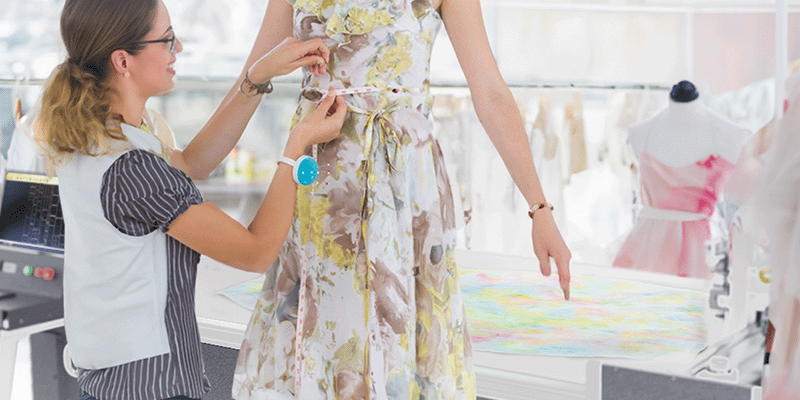
Consumer expectations for clothing are changing. For many years, mass production and fast fashion made apparel cheaper and more available, but they also created overproduction, inventory pressure, and environmental concerns.
Today, more consumers value personal style, fit, quality, and sustainability. They do not only want to buy clothes. They want garments that better match their body, lifestyle, taste, and values.
This is why personalized clothing, customization, small-batch orders, and on-demand production are becoming more important in the apparel industry.
For brands, this changes product development and sales strategy. For garment factories, it changes production requirements.
Traditional factories are usually built for high-volume, standardized, repeatable production. Personalized apparel requires a different capability: faster style changes, smaller order handling, more flexible workflows, and stable quality without excessive cost.
This is where flexible manufacturing, digital design, automation, and smart workflows become essential.
Why Demand for Personalized Clothing Is Growing
The growth of personalized clothing is not only about consumers wanting something different. It reflects several larger market changes.
First, consumers are becoming tired of overly standardized mass fashion. Many buyers want clothing that better fits their personal style and body shape.
Second, sustainability awareness is increasing. Compared with overproduction and clearance-driven retail, made-to-order and small-batch customization can reduce inventory risk and waste. When garments better match consumer needs, they are also more likely to be worn longer.
Third, digital tools make personalization more practical. Online configuration, virtual fitting, digital patterns, CAD/CAM, smart marker planning, and automatic cutting all help brands and factories handle more diverse production needs.
For factories, this does not mean every garment must be fully customized. It means factories need more flexible production capability for multiple styles, small batches, faster changeovers, and different size requirements.
Key Challenges for Factories
1. Small Batches Increase Changeover Cost
Mass production works well because the workflow is stable and unit cost is low.
When orders become smaller and more varied, factories need to change patterns, materials, operations, and schedules more often.
If the equipment and workflow are not flexible enough, changeover time increases, efficiency decreases, and cost rises.
2. Customization Increases Management Complexity
Personalized apparel may involve different sizes, colors, embroidery, prints, accessories, patterns, labels, or packing requirements.
If data management is unclear, factories may face wrong styles, wrong colors, wrong labels, missing items, or shipment errors.
Factories cannot rely only on manual communication for customized orders. They need clearer digital data workflows.
3. Quality Must Remain Consistent
Customization does not mean quality can be unstable. In fact, consumers often expect more from personalized products.
Factories need to maintain cutting accuracy, sewing quality, dimensional stability, and shipment correctness even when styles change frequently.
This creates challenges for equipment, operators, and management systems.
Six Manufacturing Methods That Support Personalized Apparel
1. Modular Cutting Systems
Modular cutting systems allow factories to adjust equipment setup based on product, fabric, and order requirements.
For small-batch and multi-style production, cutting room flexibility is critical.
When combined with CNC or automatic cutting technology, factories can process different patterns and size combinations more quickly, reduce manual cutting errors, and reduce time lost during style changes.
The value of modular cutting is not only speed. It helps factories switch faster, produce more consistently, and maintain fabric utilization across different products.
2. CAD/CAM Software
CAD/CAM is a core foundation for personalized apparel production.
CAD helps digitize design and pattern making, making it easier to adjust size, pattern, and style details. CAM converts digital patterns into production or cutting instructions, reducing manual conversion errors.
For customized orders, CAD/CAM allows factories to modify, store, and reuse data quickly.
Factories can manage different sizes, styles, and customer requirements digitally, reducing mistakes caused by paper patterns or manual communication.
Virtual samples and simulation tools can also reduce physical sampling, material use, and development time.
3. Multi-Head Embroidery and Decoration Equipment
Embroidery, logos, names, badges, and local decoration are common personalization options.
Multi-head embroidery machines can process multiple garments at the same time, improving customization efficiency.
For uniforms, sportswear, schoolwear, group apparel, merchandise, and premium customized products, embroidery equipment helps factories offer more differentiated services.
However, embroidery data should also be managed digitally to avoid mistakes in design version, position, color, and customer requirements.
4. Automatic and Semi-Automatic Sewing Equipment
Sewing is still one of the hardest garment processes to automate fully. However, many selected operations can now be supported by automatic or semi-automatic equipment.
Examples include template sewing machines, automatic button sewing machines, automatic hemming machines, automatic pocket setting machines, sleeve attachment equipment, and specialized sewing devices.
These machines help reduce skill barriers, shorten training time, and improve consistency.
For personalized apparel, they help factories maintain stable production even when styles vary more often.
5. Human-Machine Collaboration
Human-machine collaboration does not mean replacing people completely. It means allowing people and machines to focus on what they do best.
Machines are strong in repetitive, standardized, and stable-output tasks. People are strong in judgment, adjustment, inspection, detail handling, and special order confirmation.
In a human-machine collaboration model, operators are no longer only repeating manual actions. They monitor equipment, confirm quality, handle exceptions, and adjust workflows.
This is especially important in personalized production, where flexibility and consistency are both needed.
6. Flexible Workstations
Flexible workstations can be reconfigured based on order needs. This may include changing worker arrangement, machine layout, operation sequence, or material flow.
For small-batch and multi-style production, a fixed mass-production line may not always be the most efficient.
Factories may need flexible production cells that can quickly adjust cutting, sewing, decoration, inspection, and packing workflows.
Flexible workstations also help reduce overproduction risk. When factories can switch products faster, they do not need to overproduce simply to maintain line efficiency.
Personalized Apparel and Sustainable Manufacturing
When managed well, personalized apparel can support more sustainable production.
First, customization and on-demand production can reduce inventory pressure. Factories do not need to produce large volumes of uncertain products, and brands can reduce clearance and disposal risk.
Second, clothing that better matches consumer needs is more likely to be worn for a longer time.
Third, digital design and virtual sampling can reduce physical samples and material use.
Fourth, smart marker planning and automatic cutting can reduce fabric waste.
However, personalization is not automatically sustainable. If every custom item requires excessive sampling, complicated shipping, special packaging, or inefficient production, it may increase cost and environmental burden.
The key is whether the factory has efficient flexible manufacturing capability.
How OSHIMA Supports Personalized Apparel Production
OSHIMA has long supported the garment industry and understands the challenges factories face when handling multiple styles, small batches, and shorter lead times.
In the pre-cutting and cutting room process, OSHIMA’s inspection, spreading, cutting, and smart data equipment help improve fabric preparation efficiency and cutting consistency.
Automatic cutting and smart spreading equipment can support different patterns and fabric needs while reducing manual errors and changeover pressure.
When combined with AI fabric inspection and digital dashboards, factories can better monitor fabric quality, spreading status, cutting progress, and production data.
For personalized apparel, the real value is not one single machine. It is whether the workflow from design data, fabric preparation, cutting, sewing, decoration, packing, and shipment can become faster, more stable, and more traceable.
Conclusion
Personalized clothing demand is changing how garment factories need to operate. Future factories cannot rely only on mass production. They need stronger flexible manufacturing capability.
Modular cutting, CAD/CAM, multi-head embroidery, automatic sewing, human-machine collaboration, and flexible workstations can all help factories handle small-batch, multi-style, and customized orders more effectively.
For garment factories, personalization is not only a marketing topic for brands. It is a production challenge.
Factories that can change styles faster, reduce errors, and manage data more clearly will be better positioned in the personalized apparel market.
Modern consumers want more than cheap clothing. They want garments that fit their needs, feel higher quality, and are worth wearing longer.
Factories that use smart equipment and flexible manufacturing to respond to this demand can find new growth opportunities in both personalization and sustainability.


Article Classification
Recent Articles
- If Every Machine Is Running, Why Does the Factory Still Feel Stuck?
- AI Fabric Inspection: Turning Fabric Defects into Cutting Room Decisions
- Where Does a Garment Factory Lose Energy During Production?
- What Changes When Garment Factory Data Becomes Connected?
- How Garment Factories Can Boost Fabric Utilization and Cut Waste?