
 0
0



- Home
- Blog
- Smart Manufacturing
- Why Digital Transformation Fails in Garment Manufacturing
Why Digital Transformation Fails in Garment Manufacturing

In the digital era, many traditional manufacturers have been approached by technology providers, system integrators, or industry organizations promising to help them achieve digital transformation.
The message often sounds simple: introduce a new system, connect machines, use dashboards, and the factory becomes digital.
But for garment factories, the reality is rarely that easy.
The textile and garment industry is labor-intensive, equipment-heavy, process-driven, and time-sensitive. From fabric inspection, relaxation, spreading, cutting, sewing, pressing, needle detection, packing, and shipment, each process involves different machines, people, data formats, and management needs.
If a factory buys a system or smart machine without clarifying workflow, data structure, access control, employee adoption, and supplier support, digitalization often gets stuck in the second stage.
This is why many digital transformations fail to meet their original objectives. BCG has reported that about 70% of digital transformations fall short of their goals. McKinsey has also noted that transformation failure is often related to insufficient engagement, unclear ambition, and weak capability building.
For garment factories, the issue is not only technology. The real question is whether technology, workflow, people, and suppliers can work together.
Digital Transformation Is Not Just Buying Equipment
When factories discuss digital transformation, they often think about ERP, MES, digital dashboards, AI fabric inspection, smart spreading, or IoT-connected machines.
These tools matter, but they are only part of the transformation.
Real digital transformation is not simply converting paper records into Excel. It is not only connecting a machine to the internet. It is not installing a beautiful dashboard in the office.
Real digital transformation means the factory can use data to see problems, improve workflow, reduce human error, and make faster decisions.
For example, a smart spreading machine is not only a machine that spreads fabric. It can provide spreading length, layer count, machine status, and production data.
An AI fabric inspection machine is not only a machine that detects defects. It can turn defect location, category, and image data into traceable quality information that later spreading and cutting processes can use.
If these data points remain isolated in different machines, and managers still need manual summaries, the factory has purchased digital equipment but has not achieved digital transformation.
Three Stages of Digital Transformation in Garment Factories
Stage 1: Digitization
Digitization means converting paper-based, manual, or verbal information into digital form.
In garment factories, this may include using ERP for orders, purchasing, inventory, and finance; CAD for pattern making and marker planning; barcodes or QR codes for materials and finished goods; or replacing paper production records with system input.
The purpose is to improve data accuracy and accessibility.
At this stage, information that used to be hidden in paper files, verbal reports, or department-level records becomes easier to store, search, and trace.
However, digitization is not transformation. It only turns information into a digital format.
Stage 2: Digital Optimization
Digital optimization is where many factories get stuck.
At this stage, the factory may already have ERP, CAD, automatic cutting machines, smart spreading machines, AI inspection systems, or digital dashboards.
The question is: is the factory using this data to improve workflow?
Digital optimization means using data to increase efficiency, reduce errors, improve quality, and reduce waste.
For example, spreading data can help managers understand cutting room capacity. AI inspection data can help track fabric defects. Cutting data can help analyze fabric utilization. Needle detection and scanning data can help support traceability.
But if different systems cannot communicate, or departments do not share data, digital optimization stops.
This is why many factories appear digital on the surface but still feel inefficient on the shop floor.
Stage 3: Digital Transformation
Digital transformation happens when factory operations begin to change because of data.
Managers no longer rely only on after-the-fact reports. Departments no longer depend only on phone calls, paper notes, or verbal updates. Machines no longer operate only as separate units.
For example, fabric inspection data can support spreading and cutting. Spreading and cutting data can feed into dashboards. Needle detection, scanning, sorting, and packing data can support shipment and inventory management.
When these processes gradually connect, the factory moves from isolated digital tools to real digital transformation.
The goal is not to use more technology. The goal is to make data part of production decisions.
Why Garment Factories Often Fail in the Second Stage
1. Buying Equipment Without Defining the Goal
Many factories adopt digital equipment because of market trends, subsidies, customer requirements, or supplier recommendations.
But if management has not defined the goal, the equipment becomes an isolated project.
Before investing, factories should ask:
Why are we transforming?
Do we want to reduce manual records?
Do we want to reduce fabric waste?
Do we want to improve cutting room efficiency?
Do we want better visibility across multiple factories?
Do we need production data for brand customers?
Different goals require different implementation priorities.
Without a clear goal, transformation becomes equipment purchasing instead of problem solving.
2. Systems Do Not Connect, Creating Data Silos
Many garment factories use selective digitalization. They first digitalize the most important or most painful process. For example, they may start with ERP, then CAD, then smart equipment later.
This is practical, but it can create integration problems.
Systems purchased at different times may use different data formats, different interfaces, different suppliers, and different permission structures.
NIST’s work on smart manufacturing data analytics also highlights two major technical barriers to wider adoption: selecting the right analytics tools and integrating those tools with data acquisition and decision-support systems.
This is exactly where many manufacturing digitalization projects become difficult.
3. Non-IT Teams Do Not Understand Why Integration Is Hard
For purchasing, sales, production supervisors, and operators, the question is often simple: why can system A not connect directly to system B?
Why can machine data not automatically enter ERP? Why can the machine show data locally, but the office cannot see it?
These are reasonable questions. But the answer may involve data formats, APIs, communication protocols, data permissions, cloud architecture, cybersecurity, and supplier support.
Factories should not simply ask employees to “use the new system.” They should help non-IT teams understand the basic logic of digital transformation.
When employees understand why implementation must be staged, why data must be standardized, and why access control matters, resistance becomes easier to manage.
4. Employees Feel the System Only Adds More Work
Digital transformation often fails not because the system cannot work, but because people do not want to use it.
If a new system feels like extra data entry, more monitoring, or another layer of trouble, employees will not support it.
This is especially common in traditional manufacturing, where experienced workers are used to existing workflows and new workers may not receive enough training.
Before implementation, factories should clearly explain:
Which manual tasks will be reduced?
Which on-site problems will be improved?
How will the data be used?
Who will support employees when problems occur?
Digital transformation should not benefit only management. It should also help on-site teams reduce mistakes and make work clearer.
5. Suppliers Sell Products but Do Not Support Implementation
Digital transformation involves machinery, data, software, electrical control, workflow, and after-sales service.
If a supplier only sells a machine but does not understand garment factory workflow, the equipment may not deliver full value.
A good supplier should help the factory evaluate which process should be digitalized first, whether the machine can output data, whether it can connect with dashboards, whether the system is scalable, what training is needed, and how after-sales support will work.
For garment factories, a digital transformation supplier is not only a machine seller. It is a long-term partner for process improvement and data integration.
Four Keys to Successful Digital Transformation
1. Identify the Starting Point
Factories should first assess their current digital maturity.
Which processes already use systems?
Which data is still manual?
Which machines can output data?
Which workflows create the most errors?
Which departments need real-time information most?
If the factory already has ERP and CAD, the next step may be connecting cutting room machine data to a dashboard.
If the factory still relies heavily on handwritten records, the first step may be barcode systems, basic data structure, or production record digitization.
The starting point should depend on the factory’s actual situation.
2. Define Priorities
Digital transformation cannot happen everywhere at once.
Factories should first choose the process with the highest improvement value.
If the biggest issue is fabric waste, the priority may be inspection, spreading, cutting, and marker planning.
If the biggest issue is poor visibility, the priority may be machine data collection and dashboards.
If the biggest issue is inventory error, the priority may be barcodes, ERP, or warehouse data management.
If the biggest issue is unstable quality, the priority may be AI inspection, needle detection, scanning, and traceability.
Solving the most visible pain point first helps management and employees see the value of transformation.
3. Build a Scalable Roadmap
A strong digital transformation roadmap does not require replacing every machine at once.
Each step should prepare for the next step.
When buying new equipment, factories should check whether the machine can output data, whether it can support future integration, whether the supplier can provide technical documents, and whether the system can expand later.
NIST smart manufacturing research continues to focus on the integration of data, tools, models, and decision support. This reflects an important reality: manufacturing digitalization is not about one tool. It is about system architecture.
For garment factories, the equipment purchased today should not become tomorrow’s integration barrier.
4. Prepare the Team, Not Only the System
Digital transformation is a technology project and a people project.
Factories should communicate internally before implementation. Different departments need to understand the goal, implementation order, data use, and workflow impact.
After implementation, factories should provide training, feedback channels, and regular review.
If operators do not know why the system is needed, supervisors do not know how to read data, IT does not understand machine output, and suppliers cannot respond quickly, the system may fail after launch.
Successful transformation does not happen on the go-live date. It happens when employees start using data to improve work.
How OSHIMA Supports Garment Factory Digital Transformation
OSHIMA has long supported textile and garment manufacturers and understands the real challenges of digital transformation in equipment-heavy, labor-intensive factory environments.
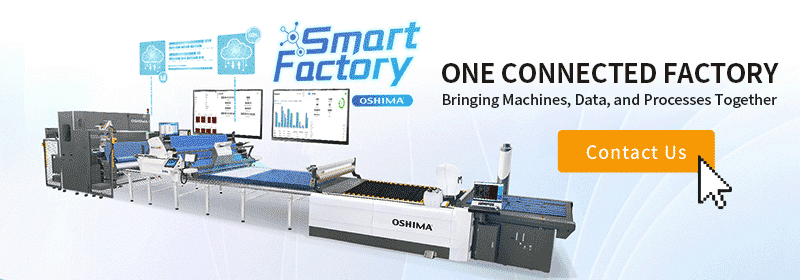
In cutting room digitalization, OSHIMA provides AI fabric inspection, smart fabric spreading, cutting equipment, and data integration solutions to help factories build clearer workflows from fabric inspection and spreading to cutting and quality management.
AI fabric inspection helps convert fabric defects into traceable data. Smart spreading uses IoT functions to provide spreading length, layer count, machine status, and production data. Digital dashboards help turn machine data into clear production information for management.
For factories, the value of these solutions is not only automation. The value is helping production data enter the management process, reducing manual reporting errors, improving quality consistency, and building a foundation for smart manufacturing.
Conclusion: Digital Transformation Fails Without an Implementation Strategy
The biggest challenge in garment factory digital transformation is often not the first step of digitizing information. It is the second step: using that information to improve the factory.
If a factory has ERP, CAD, smart machines, or dashboards, but the data is not connected, workflows are not improved, employees do not use the system, and suppliers cannot support implementation, the transformation will stop.
A practical approach starts with identifying the current digital maturity, defining priorities, building a scalable roadmap, and preparing the team.
Digital transformation is not a one-time purchase. It is a long-term process of improving workflow, integrating data, developing people, and choosing reliable suppliers.
For textile and garment factories, the goal is not to chase the newest technology. The goal is to use technology to solve real production problems.
When AI, IoT, digital dashboards, and automation equipment are connected with factory workflow, digital transformation becomes more than a slogan. It becomes real competitiveness.


Article Classification
Recent Articles
- If Every Machine Is Running, Why Does the Factory Still Feel Stuck?
- AI Fabric Inspection: Turning Fabric Defects into Cutting Room Decisions
- Where Does a Garment Factory Lose Energy During Production?
- What Changes When Garment Factory Data Becomes Connected?
- How Garment Factories Can Boost Fabric Utilization and Cut Waste?