
 0
0



- Home
- Blog
- Smart Manufacturing
- How Can Automation Help Garment Workers Do Higher-Value Work?
How Can Automation Help Garment Workers Do Higher-Value Work?
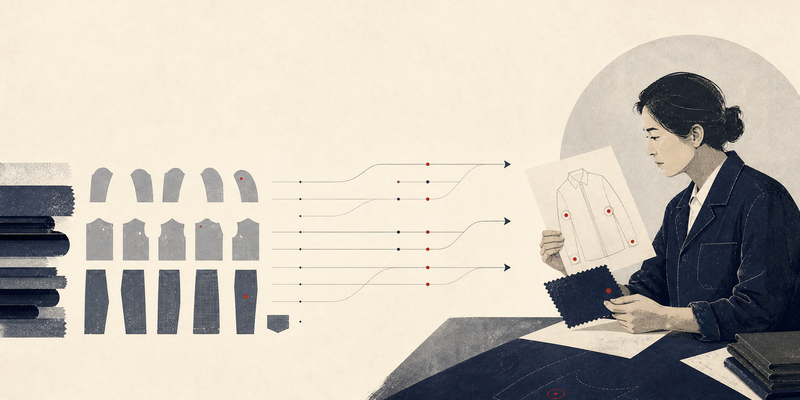
As garment factories automate more spreading, cutting, inspection and finishing work, the role of the operator begins to change as well. Some tasks require fewer repeated manual actions, but that does not mean production knowledge becomes less important. In many cases, factories need people to spend more time on setup, monitoring, quality judgment and abnormality handling.
The practical issue is how to make that transition useful. A machine may remove repetitive work from one process, but the factory gains more when the person who used to perform that work can take greater responsibility for conditions the machine cannot judge on its own. Fabric behavior, production priorities, unusual defects, changeovers and downstream consequences still require experience.
This is where Human-Machine Collaboration, or HMC, becomes relevant to garment production. The objective is not to divide the factory into work for people and work for machines once and for all. It is to keep adjusting that division so repetitive execution is handled more consistently while people spend more of their time on decisions, exceptions and process improvement.
Start by Moving Repetitive Work Away from Skilled Operators
Automation Should Free Time for Setup Monitoring and Quality Control
High-volume repetitive work is usually the most practical place to introduce automation, particularly where fatigue, handling or individual technique can affect consistency.
The cutting room is a clear example. During spreading, tension, edge alignment and repeated handling can influence the lay before cutting starts. Automated spreading can control these conditions more consistently, while automatic cutting reduces the amount of repeated manual cutting and follows digital cutting files across multiple lays.
The same principle applies further downstream. Heat-pressing and selected finishing processes can use controlled temperature, pressure and time to reduce variation from repeated manual operation. Needle detection can perform repeated inspection under defined conditions rather than depending on visual checking alone.
The important change is what happens to the operator after those repeated actions are reduced.
Instead of spending most of the shift physically repeating the same task, the operator can spend more time preparing the process, checking fabric conditions, confirming machine setup, monitoring quality and handling abnormalities.
That is a more useful way to look at automation than simply asking how many manual actions have disappeared. The machine should reduce the work that benefits from repetition and consistency, while the person takes greater responsibility for the conditions around that work.
Automation Changes the Job Before It Changes the Headcount
Operators Need to Understand More Than Machine Settings
A more automated machine does not eliminate the need for production knowledge. In many cases, it increases the importance of understanding what is happening before and after the machine cycle.
Fabric may behave differently from the previous roll. A style change may require different handling. A tension problem may appear only after several layers have been spread. A cutting issue may come from the material rather than the machine.
An operator who understands both equipment and fabric behavior is in a better position to recognize these differences early.
This changes the skills factories need from operators. The job becomes less dependent on repeating one movement well and more dependent on understanding machine settings, material conditions, quality requirements and what the next process expects.
Cross-training becomes more useful for the same reason. When operators understand neighboring processes, they can see how a decision at one station affects the next stage instead of treating each machine as an isolated task.
For a factory facing style changes, smaller orders and frequent production adjustments, that broader understanding becomes an important part of flexibility.
Better Information Gives Operators Better Decisions
Production Data Needs to Reach the Person Who Can Act on It
Automation can reduce manual work, but disconnected information can easily create another kind of manual burden.
Fabric inspection may find defects, but the records remain at the inspection station. The spreading operator then needs to check the information again. Cutting may finish on schedule, while the next team still waits for identification or confirmation. Production data may exist, but the person responsible for the next decision cannot see it.
When this happens, the factory has automated individual operations while leaving the handover between them largely manual.
Human-machine collaboration therefore also depends on information flow.
Inspection records, spreading information, cutting progress and final inspection data become useful when the people responsible for the next process can access them without rebuilding the production history manually.
In the cutting room, for example, fabric inspection can establish defect locations before spreading. Spreading equipment can record lay length, layers and operating status. Cutting equipment works from the production file assigned to that lay.
When these records remain connected, operators and supervisors spend less time searching for information and more time deciding what to do with it.
That is one of the clearest ways technology can make a worker's role more valuable: reduce the time spent recovering information and increase the time available for production decisions.
More Production Data Does Not Automatically Create Better Work
Operators and Supervisors Need Information They Can Use
Connected equipment can generate large amounts of production data, including output, machine status, downtime, spreading information, inspection results and other operating records.
Displaying more data does not automatically improve production.
A production manager does not need every available value on a dashboard. The useful information is the information that helps someone act: which order is falling behind, why a machine keeps stopping, whether a material problem is affecting the next process, or where labor and equipment need to be reassigned.
Operators often provide the context that machine data alone cannot show. A stop may be recorded as downtime, but the operator may know it happened because of a fabric condition, a material change or an adjustment requested by production.
Supervisors then combine that shop-floor understanding with order priorities and production requirements.
As automation increases, this ability to interpret what the machine is reporting becomes part of the operator's value. The role moves further away from simply running equipment and closer to understanding whether the process is actually under control.
AI Fabric Inspection Changes Where Experience Is Used
Detection Can Be Automated but Confirmation Still Needs Judgment
Fabric inspection is one of the clearest examples because automation can support repetitive detection while human experience remains important for confirmation and production decisions.
Manual inspectors build knowledge of fabric construction, defect appearance and customer requirements over time. However, long periods of repetitive visual searching are tiring, and different inspectors may classify the same condition differently.
AI-assisted inspection can help create a more consistent first layer of detection while recording defect images, categories and positions for later use.
Its performance still depends on fabric conditions, inspection setup, available training data and the way results are reviewed. Difficult defects, unusual fabric appearances and false detections still require experienced judgment.
The role of the inspector therefore does not simply disappear. It begins to shift.
Experienced Inspectors Become More Important After the Defect Is Found
Once a possible defect is identified, someone still needs to determine what it means for production.
Is the condition a true defect? How should it be classified? Does its position matter to the planned product? Should the information affect spreading or cutting? Is the same issue appearing repeatedly?
These questions require production context.
AI can reduce the amount of time spent continuously searching for defects, while experienced inspectors can spend more attention on confirmation, classification, unusual conditions and feedback that improves later inspection performance.
The value becomes greater when defect information continues beyond the inspection machine. Once defect positions are recorded digitally, they can support decisions before spreading and cutting rather than remaining as an isolated inspection record.
In this case, automation does not remove human expertise. It changes where that expertise is used.
Higher-Value Work Requires Broader Production Skills
Cross-Training Matters More as Equipment Becomes Automated
When equipment takes over more repetitive execution, the remaining human work often crosses traditional process boundaries.
A spreading operator may need to understand how fabric condition will affect cutting. An inspection operator may need to understand which defects matter to the marker. A production supervisor may need to interpret equipment records together with order status and quality requirements.
This makes cross-process knowledge increasingly useful.
A worker who only knows which button to press can operate a machine under normal conditions. A worker who understands why the settings matter can respond when the fabric, order or process changes.
That difference becomes more important as factories automate.
Training therefore needs to develop alongside equipment investment. New machines may simplify physical operation, but factories still need people who understand material behavior, process relationships, abnormality handling and the production consequences of their decisions.
The machine can make an operation easier to repeat. It cannot automatically create that broader production understanding.
Connected Equipment Should Support the People Running the Process
From Fabric Inspection to Cutting-Room Decisions
Within this type of workflow, OSHIMA's related solutions cover fabric preparation, AI fabric inspection, spreading, automatic cutting, pressing and ironing processes, needle detection, scanning, sorting and production-data applications.
The value of each machine should still be evaluated according to what it changes in the surrounding workflow.
Fabric preparation affects how material behaves during spreading. More stable spreading gives cutting a more consistent lay. Inspection information becomes more useful when recorded defect locations are available to the people planning or operating the next process.
At the finished-product end, inspection, scanning and identification records can also support quality confirmation and handling before packing and shipment.
Looking at the equipment this way changes the purchasing discussion. The issue is not only how much work a machine can perform automatically, but what repeated work it removes from the operator and what new responsibility remains after automation.
Using Inspection Data Further Downstream
OSHIMA's EagleAi® system records fabric-inspection information, while IoT-connected spreading and cutting-room equipment can carry production information further downstream. Where required, projection can also display cut-file and recorded defect information at the spreading table.
OSHIMA's IoT Dashboard extends recorded fabric information into spreading planning. Known defect data can be reviewed against the planned lay before spreading begins, allowing the production team to see how recorded defects may affect the arrangement and make adjustments where necessary.
This gives operators and supervisors more information before physical production reaches the point where correction becomes more difficult.
The important measure is therefore not how many systems are connected. It is whether the information produced by one stage reaches the person who needs to make the next decision.
Measure Automation by What It Allows People to Stop Repeating
Factories do not need to automate every operation to create better human-machine collaboration.
A practical starting point is to identify where skilled people are still spending large


Article Classification
Recent Articles
- If Every Machine Is Running, Why Does the Factory Still Feel Stuck?
- AI Fabric Inspection: Turning Fabric Defects into Cutting Room Decisions
- Where Does a Garment Factory Lose Energy During Production?
- What Changes When Garment Factory Data Becomes Connected?
- How Garment Factories Can Boost Fabric Utilization and Cut Waste?