
 0
0



- Home
- Blog
- Smart Manufacturing
- Track Your Floor from Anywhere: The Power of IoT in Garment Factories
Track Your Floor from Anywhere: The Power of IoT in Garment Factories
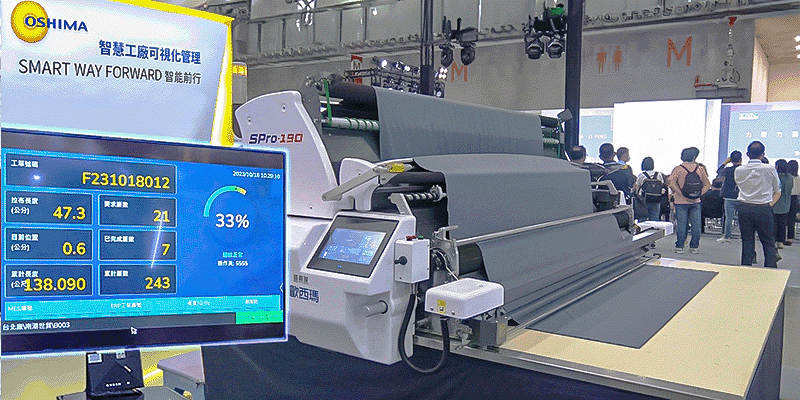
The Internet of Things, or IoT, is changing how manufacturing operations are managed. In garment manufacturing, the value of IoT is not simply connecting machines to the internet. It is helping factories see machine status, production progress, abnormal records, and resource use in real time.
In the past, many garment factory machines operated as standalone units. Fabric spreading machines, inspection machines, cutting machines, needle detectors, heat press machines, and packing equipment all worked separately. Data might stay inside the machine, on paper records, or in verbal reports from operators.
If managers were not on-site, it was difficult to understand the real production situation.
When factory networks expand across Vietnam, Cambodia, Indonesia, Bangladesh, China, Taiwan, and other regions, delayed information becomes a serious management problem.
The role of IoT is to connect scattered machines and production lines into a clearer management system. It allows managers to monitor global production with more timely and accurate data.
In garment manufacturing, the core value of IoT is not only automation. It is global management, real-time decision-making, and production transparency.
The Core Idea of IoT: Turning Machines into Manageable Data Sources
IoT allows machines to transmit operating data through sensors, controllers, networks, and software platforms.
In garment factories, this data may include:
Machine on/off status.
Production output.
Spreading length and layer count.
Fabric defect data.
Cutting progress.
Needle detection results.
Heat press temperature and pressure.
Energy use.
Abnormal alarms.
Maintenance records.
When this data can be collected and organized in real time, the factory can move from after-the-fact reporting to real-time monitoring.
The value of IoT is not having more data. The value is whether the data helps managers answer important questions.
Which machine has the longest downtime?
Which shift has lower output?
Which fabric batch has more defects?
Which factory needs maintenance support?
Which order may be delayed?
Four Major Values of IoT in Garment Manufacturing
1. Improving Production Efficiency
IoT helps factories collect machine data automatically and reduce errors caused by manual recording or verbal reporting.
For example, a smart spreading machine can record spreading length, layer count, speed, and operating status. An AI fabric inspection machine can record defect location, defect images, and defect types. A needle detection system can record inspection results and abnormal batches.
When data no longer depends on manual summaries, managers can understand production progress faster and reduce information gaps.
2. Reducing Operating Cost
IoT helps factories identify machine idle time, downtime, abnormal energy use, and workflow bottlenecks.
For example, a machine may stop briefly many times a day. Without data, this may be treated as normal. With IoT data, the factory can analyze whether it is related to operator behavior, material supply, machine wear, or scheduling.
IoT can also support preventive maintenance. When machine data shows abnormal trends, factories can schedule inspection before a small issue becomes unexpected downtime.
However, predictive maintenance is not suitable for every machine. Factories should first evaluate equipment importance, downtime cost, data availability, and maintenance cost before introducing advanced analytics.
3. Improving Quality Stability
Quality management needs data.
IoT makes it easier to store and trace equipment data and quality records.
For example, AI fabric inspection data can help factories track defect distribution. Needle detection data can help trace final safety checks before shipment. Heat press data can confirm whether temperature, time, and pressure match process requirements.
When quality issues occur, factories can use data to trace the source instead of relying only on operator memory or paper records.
This is especially important for export-oriented garment factories because international customers increasingly value quality records, traceability, and production transparency.
4. Supporting Better Decisions
The hardest part of managing global factories is information delay.
A headquarters may be in Taipei while factories are in Vietnam, Cambodia, or Bangladesh. If management relies only on daily reports or manual updates, decisions will always come late.
IoT and digital dashboards allow managers to see machine status, production progress, and abnormal information from different sites in real time.
This helps companies adjust schedules, allocate resources, arrange maintenance, and support specific factories faster.
For global apparel manufacturers, IoT is the foundation for connecting different production sites into one management system.
Practical IoT Applications in Garment Manufacturing
1. Production Visualization
IoT allows managers to see whether each machine is running, stopped, producing normally, or sending abnormal alarms.
This is useful in fabric inspection, spreading, cutting, needle detection, and packing areas.
When machine data becomes visible, managers can find bottlenecks earlier instead of investigating only after delivery is delayed.
2. Resource and Energy Management
Garment factories use equipment, lighting, steam, and electricity. Without data, it is difficult to know where energy waste happens.
Through IoT, factories can track machine operating time, energy use, downtime, and output. This helps improve scheduling and machine utilization.
This not only reduces cost but also helps factories respond to brand requirements for energy efficiency and sustainable manufacturing.
3. Remote Machine Management
For multi-site factories, remote management is one of the most valuable IoT applications.
Managers do not need to visit each factory to know whether machines are operating normally. Through cloud platforms or dashboards, headquarters can view equipment status across locations and respond faster when abnormalities occur.
This is useful for overseas factories, distributor service networks, and cross-border production management.
4. Maintenance and Fault Response
IoT helps factories build better machine history records, including operating hours, maintenance records, abnormal events, downtime reasons, and spare part replacement.
When a machine has a problem, the system can provide clearer fault information so maintenance teams can respond faster.
Over time, this helps factories establish preventive maintenance and reduce losses caused by sudden downtime.
Four Issues to Consider Before Implementing IoT
1. Technical Compatibility and System Integration
Garment factories often use machines from different brands, years, and control systems. The most common IoT challenge is whether machines can output data and whether the data formats can be integrated.
If machines cannot connect, sensors, middleware, or machine modification may be needed. If data formats differ, the factory needs a common data standard.
IoT implementation is not just buying a platform. It begins with reviewing machines, data, and workflow.
2. Technical Support and Maintenance Capability
As machines become more digital, technical support becomes more important.
Factories should confirm whether suppliers can provide system updates, troubleshooting, remote support, user training, and long-term maintenance.
If an IoT system is launched but not maintained, data interruption, system errors, and connection problems may reduce user trust.
For factories, supplier support is as important as the machine itself.
3. Data Security and Privacy
IoT makes machine data easier to collect and share, but it also increases cybersecurity risk.
Factories should consider account permissions, data encryption, backups, password management, secure remote access, and data separation. Headquarters, factory managers, supervisors, maintenance staff, and suppliers should not all have the same access rights.
Data security should not be handled only after a breach. It should be built into the system design.
4. Cost and Return on Investment
IoT implementation may require hardware, sensors, networks, platforms, machine modification, data integration, and employee training.
Factories should not look only at upfront cost. They should evaluate long-term benefits, such as reducing manual records, lowering downtime, improving machine utilization, supporting quality traceability, shortening abnormal response time, and improving multi-site management.
A practical approach is to start from high-value processes, such as smart spreading, AI fabric inspection, needle detection records, or cutting room dashboards, then expand gradually.
OSHIMA’s IoT Solutions
OSHIMA has long supported the garment and textile industry and understands the practical needs of factories with many machines, long workflows, multi-site management, and overseas service requirements.
In IoT applications, OSHIMA continues to develop connected, recordable, and visualized equipment and management solutions.
For example, the SPro smart spreading machine can help return spreading length, layer count, machine status, and production data. This gives managers clearer visibility into the pre-cutting process.
AI fabric inspection can turn defect location, images, and categories into traceable data for quality management. Needle detection, heat press machines, and other equipment with data output capability can gradually be connected to digital dashboards or management platforms.
For customers, the value of IoT is not one connected machine. It is the ability to build one management logic across multiple machines.
When machine data can be managed centrally, factories can reduce the complexity of working with multiple suppliers and shorten abnormal response time.
In data security, cloud systems should include account permissions, password protection, data desensitization, data separation, and backup mechanisms. For IoT systems to be trusted long term, convenience and security must be considered together.
Conclusion
IoT in garment manufacturing has moved beyond simple machine connection. It is becoming a foundation for global factory management, real-time decision-making, and smart manufacturing.
For garment factories, IoT can improve production efficiency, reduce operating cost, support quality traceability, enable remote management, and make multi-site production more transparent.
However, IoT should not be implemented only for the sake of technology. The real questions are whether machines can output useful data, whether systems can integrate, whether employees can use the data, whether suppliers can support the system, and whether data is managed securely.
From SPro smart spreading machines and AI fabric inspection to other connected equipment, OSHIMA’s direction is to help factories build visualized, traceable, and manageable smart manufacturing workflows.
For global apparel manufacturers, future competitiveness will not come only from machines. It will come from the ability to connect equipment, data, and people across different locations into one clear, real-time, and secure management system.


Article Classification
Recent Articles
- If Every Machine Is Running, Why Does the Factory Still Feel Stuck?
- AI Fabric Inspection: Turning Fabric Defects into Cutting Room Decisions
- Where Does a Garment Factory Lose Energy During Production?
- What Changes When Garment Factory Data Becomes Connected?
- How Garment Factories Can Boost Fabric Utilization and Cut Waste?