
 0
0



- Home
- Blog
- Smart Manufacturing
- How to Successfully Turn a Traditional Garment Factory Smart?
How to Successfully Turn a Traditional Garment Factory Smart?
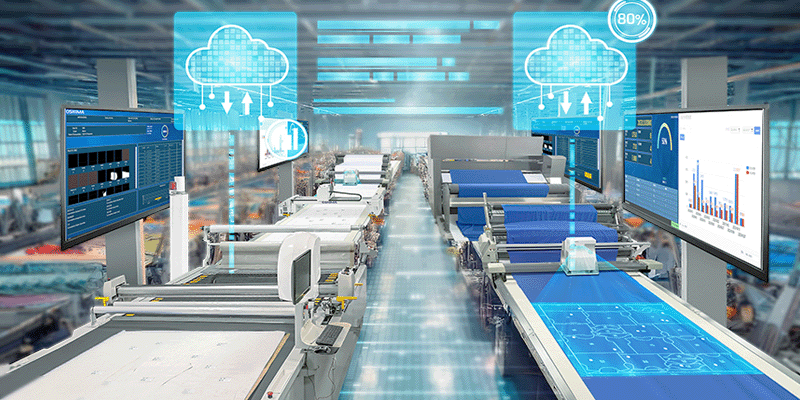
In today’s garment industry, speed, quality, cost control, and sustainability are no longer only competitive advantages. They are basic requirements for keeping orders and maintaining customer trust.
Traditional production models that rely heavily on manual labor, paper records, and standalone machines are facing increasing pressure. Consumer demand changes faster. Brand lead times are shorter. Regulations are stricter. Customers also expect more transparency, sustainability, and traceability.
For garment factories, the question is no longer whether modernization is necessary. The real question is how to modernize effectively without causing unnecessary production disruption. Modernization is not simply buying new machines. It is also not about adopting every new technology at once.
A successful modernization plan turns the factory into a more connected, transparent, flexible, and manageable system. This system requires equipment, data, workflow, people, and supply chain management to improve together.
Why Do Garment Factories Need Modernization?
Garment manufacturing has long depended on labor and experience. But the market environment has changed.
Brands want faster delivery.
Orders are becoming smaller and more varied.
Customers expect more stable quality.
Labor cost and labor shortage pressure are increasing.
Environmental and energy costs are becoming management priorities.
International buyers require clearer production records and traceability.
If factories still depend only on manual records, manual judgment, and disconnected equipment, managers will find it difficult to understand production status in real time. They will also struggle to identify bottlenecks quickly. The core value of modernization is helping factories handle more complex production tasks with less uncertainty.
7 Strategies for Modern Garment Production
1. Build a Smart Factory with IoT and Data Integration
A modern factory should not be a group of machines working separately. Equipment, data, and workflow should gradually become connected.
IoT allows machines to return production data, such as operating status, output, speed, downtime, error messages, energy use, and maintenance records.
When this data is gathered into dashboards or management platforms, managers can understand factory conditions faster.
For example, smart spreading machines can return spreading length, layer count, and machine status. AI fabric inspection machines can provide defect locations and images. Automatic cutting machines can report cutting progress. Needle detection and scanning systems can provide final inspection and tracking records.
When these data points are integrated, factories can answer important questions:
Which machine has the longest downtime?
Which order may be delayed?
Which fabric batch has more defects?
Which process needs more support?
Which machine should be scheduled for maintenance?
The goal of a smart factory is not to look advanced. The goal is to help managers make faster and better decisions.
2. Use Automation to Improve Productivity and Stability
Automation is a key foundation of modern garment production.
Its value is not simply replacing labor. Its value is assigning repetitive, time-consuming, and error-prone tasks to stable systems.
In the cutting room, automatic spreading and automatic cutting reduce manual spreading and cutting variation, improving fabric utilization and panel consistency.
In quality control, AI fabric inspection helps identify fabric defects and turn defect data into traceable records. This reduces variation caused by different inspection standards among operators.
In back-end processes, labeling machines, needle detectors, scanning systems, sorting systems, and packing equipment help reduce labeling errors, missing items, incomplete inspection, and shipment mistakes.
Automation allows workers to move away from repetitive low-value tasks and focus on quality confirmation, machine monitoring, abnormality handling, and process improvement.
This is especially important for factories facing labor shortages or high turnover.
3. Make Sustainability Part of Modernization
Sustainability should not be only a slogan in ESG reports. It should be built into equipment selection, energy use, fabric utilization, waste management, and production workflow.
Garment factories can begin with several practical actions:
Use more energy-efficient equipment.
Improve fabric utilization and reduce cutting waste.
Recycle fabric scraps and reusable materials.
Improve steam, lighting, and compressed air efficiency.
Use data to monitor machine energy use and downtime.
Strengthen quality control to reduce rework and rejected products.
For example, precise cutting and marker planning can reduce fabric waste. AI fabric inspection can find fabric problems earlier and prevent defective fabric from entering downstream processes. IoT data can help managers track equipment utilization and energy efficiency.
Sustainability and efficiency do not need to conflict.
For many factories, reducing waste is the most practical sustainability action.
4. Improve Workflow Efficiency with Lean Management
Modernization is not complete when new equipment is placed into an old workflow.
If the workflow is inefficient, new machines may only make old problems move faster.
Lean management focuses on finding and reducing waste in production, such as waiting, unnecessary movement, rework, overproduction, repeated data entry, poor material flow, and machine idle time.
Garment factories can begin with the cutting room.
Fabric inspection, relaxation, spreading, cutting, and panel sorting should become a smoother process. This reduces manual handling and waiting time.
For example, AI fabric inspection can provide defect location data. Smart spreading machines can stabilize fabric laying and return production data. Automatic cutting machines can cut according to digital files.
When these processes gradually connect, the cutting room becomes more than a group of machines. It becomes a manageable production system.
Factories should also review the physical layout of the shop floor.
Is the material movement path too long?
Are there too many waiting areas?
Are processes too far apart?
Workflow modernization often creates more impact than buying machines alone.
5. Build Flexible and Customized Production Capability
Modern markets no longer depend only on large-volume production of single styles. Small-batch, multi-style, short-lead-time, and personalized demand are increasing.
If a factory has only a fixed mass-production model, it will struggle with small orders and urgent orders.
Flexible production can be built through several methods:
Use equipment that supports faster style changeover.
Use low-ply or single-ply cutting machines for special orders.
Manage different patterns through CAD/CAM.
Create workstations that can be adjusted quickly.
Train workers who can support multiple processes.
Flexibility does not mean buying more equipment without a plan.
It means the factory can adjust production methods based on order requirements.
For garment factories, future competitiveness will depend not only on mass production capability but also on the ability to respond to small-batch and varied orders.
6. Optimize the Supply Chain with Digital Integration
Garment production involves raw materials, fabric, trims, outsourced processing, warehousing, shipment, and customer delivery.
If supply chain information is not transparent, internal efficiency may still be affected by material delays or data errors.
Supply chain digitalization can begin with ERP, inventory management, barcodes, QR codes, scanning, and supplier collaboration platforms.
For factories, the most important point is making raw material, work-in-progress, and finished goods status traceable.
For example, when fabric enters the factory, batch records can be created. After inspection, quality data can be stored. During spreading and cutting, production progress can be tracked. Before packing and shipment, scanning can confirm quantity and product details.
This reduces manual searching and verbal confirmation.
It also makes it easier to trace causes when quality or delivery problems happen.
The goal of supply chain digitalization is not to create more forms. The goal is to make information more accurate, timely, and useful.
7. Invest in Workforce Development
Modern machines need skilled operators.
If a factory introduces new equipment without training people, modernization will stay on the surface.
Workers need to learn more than starting and stopping machines. They need to understand machine logic, interpret data, handle abnormalities, maintain basic machine condition, and know when to report issues.
Training may include:
Equipment operation and safety.
IoT dashboard reading.
Basic troubleshooting.
Quality standards and inspection procedures.
Cross-process collaboration.
Machine cleaning and maintenance.
Modernization does not remove people from production. It helps workers move from repetitive physical tasks toward more technical roles.
The World Economic Forum has also highlighted that manufacturing digital transformation requires industrial intelligence and new digital capabilities, making workforce development a core part of successful transformation.
How Should a Garment Factory Start Modernization?
Modernization should not happen all at once, and it should not begin only with the most expensive machine.
A practical approach is to identify the most obvious bottleneck first.
If the cutting room is often delayed, improve inspection, spreading, and cutting first.
If quality is unstable, improve fabric inspection, quality records, and inspection equipment.
If shipment errors are common, improve scanning, needle detection, sorting, and packing.
If managers cannot see production status, begin with machine data and dashboards.
If workers cannot use new equipment effectively, begin with training and SOPs.
Each upgrade should have a clear goal, such as reducing downtime, reducing fabric waste, shortening lead time, increasing output, or improving traceability. This prevents modernization from becoming an expensive investment with unclear results.
How OSHIMA Supports Garment Factory Modernization
OSHIMA has long supported the garment and textile industry with equipment and solutions from pre-cutting preparation and quality inspection to cutting room, heat press, ironing, needle detection, and packing processes.
In garment factory modernization, OSHIMA can help factories begin with specific production bottlenecks.
AI fabric inspection can strengthen fabric quality management.
SPro smart spreading machines can create spreading data and production visibility.
Automatic cutting machines can improve panel consistency and cutting efficiency.
Labeling, needle detection, scanning, and sorting equipment can reduce downstream errors.
Digital dashboards can gradually connect machine data.
For factories, the most important point is not introducing every machine at once. It is building a more complete workflow based on real production needs. Our role is to help factories evaluate site pain points, choose suitable equipment, and connect equipment upgrades with process improvement.
Conclusion
Garment factory modernization is not only about buying new machines. It is about transforming the factory into a faster, more stable, more flexible, and more traceable production system.
IoT and data integration help managers see production status.
Automation reduces repetitive work and human error.
Sustainability measures reduce waste and energy cost.
Lean management improves workflow bottlenecks.
Flexible production supports small-batch and multi-style demand.
Supply chain digitalization improves transparency and traceability.
Workforce training is what makes every technology work in practice.
The factory of the future is not a completely unmanned factory. It is a factory where people, machines, data, and workflows work together effectively.
For garment manufacturers, modernization is not a one-time project. It is a continuous improvement process. Starting from the most visible bottleneck and gradually upgrading equipment, workflow, and workforce capability is the most practical way to create long-term value.


Article Classification
Recent Articles
- If Every Machine Is Running, Why Does the Factory Still Feel Stuck?
- AI Fabric Inspection: Turning Fabric Defects into Cutting Room Decisions
- Where Does a Garment Factory Lose Energy During Production?
- What Changes When Garment Factory Data Becomes Connected?
- How Garment Factories Can Boost Fabric Utilization and Cut Waste?