
 0
0



- Home
- Blog
- Smart Manufacturing
- How AI Improves Textile Color Difference Detection
How AI Improves Textile Color Difference Detection
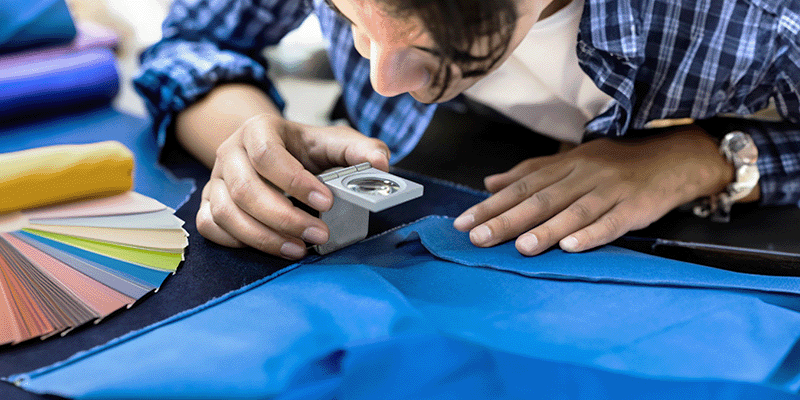
Imagine buying a cap where every panel has a slightly different color. Even if the stitching is good, the product will immediately look unstable in quality.
In textile and garment manufacturing, color consistency is critical. It affects product appearance, brand trust, production cost, and final quality.
If fabric color differences are not detected early, problems may move into cutting, sewing, or finished goods. By that stage, the factory may face rework, rejection, material replacement, delivery delays, or customer complaints.
Color difference detection is not a small detail. It is an important part of textile quality control.
With the development of AI vision technology and image analysis, textile color difference detection is moving from manual experience toward a more objective, measurable, visualized, and traceable process.
What Is Color Difference?
Color difference refers to the perceived difference between two fabric samples or two areas of the same fabric.
This difference is usually reflected in three areas:
Hue: whether the color shifts toward red, green, blue, or yellow.
Chroma: how vivid or saturated the color appears.
Lightness: how light or dark the color is.
In the textile industry, color difference is an important indicator of fabric quality stability.
This is especially important for sportswear, uniforms, shirts, jackets, caps, home textiles, and branded orders.
If different sections of the same fabric roll have visible shade variation, or if different fabric batches do not match, panels may show inconsistent color after cutting and sewing.
Common Causes of Textile Color Difference
1. Dye Batch Variation
Even when dye formulas are the same, small variations in dye manufacturing or batch preparation may create color differences.
When factories use different dye lots or supplementary dyeing, the risk of color variation increases.
2. Fabric Absorbency
Different fibers, constructions, pre-treatment methods, moisture levels, and absorbency affect how fabric takes in dye.
Cotton, polyester, nylon, elastic fibers, and blended fabrics may all react differently to dyeing.
Even under the same dyeing conditions, final color may vary.
3. Dyeing Environment
Temperature, humidity, water quality, pH value, liquor ratio, and dyeing time can all affect color development.
If these conditions are not stable, batch-to-batch variation or uneven fabric color may occur.
4. Dyeing and Finishing Techniques
Dye application method, machine tension, dyeing time, heat setting temperature, finishing process, and surface treatment can all cause color differences.
Some color differences do not appear clearly during dyeing. They may become visible after heat setting, washing, coating, pressing, or other finishing processes.
5. Lighting and Viewing Conditions
Color perception is highly sensitive to lighting.
The same fabric may look different under fluorescent light, natural daylight, warm light, or a D65 standard light source.
If the factory does not use consistent lighting and inspection conditions, different inspectors may reach different judgments.
How Do Textile Mills Traditionally Inspect Color Difference?
Traditional shade inspection often relies on experienced inspectors comparing fabric against standard color samples with the naked eye.
This method has value because experienced inspectors understand fabric behavior, customer standards, and production reality.
However, manual judgment can also be affected by light, fatigue, subjective standards, and environmental conditions.
For this reason, many factories use instruments for more objective measurement.
Colorimeter
A colorimeter measures reflected or transmitted light and converts color into numerical values.
It works like a tool for taking a quick “snapshot” of color data and is useful for basic color comparison and shade checking.
Spectrophotometer
A spectrophotometer provides deeper analysis by measuring reflectance or absorption across different wavelengths.
In textile color control, spectrophotometers are commonly used for more precise color matching, batch control, and customer standard confirmation.
These tools help convert “the color looks different” into “how different the color is.”
This is a key step in modern quality control.
Why Is Fabric Color Consistency Difficult to Control?
1. Too Many Process Variables
Textile manufacturing includes spinning, weaving, dyeing, finishing, heat setting, and post-processing.
Every stage can create small variations.
Even under controlled conditions, raw materials, equipment, environment, and operation may still create color variation.
2. Human Judgment Is Subjective
Different people have different sensitivity to color.
Even the same person may judge color differently depending on fatigue, lighting, background color, or inspection time.
3. Lighting Changes Color Perception
Different light sources can make the same fabric look different.
This is why standardized light sources are important in color difference inspection.
4. Color Difference Can Occur Within One Roll
Color difference does not only happen between batches.
It can also appear between the beginning, middle, and end of one roll, or between fabric edge and center.
If inspection coverage is limited, local shade variation may be missed.
What Are Delta E and CIELAB?
To manage color difference objectively, color must be converted into measurable data.
Delta E, often written as ΔE, is a metric used to measure the difference between two colors.
A smaller Delta E means the two colors are closer. A larger Delta E means the color difference is more visible.
Datacolor explains that Delta E is used to describe the distance between two colors, and a ΔE value around 1 is often treated as a just noticeable difference threshold.
In textiles, Delta E can help factories compare fabric against standard samples, different batches, or different areas within the same roll.
CIELAB
CIELAB is a common color space that describes color through three values: L*, a*, and b*.
L* represents lightness.
a* represents the green-to-red direction.
b* represents the blue-to-yellow direction.
How AI Improves Textile Color Difference Detection
AI color difference detection is not only about taking pictures.
It combines imaging, color data, and analysis rules into a repeatable inspection workflow.
1. High-Resolution Image Capture
AI systems can use high-resolution imaging to capture fabric surface color, texture, and area variation.
Compared with manual sampling, imaging systems can expand inspection coverage and help factories see shade variation across different sections of a fabric roll.
2. Color Analysis Algorithms
AI can analyze color distribution in images and detect whether certain areas deviate from the standard.
This is useful for local shade variation, edge-to-center difference, batch difference, or gradual color changes.
3. Standardized Evaluation Process
Manual inspection can vary by inspector, lighting, and fatigue.
AI systems can evaluate color under fixed inspection conditions and algorithms, helping reduce subjective variation.
This does not mean AI completely replaces people.
It allows inspectors to move away from repetitive checking and focus on abnormal confirmation, standard setting, and quality improvement.
4. Color Space Integration
AI systems can analyze colors through RGB, HSV, LAB, and other color spaces.
CIELAB is especially useful because it is designed to represent color in a way that is closer to human visual perception.
Through color space conversion, the system can better understand changes in hue, chroma, and lightness.
5. Visualized Reports
One of the biggest values of AI color difference detection is turning abstract color problems into visual reports.
For example, the system can show where shade differences are located on the fabric, how Delta E values are distributed, and whether certain sections exceed tolerance.
This helps quality control teams, sales teams, customers, and production teams communicate using the same data.
It reduces vague arguments such as “the color looks different.”
6. Quality Data Accumulation and Improvement
When color difference data is collected over time, factories can analyze which fabric types, dyes, suppliers, batches, or process conditions are more likely to create shade variation.
This data is useful not only for inspection, but also for process improvement and supplier management.
How OSHIMA AI Fabric Inspection Supports Color Difference Detection
OSHIMA’s AI fabric inspection machine does not only inspect fabric defects. It can also support color analysis and help factories build a more objective color difference inspection process.
Through high-resolution imaging, Delta E values, and CIELAB color data, the system can create visualized color difference reports that help customers understand where shade differences appear and how serious they are.
These reports help factories:
Check whether fabric matches the standard shade.
Compare color differences between batches.
Track shade variation across different areas of the same roll.
Provide clearer quality data to customers.
Reduce disputes caused by subjective visual judgment.
Support later spreading and cutting decisions.
For textile mills and garment factories, the purpose of color difference inspection is not only finding problems.
It is making problems visible, measurable, communicable, and easier to improve.
Conclusion
Color consistency is a critical part of textile quality control. Color difference affects product appearance and may lead to rework, rejection, complaints, and delivery delays.
Manual shade inspection provides valuable experience, but it can be affected by lighting, fatigue, and subjective standards. Colorimeters and spectrophotometers make color inspection more objective. AI vision technology takes this further by expanding inspection coverage, generating more complete data, and producing clearer visual reports.
For textile manufacturers that want stable quality and lower production risk, AI color difference detection is not only a technology upgrade.
It is a way to make quality management more standardized, transparent, and easier to communicate with brand customers.
If you would like to understand how AI fabric inspection generates color difference reports or request a sample inspection report, please contact us.



Article Classification
Recent Articles
- If Every Machine Is Running, Why Does the Factory Still Feel Stuck?
- AI Fabric Inspection: Turning Fabric Defects into Cutting Room Decisions
- Where Does a Garment Factory Lose Energy During Production?
- What Changes When Garment Factory Data Becomes Connected?
- How Garment Factories Can Boost Fabric Utilization and Cut Waste?