
 0
0



- Home
- Blog
- Equipment Knowledge
- How Factories Should Choose Electric, Gas, Oil or Biomass Boilers
How Factories Should Choose Electric, Gas, Oil or Biomass Boilers
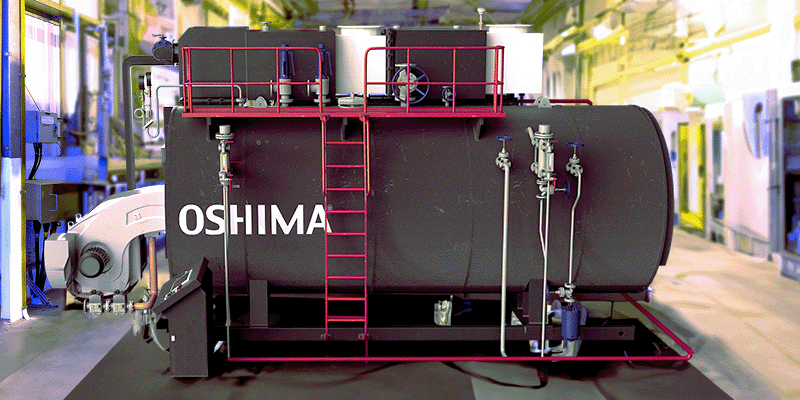
Industrial boilers are essential equipment in many production environments. They provide the steam or hot water required for manufacturing, finishing, cleaning, sterilization, heating, and other critical processes.
In garment and textile factories, steam may support ironing, fusing, fabric pre-shrinking, and related finishing operations. In food processing, hospitality, medical, chemical, and other industries, boilers may support heating, sterilization, cleaning, or hot water supply.
Choosing the wrong boiler can result in unstable steam supply, unnecessary energy cost, higher maintenance burden, or operational risk. Choosing the right boiler helps factories maintain production stability, manage long-term cost, and support safe operation.
An industrial boiler should therefore not be selected only by purchase price or rated capacity. Buyers should evaluate process requirements, steam or hot water demand, fuel availability, water quality, installation conditions, safety requirements, and after-sales support.
Why Does Industrial Boiler Selection Matter?
An industrial boiler must continuously provide stable thermal energy when production requires it.
This affects several important areas of factory operation.
1. Production Stability
If steam pressure or supply is unstable, processes such as ironing, fusing, pre-shrinking, sterilization, or heating may become inconsistent.
2. Energy Cost
Different boiler types and energy sources influence operating cost. A low purchase price does not always mean a lower long-term cost if the fuel source, efficiency, and usage pattern do not suit the factory.
3. Maintenance and Downtime
Poor water treatment, unsuitable fuel conditions, or weak maintenance practices may cause scale, corrosion, efficiency loss, and unexpected downtime.
4. Safety and Compliance
Boilers involve pressure, heat, fuel, and steam systems. Installation and operation must follow applicable safety and inspection requirements.
Start with Steam and Hot Water Demand
Before purchasing a boiler, the first question should not be which model costs less. It should be what your factory actually needs.
1. Identify the Application
Different processes require different types of thermal energy.
For example:
-
Garment factories may require steam for ironing, fusing, or pre-shrinking.
-
Textile factories may require stable steam for dyeing or finishing operations.
-
Food processors may use steam for heating, sterilization, or cleaning.
-
Hotels, dormitories, or schools may mainly require hot water.
-
Medical or pharmaceutical applications may require more careful management of cleanliness and system stability.
Understanding the application helps determine whether the facility needs a steam boiler, a hot water boiler, or a combined system.
2. Evaluate Normal and Peak Demand
Thermal demand is rarely constant throughout the day.
A factory should determine its regular steam requirement, peak demand, peak duration, and whether several pieces of equipment operate at the same time.
Important information includes:
-
Normal operating load;
-
Peak production demand;
-
Production schedule;
-
Future expansion plans;
-
Backup requirements.
A boiler selected only for maximum demand may operate inefficiently during regular production. A boiler selected only for normal demand may fail to support peak operation.
3. Confirm Pressure and Temperature Requirements
Higher pressure is not automatically better.
The boiler must provide suitable steam conditions for the production process while accounting for system design, pipe losses, and safety requirements.
Buyers should prepare information on:
-
Required steam pressure at the point of use;
-
Required steam quantity;
-
Pipe distance and layout;
-
Simultaneous machine usage;
-
Need for stable saturated steam.
A qualified supplier or engineer can then recommend an appropriate design.
Steam Boiler or Hot Water Boiler?
Steam Boilers
Steam boilers are suitable when steam is directly required in the process.
Common applications include:
-
Garment and textile finishing;
-
Food processing;
-
Medical and pharmaceutical processes;
-
Chemical production;
-
Laundry and ironing services.
Hot Water Boilers
Hot water boilers are suitable when the main requirement is stable hot water or heating, such as in hotels, dormitories, schools, selected cleaning processes, or building heating applications.
When Both Steam and Hot Water Are Needed
If a facility requires both steam and hot water, the system should be evaluated as a whole.
Depending on demand, possible approaches may include:
-
A steam boiler with a heat exchanger for hot water;
-
A hot water boiler with a smaller steam source;
-
Multiple units configured around production and backup requirements.
The best arrangement depends on usage ratio, process importance, installation space, fuel conditions, and maintenance capability.
Common Industrial Boiler Energy Options
1. Electric Boilers
Electric boilers do not burn fuel on site. They are often considered where clean operation, simplified local emissions management, and ease of use are important.
They may be suitable for:
-
Small to medium steam requirements;
-
Food, medical, or indoor environments with higher cleanliness expectations;
-
Facilities without convenient fuel supply but with sufficient electrical capacity;
-
Factories seeking simpler combustion-related management.
Before purchase, the factory should confirm available electrical capacity, electricity cost, and peak power management.
2. Gas Boilers
Gas boilers are commonly considered where natural gas or liquefied gas supply is stable. They can support continuous steam or hot water demand in industrial and commercial facilities.
They may be suitable for:
-
Garment and textile finishing;
-
Food processing;
-
Hotels and large hot water applications;
-
Factories seeking stable heating with practical fuel management.
Buyers should confirm gas supply, combustion safety, installation requirements, and applicable emissions rules.
3. Oil-Fired Boilers
Oil-fired boilers may be suitable in areas where oil supply is accessible and gas pipelines are limited.
They can provide stable heat, but factories should evaluate fuel storage, transport, safety management, price fluctuation, and emissions obligations.
4. Biomass Boilers
Biomass boilers can use suitable biomass fuels where a reliable fuel source is available.
They may be considered for:
-
Agricultural processing;
-
Selected textile or larger industrial applications;
-
Facilities with stable biomass fuel access.
However, biomass systems require attention to fuel quality, storage space, ash management, combustion control, and emissions compliance.
5. Coal-Fired Boilers
Coal-fired boilers may still exist in certain large or specialized industrial applications.
However, increasing emissions management requirements, fuel handling, ash disposal, and environmental expectations mean that buyers should conduct careful long-term cost and compliance assessment before selecting new coal-fired equipment.
Fire-Tube Boilers and Water-Tube Boilers
Boiler structure is another important consideration.
Fire-Tube Boilers
In a fire-tube boiler, hot combustion gas passes through tubes and heats the surrounding water.
This structure is commonly used for small to medium steam or hot water requirements where stable output and relatively straightforward operation are priorities.
Water-Tube Boilers
In a water-tube boiler, water flows through tubes and is heated by external high-temperature energy.
This type is typically considered for larger capacity, higher pressure, or applications requiring greater steam response capability.
Which Structure Is Right for Your Factory?
Buyers do not need to decide on structure alone before discussing their needs with a supplier.
Instead, provide:
-
Steam capacity requirement;
-
Pressure and temperature requirement;
-
Operating hours;
-
Peak load;
-
Installation space;
-
Fuel conditions;
-
Maintenance and operator capability.
The supplier can then assess a suitable boiler structure and configuration.
Water Quality Management: A Critical Factor in Boiler Life
Factories often spend considerable time comparing boiler price and fuel cost, but water quality can be overlooked.
Water quality directly affects boiler efficiency, safety, and service life.
Poor feedwater conditions may contribute to:
-
Internal scale formation;
-
Reduced heat transfer efficiency;
-
Higher energy consumption;
-
Metal corrosion;
-
Lower steam quality;
-
Increased maintenance frequency;
-
Shortened equipment life.
Common water treatment considerations include:
Water Softening
Softening equipment helps reduce hardness components such as calcium and magnesium, lowering the risk of scale formation.
Oxygen and Corrosion Control
Depending on boiler specifications and process requirements, facilities may need to consider oxygen removal or other corrosion control measures.
Water Testing and Blowdown Management
Water treatment is not a one-time action. Feedwater and boiler water should be monitored regularly, and blowdown and maintenance should follow equipment operating requirements.
The final water treatment approach should be confirmed according to boiler design, operating pressure, raw water conditions, and steam application.
Installation and Safety Factors to Confirm Before Purchase
Industrial boilers involve high temperature, pressure, fuel, and steam. Buyers must confirm more than whether the machine can physically fit inside the facility.
Before purchasing and installing a boiler, a factory should confirm:
-
Adequate installation and maintenance space;
-
Boiler room ventilation and fuel safety arrangement;
-
Required equipment inspection and certification;
-
Required operator qualifications;
-
Accessibility of safety valves, water level gauges, and pressure gauges;
-
Planned inspection and maintenance schedule;
-
Fuel storage and fire safety arrangement;
-
Local emissions and environmental requirements.
Boiler safety depends on the equipment, the installation environment, trained operators, maintenance practices, and proper documentation.
Seven Items to Prepare Before Discussing a Boiler Solution
Before requesting a quotation, buyers should prepare the following information:
1. Industry and Process Application
Which machines or processes need steam or hot water?
2. Required Steam or Hot Water Capacity
What are the regular and peak demands? Is future expansion planned?
3. Pressure and Temperature Requirements
What conditions are required at the point of use?
4. Available Energy Sources
Does the site have suitable electricity, gas, oil, or biomass fuel access?
5. Water Source and Water Quality
Is water treatment already installed? What is the raw water condition?
6. Installation Space and Operating Environment
Is there enough room for the boiler, piping, ventilation, fuel storage, and maintenance access?
7. After-Sales and Maintenance Support
Can the supplier provide installation, operator training, scheduled maintenance, spare parts, and technical support?
The more complete this information is, the more suitable the recommended boiler configuration can be.
OSHIMA Industrial Boiler Solutions
OSHIMA provides industrial boiler and steam equipment solutions for customers seeking reliable thermal energy systems for different industrial applications.
Available solution directions may include:
-
Electric boilers;
-
Gas boilers;
-
Oil-fired boilers;
-
Biomass boilers;
-
Fire-tube or water-tube equipment;
-
Steam and hot water configurations.
For garment and textile factories, boiler systems may support ironing, pre-shrinking, fusing, and related steam applications. For food, hospitality, medical, and other manufacturing industries, boiler solutions may be evaluated according to heating, sterilization, cleaning, or hot water requirements.
The right boiler is not necessarily the largest or most expensive model. It is the equipment that fits the factory’s process, energy conditions, water management, safety requirements, and long-term maintenance capability.
Conclusion
Industrial boilers are fundamental to stable production in many factories.
Choosing unsuitable equipment may cause insufficient steam, higher energy cost, increased maintenance burden, and operational risk. Choosing appropriate equipment can support stable production, improve long-term cost management, and extend equipment life.
Before purchasing an industrial boiler, factories should organize information on steam or hot water demand, peak load, fuel conditions, water quality, installation space, safety requirements, and after-sales support.


Article Classification
Recent Articles
- The 30-90-180 Day Rule for Industrial Boiler Maintenance
- How Garment Machinery Supports Safety, Compliance and Environmental Management?
- What Happens Before Fabric Goes to the Cutting Table?
- Industrial Iron & Vacuum Table Care: How to Extend Their Lifespan
- Cutting Floor ROI: How the M8s and TAC Save $100K Annually