
 0
0



- Home
- Blog
- Equipment Knowledge
- How to Choose a Heat Press Machine: Complete Buying Guide
How to Choose a Heat Press Machine: Complete Buying Guide
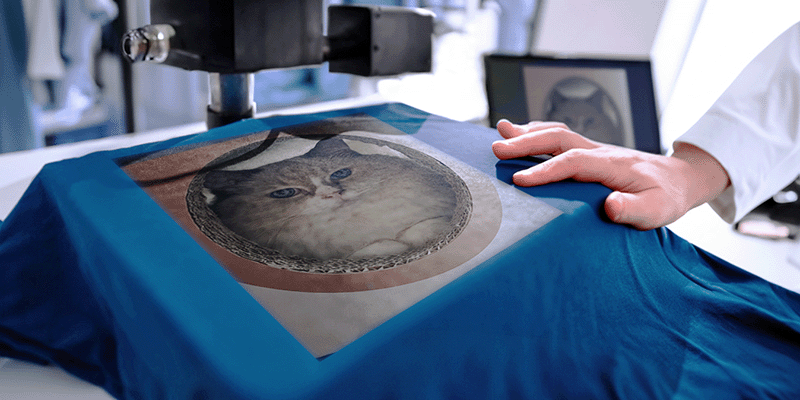
Choosing a heat press machine is not only about finding a machine that can apply heat to a garment. The right equipment depends on what you are producing, the size of the transfer, the required pressure and temperature, production volume, operator workflow, and the level of automation needed.
A small printing studio producing customized T-shirts has very different requirements from a garment factory pressing thousands of labels, graphics, or garment panels every day.
This guide explains the main types of heat press machines, common platen sizes, price factors, production requirements, and how to select suitable equipment for different garment applications.
Which Heat Press Machine Should You Choose?
For a quick comparison, start with the application and production requirement.
| Production Need | Recommended Heat Press Type | Main Reason |
|---|---|---|
| Small T-shirt or customized garment production | Clamshell or compact heat press | Compact and simple to operate |
| Frequent design changes or thicker garments | Swing-away heat press | More open working area for positioning |
| Repeated daily production | Drawer or sliding heat press | Easier loading and smoother workflow |
| Small garment labels and logos | Small-area pneumatic heat press | Concentrated and repeatable pressing area |
| Large garment panels | Large flatbed or open-table press | Larger working area and more consistent pressure |
| Transfers requiring hot pressing and cold setting | Hot-and-cold heat press | Combines heating and cooling processes |
| High-volume garment production | Multi-station automatic heat press | Higher throughput and continuous production |
The correct choice depends not only on the machine structure, but also on transfer area, garment material, transfer process, output requirements, and factory workflow.
What Is a Heat Press Machine?
A heat press machine, sometimes called a heat transfer machine, uses controlled temperature, pressure, and time to apply a transfer, graphic, label, or other material to a garment or textile product.
A typical process includes:
- Setting the required temperature and pressing time.
- Positioning the garment or fabric on the worktable.
- Placing the transfer paper, film, label, or graphic in the required position.
- Applying controlled heat and pressure.
- Removing or cooling the transfer according to the process requirements.
Heat press machines are commonly used for:
- T-shirts
- Sportswear
- Teamwear
- Uniforms
- Garment labels
- Brand logos
- Graphic transfers
- Reflective transfers
- Functional apparel
- Garment panels
- Bags and textile accessories
Different transfer materials require different combinations of temperature, pressure, and pressing time, so the machine should provide sufficient control for the intended production process.
Common Types of Heat Press Machines
1. Clamshell Heat Press
A clamshell heat press opens upward like a lid.
Its compact structure makes it common in small printing businesses, sampling rooms, customized T-shirt production, and other operations where floor space is limited.
Advantages
- Compact footprint
- Simple operation
- Suitable for common T-shirt transfers
- Usually lower initial investment
- Good for small-batch production
Considerations
The operator works relatively close to the upper heating platen. Working space can also be more restricted when positioning thicker garments, larger pieces, or transfers requiring precise alignment.
Clamshell machines are therefore most appropriate when production is relatively simple and the transfer area is consistent.
2. Swing-Away Heat Press
A swing-away heat press moves the upper heating platen away from the work area.
This gives the operator more open space for positioning garments and transfer materials.
Advantages
- Open working area
- Easier transfer positioning
- Suitable for thicker materials
- Reduced need to work directly underneath the hot platen
- Good for applications requiring careful alignment
Considerations
Swing-away machines generally require more surrounding space because the heating unit needs room to move sideways.
They are often selected when workspace, positioning accuracy, and material flexibility are more important than having the smallest possible footprint.
3. Drawer or Sliding Heat Press
A drawer or sliding heat press allows the lower worktable to move outward from underneath the heating platen.
The operator can load and position the garment away from the hot pressing area before sliding the worktable into position.
This structure is particularly useful for repetitive production.
Advantages
- Open loading area
- Easier garment positioning
- Better separation between loading and heating areas
- Suitable for repeated production cycles
- Can support dual-station workflows
For garment factories producing large volumes, sliding or dual-worktable systems can also allow one worktable to be loaded while another is being processed.
4. Flatbed and Open-Table Heat Press
Industrial garment production often requires larger pressing areas than a standard T-shirt press.
Flatbed or open-table heat press machines are designed for applications such as:
- Large garment panels
- Down jackets
- Heat labels
- Graphic transfers
- Fabric bonding
- Shirts and trousers
- Larger transfer areas
A larger worktable gives operators more flexibility when positioning garment components and helps support production beyond standard T-shirt printing.
5. Multi-Station Automatic Heat Press
When production volume becomes much higher, increasing automation can reduce waiting between pressing cycles.
Multi-station machines separate different operations across several working stations.
Depending on the configuration, the production process may include:
- Loading
- Label or transfer feeding
- Heat pressing
- Cooling
- Film peeling
- Collection
This type of system is designed primarily for garment factories requiring continuous, repeatable production rather than occasional customized printing.
Clamshell vs Swing-Away vs Drawer Heat Press
The three structures solve different production problems.
| Factor | Clamshell | Swing-Away | Drawer / Sliding |
|---|---|---|---|
| Floor space | Low | Higher | Medium |
| Loading access | Moderate | Very open | Very open |
| Transfer positioning | Standard | Good | Good |
| Thick materials | Moderate | Good | Good |
| Repetitive production | Moderate | Moderate | Good |
| Operator separation from hot platen | Moderate | Good | Good |
| Typical application | Small batches | Flexible professional use | Repeated production |
There is no single structure that is best for every operation.
A printing studio may prioritize compact size and cost, while an industrial garment factory may place greater importance on loading efficiency, repeatability, automation, and output.
What Size Heat Press Do You Need?
Heat press size should be selected according to the actual transfer area, not simply the overall garment size.
A small brand logo does not require the same platen area as a large graphic covering the front of a garment.
Typical applications can be divided as follows:
| Approximate Working Area | Typical Application | Suitable Production |
|---|---|---|
| Around 150 × 150 mm | Brand labels, logos, small graphics | Small-area garment transfer |
| Around 380 × 380 mm | T-shirts and garment panels | General apparel transfer |
| Around 500 × 500 mm | Larger graphics and garment panels | Large-area transfer |
| Larger / customized sizes | Large garment components and special applications | Industrial production |
For example, OSHIMA OP-15A / OP-15AII uses a standard 150 × 150 mm platen for small garment labels and graphic transfers.
For larger applications, the OP-380A series provides a 380 × 380 mm working area, while the OP-550A provides a 500 × 500 mm working area.
Should You Buy a Larger Heat Press?
A larger platen provides more flexibility, but larger is not automatically better.
Consider:
- Maximum transfer size
- Most frequently produced garment
- Position of the transfer
- Required pressure consistency
- Available factory space
- Heating capacity
- Energy requirements
- Loading ergonomics
If most production consists of small garment labels, using a very large platen may be unnecessary.
If the factory regularly handles large graphics or garment panels, however, a larger worktable can reduce positioning limitations and improve workflow.
How Much Does a Heat Press Machine Cost?
Heat press machine prices vary significantly because machines designed for occasional T-shirt printing and machines designed for industrial garment production have very different specifications.
Instead of comparing price alone, buyers should first compare configuration and production capability.
What Affects Heat Press Machine Price?
1. Working area
Larger heating platens generally require larger heating systems, structures, and worktables.
2. Manual, pneumatic, or automatic operation
A simple manual press has a different cost structure from pneumatic or automated industrial equipment.
3. Number of workstations
Single-station, dual-station, sliding, rotary, and multi-station systems have different levels of productivity and mechanical complexity.
4. Pressure control
Stable and repeatable pressure becomes increasingly important in industrial production.
5. Temperature control
Consistent temperature across the working area helps improve transfer consistency, especially during long production runs.
6. Hot-only or hot-and-cold processing
Some transfer applications require cold setting after heat pressing, requiring additional cooling equipment and process control.
7. Automatic feeding
Automatic transfer or label feeding can reduce repetitive manual placement.
8. Positioning systems
Depending on the application, infrared or other positioning assistance may improve placement consistency.
9. Production capacity
A machine designed for several hundred pieces per hour requires a different structure from one intended for occasional use.
10. Installation and after-sales support
For factories, service availability, spare parts, training, and technical support should also be considered when comparing total equipment cost.
Purchase Price vs Total Production Cost
For industrial users, the lowest purchase price does not always result in the lowest production cost.
Factories should also consider:
- Pieces produced per hour
- Number of operators required
- Rework rate
- Transfer consistency
- Downtime
- Maintenance requirements
- Spare-parts availability
- Equipment service life
A more automated machine may have a higher initial investment, but it can make sense when production volume is high enough to justify the additional productivity.
Temperature, Time and Pressure: The Three Core Variables
Heat transfer depends primarily on three processing conditions:
Temperature
The machine must reach and maintain the required transfer temperature.
Uneven or unstable heating can contribute to inconsistent adhesion or appearance.
Time
The material must remain under the correct temperature and pressure for the required duration.
Too little time may result in insufficient bonding, while excessive pressing may affect the garment or transfer material.
Pressure
Pressure should be appropriate for the fabric, transfer material, and application.
Insufficient pressure can result in incomplete adhesion. Excessive pressure may cause visible marks, deformation, or other unwanted effects.
For factories processing multiple materials or products, controllable and repeatable settings become especially important.
What About Sublimation Heat Press Machines?
A heat press used for sublimation printing must provide sufficiently even heat and pressure across the transfer area.
During dye-sublimation, heat converts the sublimation dye so that it can bond with compatible polyester fibers or specially coated materials.
Sublimation is commonly used for:
- Polyester sportswear
- Teamwear
- Performance apparel
- Textile graphics
- Customized products
Before purchasing a sublimation heat press, confirm:
- Material composition
- Transfer dimensions
- Temperature requirements
- Required platen size
- Production volume
- Whether large-format or repeated production is required
Sublimation is generally better suited to polyester or compatible coated materials, so the intended substrate should always be confirmed before selecting the process.
Hot Press vs Hot-and-Cold Heat Press
Not every transfer process ends immediately after heat pressing.
Some labels, graphics, or transfer materials benefit from controlled cooling or cold setting after the heating stage.
A hot-and-cold heat press combines both processes.
This can be useful for applications requiring:
- Heat pressing followed by cold setting
- Premium labels
- Specialized graphic transfers
- More controlled bonding conditions
- Production lines requiring repeatable heating and cooling
For example, OSHIMA OP-15A4N is designed for small transfers requiring hot pressing followed by cold setting, while OP-305S supports hot-and-cold transfer applications and can be integrated with automatic feeding equipment.
Choose a Heat Press by Production Volume
Production volume is one of the most important differences between commercial and industrial heat press selection.
Small-Batch Production
For sampling, custom garments, or occasional T-shirt production, priorities normally include:
- Compact size
- Simple controls
- Flexible operation
- Lower investment
- Easy setup
A basic clamshell, swing-away, or compact press may be sufficient.
Regular Commercial Production
As order volume increases, look for:
- More stable pressure
- Digital temperature control
- Pneumatic operation
- Larger or dual worktables
- Easier loading
- Faster repeated cycles
The objective changes from simply completing the transfer to maintaining consistent output across repeated orders.
High-Volume Garment Factory Production
Factories producing large quantities should evaluate:
- Multi-station operation
- Automatic feeding
- Continuous workflow
- Loading and unloading efficiency
- Heating consistency
- Pressure repeatability
- Cooling requirements
- Operator requirements
- Production capacity
For example, OSHIMA OP-10A5 uses a five-station rotary structure and is designed for approximately 600–650 pieces per hour, depending on the application and production conditions.
Heat Press Selection by Garment Application
Different products require different equipment configurations.
Small Garment Labels and Logos
A small pressing area can provide a more practical solution than using a large machine for every transfer.
Working area: 150 × 150 mm
Typical application: Small heat labels, brand labels, and graphic transfers
Small Labels Requiring Hot and Cold Setting
Some transfer materials require cooling after the heat-pressing stage.
Typical application: Small labels and graphics requiring hot pressing followed by cold setting
Premium Labels and Automatic Feeding
Production lines processing premium labels or repeated transfer operations may require hot-and-cold control combined with automatic feeding support.
Typical application: Premium labels, graphic transfers, and production lines requiring automatic feeding integration
Large Garment Panels and Graphics
Large graphics and garment pieces require more worktable space.
Typical application: Garment panels, large-area heat transfer, labels, and graphic transfers
Large Garment Panels Requiring Sliding Operation
For repeated large-panel production, a dual-station sliding structure can improve loading workflow.
Typical application: Garment panels, down jackets, labels, and graphic transfers
View Sliding Heat Press Series →
High-Volume Automatic Transfer
For factories requiring substantially higher production capacity, multi-station systems provide a different level of automation.
Typical application: Thick transfers, garment labels, graphic transfers, and high-volume production
Production capacity: Approximately 600–650 pieces/hour
Common Heat Press Buying Mistakes
1. Choosing Only by Price
Two machines may both be described as heat presses but serve completely different production requirements.
Compare application, size, pressure system, automation, capacity, and support before comparing price.
2. Buying a Platen That Is Too Small
Always check the largest transfer you expect to produce, not only the garment size.
3. Ignoring Production Volume
A machine suitable for occasional customized shirts may become a bottleneck when used for continuous factory production.
4. Ignoring Loading and Positioning Time
Pressing time is only one part of the cycle.
Garment loading, transfer positioning, cooling, peeling, and unloading also affect actual production capacity.
5. Ignoring Pressure Consistency
Heat alone does not determine transfer quality. Pressure should remain appropriate and repeatable across production.
6. Overlooking After-Sales Support
For industrial equipment, installation, training, maintenance, spare parts, and technical support should be evaluated before purchase.
Questions to Ask Before Buying a Heat Press Machine
Before requesting a quotation, prepare the following information:
- What garment or textile product will be processed?
- What transfer material will be used?
- What is the maximum transfer size?
- What is the typical transfer size?
- What fabric or material will be processed?
- Is cold setting required?
- What is the required production volume per hour or per day?
- Is manual loading acceptable?
- Is automatic feeding required?
- How much production space is available?
- What electrical and compressed-air supply is available?
- Are positioning systems required?
- Is local technical support available?
Providing this information allows an equipment supplier to recommend a machine based on the actual production process rather than only on basic dimensions.
Frequently Asked Questions
What should I look for when buying a heat press machine?
Evaluate the machine type, platen size, temperature stability, pressure control, pressing time, production capacity, loading method, automation level, safety, and after-sales support. Industrial users should also consider output and total operating cost.
What size heat press is best for shirts?
The correct size depends on the maximum graphic area. A working area around 380 × 380 mm can accommodate many common garment-transfer applications, while larger designs may require 500 × 500 mm or larger equipment. Small logos and garment labels can use much smaller platens.
Is a swing-away heat press better than a clamshell?
Neither is universally better. A clamshell requires less space and is suitable for straightforward transfer work. A swing-away press provides a more open loading area and can make positioning thicker or more complex products easier.
What is the difference between a heat press and a sublimation heat press?
A heat press is the equipment that applies controlled heat and pressure. Sublimation refers to a transfer process using sublimation dye and compatible substrates. A heat press used for sublimation needs sufficiently even temperature and pressure for the required transfer area.
What type of heat press machine is suitable for clothes?
For customized T-shirts and small batches, a compact clamshell or swing-away press may be sufficient. Garment factories producing labels, panels, graphics, or large orders may require pneumatic, sliding, hot-and-cold, or multi-station automatic heat press equipment.
Why do heat press machine prices vary so much?
Price depends on working size, pressure system, heating system, number of workstations, automation, cooling functions, feeding equipment, positioning systems, production capacity, and service support.
Is an automatic heat press worth it?
Automation is most valuable when production volume is high enough that loading time, repeated manual work, operator consistency, or production capacity becomes a bottleneck. For occasional production, a simpler machine may be more economical.
How to Choose the Right Heat Press for Your Factory
The correct heat press should match the production process rather than simply having the largest platen or highest level of automation.
For small-batch work, flexibility and investment cost may be the priorities.
For industrial garment production, the decision usually shifts toward:
- Stable temperature and pressure
- Repeatable transfer quality
- Production capacity
- Loading efficiency
- Automation
- Operator safety
- Maintenance
- Technical support
OSHIMA provides heat press and heat transfer equipment for applications ranging from small garment labels to large garment panels and multi-station automatic production.
If you are evaluating a heat press machine, provide your product type, transfer dimensions, material, required output, and transfer process so the appropriate equipment configuration can be evaluated.
Related Reading


Article Classification
Recent Articles
- The 30-90-180 Day Rule for Industrial Boiler Maintenance
- How Garment Machinery Supports Safety, Compliance and Environmental Management?
- What Happens Before Fabric Goes to the Cutting Table?
- Industrial Iron & Vacuum Table Care: How to Extend Their Lifespan
- Cutting Floor ROI: How the M8s and TAC Save $100K Annually