
 0
0



- Home
- Blog
- Applications & Solutions
- What Fabric Fusing Machines Can Do Beyond Shirts?
What Fabric Fusing Machines Can Do Beyond Shirts?
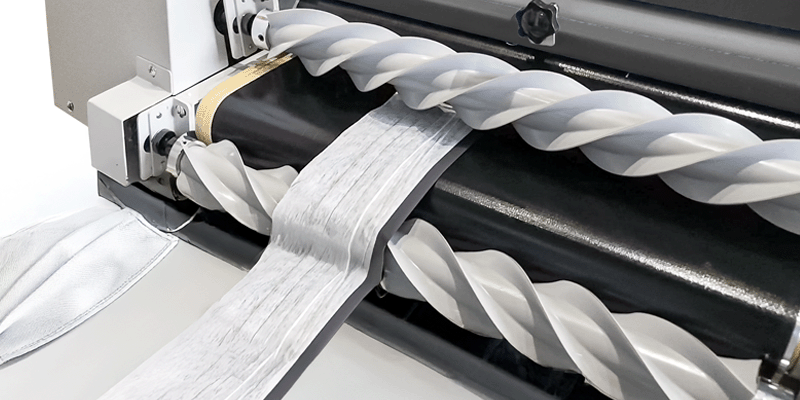
The peak of the pandemic has passed, but masks, protective clothing and other protective products still have a role in public health, medical care and daily protection. During the pandemic, many garment factories did not completely transform into medical product factories. Instead, they used their existing experience in fabric processing, sewing, pressing and fusing to support part of mask, protective wear or related fabric component production.
This is why compact continuous fusing machines received more attention at the time. They are not the entire mask production line, and they cannot replace professional mask machines, ultrasonic welding equipment or medical-grade testing processes. However, for small fabric parts, layered materials, long strips or local bonding processes, a fusing machine can help factories control temperature, pressure and processing time more consistently.
For factories that already have garment production experience, this type of equipment is not about turning the factory into a large PPE production base. It is more about giving the factory another practical process when it needs to support mask-related components, protective wear parts or small fabric bonding work.
What Is a Fabric Fusing Machine?
Fabric fusing means bonding a material with hot-melt adhesive or resin coating to another fabric or material through heat, pressure and time. When the adhesive is heated, it softens. Under pressure and after cooling, it forms a more stable bond.
In regular garment production, fusing is often used for shirt collars, cuffs, plackets, pocket flaps, waistbands and jacket parts. These areas need structure or support, and fusible interlining helps garments keep their shape.
In mask or protective product processing, fusing machines may be used for certain small fabric parts, auxiliary materials, local reinforcement areas or components that require heat-pressure bonding. Whether they can be used depends on product structure, material properties, specification requirements and customer standards.
A fusing machine is therefore not simply a tool that presses two pieces of fabric together. It requires stable control of heat, pressure and processing time.
How Garment Factories Support Mask and Protective Product Processing
During the pandemic, some garment factories supported the processing of masks, protective clothing or related fabric components because they were already familiar with fabric handling and garment production processes.
Masks and protective products may look simple, but in actual production, factories often handle small fabric parts, layered materials, long strips or local bonding steps. If every piece relies on manual positioning and pressing, the process can be slow and inconsistent.
A compact continuous fusing machine can be used for continuous processing of medium and small fabric parts. Once the material enters the conveyor, the machine completes heating, pressure and feeding according to the set conditions, making temperature, pressure and processing time more consistent. For factories already experienced in garment production, this type of equipment can work with existing production lines to support mask-related components, protective wear parts or other small fabric bonding processes.
When garment factories need to support masks, protective products or small fabric part processing, a stable, compact and easy-to-place fusing machine can help these temporary or supporting processes run more smoothly.
Three Key Conditions in Fabric Fusing
The core conditions in fabric fusing are usually heat, pressure and time. These three variables are connected. If one changes, the others may also need to be adjusted.
If the temperature is too low, the adhesive may not activate fully, causing weak bonding.
If the temperature is too high, fabric may shrink, change colour, change hand feel or allow adhesive to seep through.
If pressure is too low, the fabric and adhesive may not bond well.
If pressure is too high, pressure marks or surface deformation may occur.
If processing time is unsuitable, bonding strength and appearance may be affected.
A typical operation begins by setting temperature and conveyor speed according to material conditions. The fabric or interlining is then placed flat on the conveyor and passes through the heating and pressure zones. After fusing, the material needs to cool so the adhesive can stabilize.
For mask-related components, protective wear and small fabric part processing, stable control is especially important. The parts may be small, and the number of layers may vary. If temperature or pressure is unstable, uneven bonding, edge lifting, shrinkage or appearance problems may occur.
What Processing Is Suitable for Continuous Fusing Machines?
Compact continuous fusing machines are suitable for medium and small fabric parts, such as shirt collars, cuffs, small interlining pieces, long strips and certain mask or protective product components.
These machines usually have smaller working widths, often ranging from 600 mm to 1400 mm depending on the model. For factories, these machines require less floor space and are easier to fit into existing production areas.
In mask or protective product processing, compact continuous fusing machines may help with:
-
small fabric or interlining bonding;
-
heat-pressure bonding for mask-related components;
-
small-area materials used in protective products;
-
long strips or local reinforcement parts;
-
temporary small-batch support on garment lines;
-
continuous processing of small parts across multiple styles.
However, if the product is a medical-grade mask, protective garment or certified PPE product, the factory still needs to follow relevant regulations, material specifications and testing requirements. A fusing machine can support part of the process, but it does not replace product certification or quality testing.
Why Temperature Control Matters
Protective products differ from regular garments because they often place more emphasis on material stability and function. If the material requires filtration, protection, sealing or barrier performance, heat, pressure and time cannot be set casually.
Excessive temperature may cause deformation, shrinkage or adhesive strike-through. Insufficient temperature may cause weak bonding and affect product stability.
Defects such as strike-back and strike-through can be understood as fusing defects. When temperature or pressure is unsuitable, adhesive may seep through the front or back of the fabric, affecting appearance, hand feel or performance. In ordinary garments, these defects affect quality. In protective products, they should be avoided even more carefully.
This is why fusing equipment with stable temperature control, preheating, cooling and abnormal protection can help factories manage the fusing process more consistently.
What Problems Can Automated Fusing Reduce?
In the past, some small fabric parts or interlining work may have relied on manual handling. Manual operation is easily affected by experience, speed, fatigue and placement variation.
Automated fusing equipment allows fabric parts to pass continuously through the machine under set heating, pressure and conveyor conditions. This reduces variation between operators and helps factories process more small parts in a shorter time. For factories, automated fusing equipment can help reduce several shop-floor problems:
-
unstable fusing temperature;
-
uneven pressure distribution;
-
large differences in fabric placement;
-
slow processing of small fabric parts;
-
fatigue caused by repetitive manual work;
-
cleaning burden caused by adhesive residue;
-
difficulty arranging workflow when temporary orders increase.
These issues are not limited to mask or PPE production. Shirt, uniform, jacket, workwear and other garment production may also require stable fusing processes.
From Temporary Support Back to Everyday Equipment Planning
During the pandemic, many garment factories supported mask, protective product or related fabric component processing. This experience reminded factories that some equipment does not serve only one product. It can provide a certain level of processing flexibility across different orders.
A continuous fusing machine is one example. It can be used for shirt, uniform, jacket or small interlining fusing during regular production. When mask-related components, protective wear parts or other small fabric bonding work appear, it can also support the production floor.
It is not the entire protective product production line, and it is not a large conversion investment that every factory must make. However, for factories that handle small, layered, long-strip or local bonding materials, stable control of heat, pressure and time can make these processes easier to manage.
OSHIMA has long developed fusing machines as one of its core equipment categories, with models ranging from compact 450 mm machines to large 1800 mm continuous fusing machines. Factories can select the suitable configuration according to fabric part size, output and production line layout.
The machines can be equipped with independent temperature control, preheating zones, cooling zones, extended feeding tables, seamless belts and motorized belt correction systems. These features help factories maintain stable temperature, pressure and material feeding during continuous fusing.
For garment factories, a fusing machine is not only useful for special or temporary orders. It is also part of daily production that affects garment structure, appearance and quality consistency.


Article Classification
Recent Articles
- What Changes When Fabric Defect Data Reaches the Cutting Plan?
- How Can Food Factories Catch Problems Before Shipping?
- From Metal to Bones: How to Pick the Right Food Safety Machine
- From Nonwovens to Automotive Interiors: Choosing the Right Fabric Spreading Machine
- How Garment Factories Can Prepare for Smaller Orders?