
 0
0



- Home
- Blog
- Smart Manufacturing
- AOI vs. AI Fabric Inspection: What’s the Real Difference?
AOI vs. AI Fabric Inspection: What’s the Real Difference?
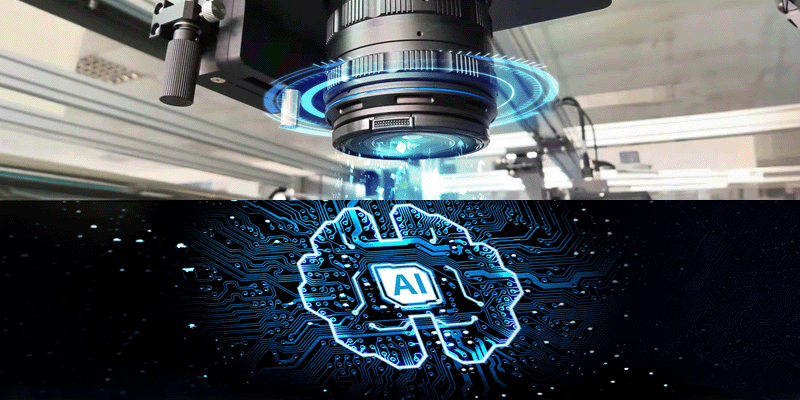
Fabric inspection has traditionally relied on human experience. Inspectors observe moving fabric and identify holes, oil stains, colour spots, foreign fibres, bars, snags, dye marks and other surface irregularities before the material proceeds to cutting and garment production.
This work requires sustained concentration. As inspection time increases, roll volume grows or inspection speed rises, manual results may be affected by fatigue, differences in individual judgement and limitations in recordkeeping. For textile mills, dyeing and finishing operations, inspection service providers and garment factories, the ability to inspect fabric more consistently and retain usable quality information has become a major reason to consider vision-based inspection technology.
Automatic Optical Inspection (AOI) and Artificial Intelligence (AI) inspection both use cameras and image data to examine fabric surfaces. However, they do not identify defects in exactly the same way. Understanding the difference helps manufacturers decide which approach fits their fabrics, recurring defects and quality workflow.
Why Does Manual Fabric Inspection Have Limitations?
Manual inspection remains valuable because experienced inspectors can interpret fabric appearance in relation to product use and customer standards. When a fabric has an unusual surface, complex pattern or newly observed issue, a skilled person can examine it directly and make a practical judgement.
However, several limitations are difficult to avoid.
First, inspection performance is influenced by concentration and working time. The operator must continuously watch moving fabric, making small, low-contrast or short-duration defects easier to miss.
Second, judgement may differ between inspectors. The same colour spot, scratch or surface mark may be handled differently depending on product application, defect position or individual experience.
Third, manual records may not provide a complete picture of defect distribution across an entire roll. Even where defects are marked on the fabric edge, quality and cutting personnel may still need to organise the information before it can support downstream decisions.
Vision-based fabric inspection is therefore valuable not only because it may accelerate inspection, but because it can provide a more structured record of defect type, location and inspection result.
What Is AOI Fabric Inspection?
AOI stands for Automatic Optical Inspection. An AOI system typically uses cameras, controlled lighting and image-processing software to capture fabric surfaces and locate irregularities based on preset rules, thresholds or visual features.
In fabric inspection, AOI may identify areas that differ from an expected surface pattern, including:
-
interruptions in a regular texture;
-
visible holes or tears;
-
abnormalities identifiable through contrast, brightness or shape;
-
recurring surface problems on a stable fabric type.
Where fabric construction is consistent, defect forms are clearly defined and the inspection environment is controlled, AOI can repeatedly apply the same checking standard. It does not experience fatigue, and the system can retain images or location records for identified abnormalities.
Advantages of AOI in Fabric Inspection
1. More Consistent Checking Conditions
After the inspection parameters have been set, AOI applies the same logic across the fabric surface. This supports production lines seeking a repeatable inspection standard instead of relying entirely on individual judgement.
2. Practical for Stable Fabrics and Defined Defects
Where a factory works with similar materials over time and focuses on clearly identifiable surface problems, AOI can provide continuous monitoring of those specific conditions.
3. Image and Location Records
Compared with fabric-edge marking alone, vision-based systems can retain images or abnormal-location data, making later review and quality tracking easier.
Limitations of AOI
AOI is not a fixed solution that can be applied to every fabric without adjustment. Fabric surfaces vary in texture, colour, stretch, pile, gloss and natural appearance. These properties can interfere with rule-based or feature-based detection.
For example, lighting variation may be interpreted as a stain; natural texture may be flagged as an irregularity; and changes in stretch-fabric tension may alter the appearance of the material enough to affect comparison results.
AOI therefore depends on suitable lighting, camera arrangement and inspection settings developed for the material being processed. Where a factory frequently introduces new fabrics or manages surfaces with substantial visual variation, additional setup work may be required.
What Is AI Fabric Inspection?
AI fabric inspection also captures images of moving fabric, but its recognition process is not limited to fixed image thresholds. The system uses labelled fabric images to train a model that learns differences between acceptable surfaces and specified defect types.
For example, labelled images of yarn knots, slubs, holes, oil stains, colour spots or snags can be used to train the model to recognise characteristics associated with those defects across different fabric samples. When production fabric passes through the system, the model can identify and classify defects according to what it has learned.
AI should not be understood as automatically recognising every new defect without preparation. New fabrics, new defect categories or surfaces significantly different from the original training data may still require additional images, labelling, model training and validation.
Advantages of AI Fabric Inspection
1. Suitable for More Varied Defect Characteristics
Compared with systems that rely mainly on fixed visual rules, AI models can learn from labelled examples of more complex defect appearances. This makes it possible to bring recognition and classification of issues such as yarn knots, slubs, foreign fibres, holes, stains, oil marks and selected structural irregularities into one process.
2. Structured Roll-Level Quality Information
AI inspection results can include defect categories, positions and distribution information. Quality teams gain more than notification of a single fault: they can understand where defects are concentrated across the entire roll.
Where this information is available to the cutting room, the factory can identify problematic areas before cutting begins, reducing the risk of discovering defects only after important panels have already been processed.
3. Application Can Expand as Fabric Data Develops
When a factory continues to organise accurate defect images, categories and feedback, an AI model can be retrained and validated to include additional recurring fabrics or defect types. This makes AI inspection relevant to manufacturers seeking to build a longer-term fabric quality data process.
Limitations of AI Fabric Inspection
AI inspection performance depends heavily on the quality of its data. If training images are insufficient, defect categories are unclear or the samples differ greatly from actual production fabrics, results may be affected.
Fabric inspection is also not a software-only task. Fabric flatness, tension stability, lighting conditions and camera resolution all affect whether small defects can be identified. This is particularly important for stretch knitted fabrics: if the material is distorted during transport through the inspection zone, changes in the fabric surface may themselves interfere with recognition.
For this reason, introducing AI fabric inspection requires suitable fabric-handling equipment, clear defect classification, image data and on-site validation to work together. Installing software alone is not enough.
How Do AOI and AI Fabric Inspection Differ?
In actual commercial systems, AOI and AI functions may be combined rather than strictly separated. For clarity, the comparison below uses AOI to describe inspection primarily based on preset optical rules or features, and AI to describe model-based recognition trained from labelled data.
| Comparison Point | AOI Optical Inspection | AI Fabric Inspection |
|---|---|---|
| Recognition method | Detects abnormalities through preset image rules, thresholds or features | Uses labelled image data to train a model to recognise defect categories |
| Suitable situation | Stable fabric types, defined defects and controlled inspection conditions | Higher roll volume, varied recognised defects, reporting and quality-data use |
| Main setup work | Lighting, lenses, cameras and parameter settings | Fabric images, defect labelling, model training and on-site validation |
| New fabric introduction | Often requires parameter adjustment | May require new data, retraining or additional validation |
| Typical challenge | Sensitivity to lighting, textures and material variation may increase false detections | Insufficient or poorly classified data may reduce recognition performance |
| Information output | Can retain abnormal images and locations | Can build defect categories, defect maps and roll-level reports |
Why Does Inspector Experience Still Matter?
Introducing AOI or AI does not mean that a factory no longer needs people who understand fabric. Defect classification still requires professional judgement. The difference between an oil stain, abrasion mark, uneven elasticity, crease shading or an acceptable minor appearance issue must first be clearly defined by personnel familiar with fabrics and customer standards.
Different brands, textile mills and garment factories may also treat defects differently. A defect of the same size and position may be accepted for one product but rejected for another. A system can identify and record an issue, but the rules that convert the result into a production decision still come from the manufacturer’s quality process. In addition, when new fabrics, new surface designs or uncommon defects arise, operator feedback becomes important for supplementing data and improving system performance.
Vision-based inspection should therefore be seen as a way to convert inspection expertise into a more repeatable and traceable process, rather than simply as a replacement for people.
Three Points to Clarify Before Introducing AOI or AI Inspection
1. Which Fabrics Are Actually Processed?
Woven fabrics, stretch knits, solid-colour materials, printed fabrics, reflective surfaces and specialised textiles present different inspection challenges. Where stretch fabrics form a major part of production, the ability to guide the material through the inspection zone with limited distortion can directly affect inspection performance.
2. Which Defects Occur Most Often?
A factory does not need to begin by covering every possible defect category. It is more practical to identify the issues that most often affect cutting or customer acceptance, such as holes, oil stains, foreign fibres, yarn knots, snags, colour spots or bars, and conduct trials using actual production fabrics.
3. How Will the Inspection Result Be Used?
Where the factory only needs immediate defect identification and marking on the line, required system functions may remain relatively simple. Where the quality team requires roll-level reports, or the cutting room needs defect-location information, the reporting format, defect map and downstream data use become central to the equipment decision.
How OSHIMA AI Fabric Inspection Supports Fabric Quality Control
OSHIMA EagleAi/Plus is an AI fabric inspection system designed for quality control in textile and garment production. It can be applied to stretch knitted and woven fabrics. Inspection speed ranges from 10 to 40 metres per minute depending on fabric type, supported by fabric handling designed to control tension through the inspection zone.
The system covers defect categories including yarn knots, slubs, foreign fibres, warp and weft abnormalities, broken weft, stop marks, horizontal lines, snags, holes, fabric joins, crease shading, solvent residue, colour spots, colour stains, dirt, oil marks, uneven elasticity and abrasion marks. It also produces a defect distribution map and a detailed inspection report.
For manufacturers, these reports extend fabric inspection beyond on-line viewing. Areas with concentrated defects, recurring quality issues and rolls requiring additional attention can be recorded more clearly and reviewed before further production stages.
The Value of AOI and AI Is Making Inspection More Manageable
Neither AOI nor AI is a universal tool that immediately resolves every fabric-quality issue. AOI provides repeated checking under defined optical conditions. AI uses labelled data and model training to handle a wider range of recognised defect categories and produce more structured roll-level information.
For textile and garment manufacturers, the objective is not to adopt the most complex technology. It is to select an inspection approach that works with the fabrics, recurring defects and quality procedures already present on the production floor.
OSHIMA has long been involved in fabric inspection equipment development. The EagleAi/Plus AI fabric inspection system combines textile production considerations with image-recognition technology for stretch knitted and woven fabric applications. Manufacturers seeking defect distribution maps and inspection reports for fabric quality control may contact us to request a sample inspection report.

Article Classification
Recent Articles
- If Every Machine Is Running, Why Does the Factory Still Feel Stuck?
- AI Fabric Inspection: Turning Fabric Defects into Cutting Room Decisions
- Where Does a Garment Factory Lose Energy During Production?
- What Changes When Garment Factory Data Becomes Connected?
- How Garment Factories Can Boost Fabric Utilization and Cut Waste?