
 0
0



- Home
- Blog
- Smart Manufacturing
- AI Fabric Inspection: 4 Myths & 6 Things Suppliers Don't Explain
AI Fabric Inspection: 4 Myths & 6 Things Suppliers Don't Explain
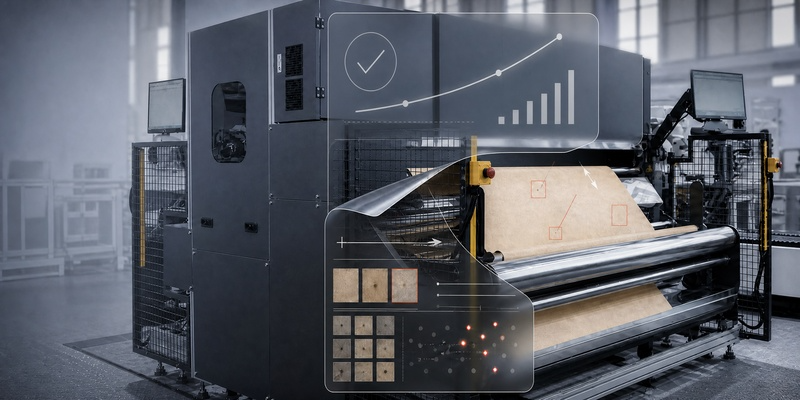
Fabric inspection has always depended heavily on experience. An experienced inspector knows what to look for when a roll passes through the machine: holes, oil stains, colour spots, foreign fibres, snags, horizontal bars and other surface problems that may affect cutting or final garment quality.
As factories handle more rolls, more fabric varieties and more demanding inspection records, maintaining the same judgement across operators and shifts becomes harder. This is one reason AI fabric inspection has attracted attention. A system can help locate defects, record their positions and produce inspection reports without requiring an operator to continuously watch every metre of moving fabric.
But AI does not remove the production conditions surrounding inspection. The fabric still has to move through the machine properly. Defect standards still have to be defined. The model still needs suitable image data, and someone still has to decide what to do with the information after inspection.
For factories evaluating AI fabric inspection, we find that the most useful discussions usually begin by clearing up a few common expectations.
Is AI Able to Solve Everything? 4 Common Myths About AI Fabric Inspection
Myth 1: Once an AI Fabric Inspection Machine Is Installed, It Should Immediately Inspect Every Fabric Accurately
An AI fabric inspection machine does not arrive at a factory already understanding every material, every customer's quality standard and every defect that matters to production.
Even defects carrying the same name can look very different from one fabric to another. An oil stain on light-coloured fabric does not appear the same way on dark fabric. Surface irregularities on knitted material may also look very different from those on woven fabric.
Acceptance standards add another variable. A small mark that is acceptable for one product may need to be identified when it falls on a visible panel or when the customer's quality requirement is stricter.
Before regular production begins, the factory and equipment supplier therefore need to clarify several practical points:
- which fabrics are inspected most frequently;
- which defects occur most often;
- which defects must be identified or marked;
- which surface conditions are still acceptable;
- whether the inspection information will later be used by quality management or the cutting room.
The model needs a clear standard to work from. When different inspectors classify the same condition differently, adding more AI does not remove that inconsistency.
The mechanical side also matters. Fabric flatness, tension, speed, lighting and camera stability all influence the images entering the recognition system. This is particularly important with stretch and knitted fabrics, where excessive tension can change the appearance of the fabric surface during inspection.
AI recognition begins with a stable image, and a stable image begins with stable fabric handling.
Myth 2: The More Training Data You Have, the Better the AI Will Perform
AI models need data, but collecting a large quantity of images is not the same as building useful training data.
Problems begin when the same defect is labelled under several names, normal fabric texture is mixed into defect samples, or visually different conditions are grouped together simply because operators use the same general term.
The model then learns inconsistent judgement. In production, this can appear as missed defects or as too many false detections that require manual secondary inspection.
For most factories, a more practical approach is to start with the defects that appear frequently and have a meaningful effect on production.
Depending on the material mix, these may include:
- holes;
- oil stains;
- colour spots;
- foreign fibres;
- yarn knots;
- snags;
- horizontal bars.
Useful image data should also retain enough context to make the classification meaningful, including the fabric type, colour and whether the condition is considered acceptable.
A smaller, clearly classified dataset built around real factory problems is usually more useful than a large collection of mixed images with inconsistent labels.
As new materials and defect types enter production, the database can continue to expand from that foundation.
Myth 3: A Factory Can Wait Until Someone Else Has Trained the AI Model and Then Use It Directly
A supplier with an existing defect model can give the factory a useful starting point. It reduces the amount of work required to begin from zero and allows sample testing to start sooner.
However, another factory's training result cannot automatically represent your own fabrics.
Fabric construction, colour, elasticity, surface shine and finishing all affect how defects appear to the camera. Even when two factories both identify a condition as an oil stain, snag or elasticity problem, the image characteristics may be quite different.
Customer standards are also different from factory to factory.
This is why an existing model should be treated as a starting point rather than a guarantee of production performance.
Before the equipment enters regular use, representative fabrics from the factory should still be tested. The evaluation should include the materials the factory actually processes and the defects that matter most in daily production.
A demonstration on prepared samples shows that the system can recognise those samples. A trial on your own fabrics tells you much more about how the system will behave after installation.
Myth 4: Once AI Fabric Inspection Is Introduced, Manual Inspection Is No Longer Needed
AI changes the work of fabric inspection, but experienced quality personnel still have an important role.
A system can continuously monitor moving fabric, identify selected defects, record their positions and generate reports. This reduces the dependence on an operator watching every metre of fabric and makes inspection results easier to retain and review.
The judgement behind those results still has to come from the factory.
When a new fabric is introduced, someone needs to decide whether the existing standard still applies. When a new surface condition appears, someone has to determine whether it should become a new defect category or remain within the acceptable range.
Customer requirements can also change, which may require classifications to be reviewed again.
In practice, experienced inspectors increasingly move toward defining standards, reviewing uncertain cases and maintaining the quality of the defect database.
This is a more useful way to look at AI inspection. Part of the inspector's experience becomes more consistent, recordable and repeatable, while experienced personnel continue to manage the judgement that the system depends on.
6 Things AI Fabric Inspection Machine Suppliers May Not Explain Clearly
After the basic expectations around AI are clear, equipment selection becomes much more practical.
Factories can then look beyond whether a machine is described as “AI-powered” and examine how its imaging configuration, data management and long-term support actually fit production.
1. More Camera Stations Do Not Automatically Mean Better Inspection
Camera count is one of the easiest specifications to compare, so it often receives a great deal of attention during equipment selection.
More stations can provide additional imaging conditions, but they only create value when those conditions help identify defects relevant to the factory.
Some surface problems may already be visible under a suitable general lighting arrangement. Other structural defects may become clearer under transmitted light or another imaging condition.
For this reason, every additional station should have a clear job.
Before purchasing, the factory should understand:
- which defects are mainly handled by the first station;
- what additional defects the second station is intended to cover;
- whether those additional defects are relevant to regular production;
- how another station changes the inspection and reporting process.
A factory does not gain much from paying for more imaging stations when its main fabrics and defects can already be handled by a suitable simpler configuration.
The appropriate number of stations depends on the inspection requirement, not on which specification looks more impressive.
2. Every Camera Station Should Correspond to Specific Defect Types
This point is closely related to camera count, but it deserves separate attention.
When a supplier offers one-station and two-station configurations, the factory should be able to understand exactly why the second station exists.
Surface defects such as colour spots, oil stains, snags and abrasion marks do not always require the same imaging method as structural problems such as broken warp, broken weft or thick-and-thin sections.
The equipment configuration should therefore be discussed from the defect backwards.
Start with the fabrics being inspected and the defects the quality team needs to identify. From there, determine which imaging conditions are necessary.
This is more useful than selecting the largest camera configuration first and trying to justify it afterwards.
3. Higher Camera Resolution Does Not Automatically Mean Higher Inspection Accuracy
Higher-resolution cameras can capture finer detail. That sounds straightforward, but finer detail includes both defects and normal fabric variation.
Natural fibre differences, acceptable surface texture and minor visual changes may become more visible as image detail increases. Without a clearly defined defect standard, the system may begin flagging more of these normal variations as abnormalities.
The result can be a technically sensitive system that creates too much secondary inspection work.
Camera resolution also works together with other conditions. Fabric flatness, lighting stability, inspection speed, image processing and the AI model all affect the final recognition result.
Instead of evaluating a system mainly by camera pixels, factories should ask to test their own fabrics and review actual recognition results.
Look at what the system detected, what it missed and how much acceptable fabric was incorrectly flagged. Those results are more useful for production planning than the resolution figure by itself.
4. AI Fabric Inspection Also Depends on Computing, Storage and Data Management
An AI fabric inspection machine is doing more than taking pictures.
As fabric passes through the inspection area, the system may need to process images, run the recognition model, record defect positions, generate reports and retain inspection information.
Once these records begin accumulating across many rolls, data management becomes part of the equipment requirement.
Before purchasing, factories should clarify:
- whether the system supports offline operation;
- how defect images and reports are stored;
- whether historical records can be searched;
- whether reports can be exported;
- how software and AI models are updated;
- whether the inspection information can later support other production or quality processes.
These items are less visible than the machine frame or camera system, but they affect how useful the equipment remains after the initial installation.
This becomes particularly important when inspection data needs to move further downstream.
A defect coordinate has more production value when the quality team can review it later or the cutting room can use that information for planning. When the record remains isolated inside the inspection machine, the factory has collected useful information without fully using it.
5. AI Inspection Performance Cannot Be Explained by One Accuracy Number
Factories naturally want a number they can use to compare systems. AI inspection does not fit neatly into one percentage.
An accuracy or detection-rate figure only becomes meaningful when the test conditions are known.
The result can change according to:
- fabric type;
- defect category;
- inspection speed;
- image conditions;
- the method used to calculate the result.
Missed defects and false detections should also be considered separately because they create different production problems.
A missed hole may continue into cutting. Excessive false detections may send quality personnel back to review large numbers of acceptable areas.
During an equipment trial, factories should therefore ask what was actually tested:
- Were the materials similar to regular production fabrics?
- Which defects were included?
- What inspection speed was used?
- Were missed defects recorded?
- Were false detections recorded?
- Can difficult or newly introduced materials be evaluated separately?
The closer the test is to daily production, the more useful the result becomes.
A single accuracy percentage is much less informative when the factory does not know what sits behind it.
6. AI Fabric Inspection Still Needs Adjustment After Installation
A factory's fabric mix does not remain unchanged.
New materials enter production, suppliers change, customer standards are revised and previously uncommon defects may begin appearing more often.
The inspection system needs to adapt with those changes.
This makes ongoing support an important part of the purchasing discussion.
Factories should understand:
- how new fabric types can be added for testing;
- how new defect images can be added;
- whether defect categories can be revised;
- how model adjustments are handled;
- how software updates are managed;
- what operational and maintenance support is available after installation.
The initial model may work well for today's fabric mix and still require adjustment later.
AI fabric inspection therefore makes more sense as a production tool that continues to develop with the factory's materials and inspection standards rather than as a model that is trained once and never touched again.
Where OSHIMA EagleAi/Plus Fits Into the Inspection Process
Within this process, OSHIMA's related solution is the EagleAi/Plus AI Fabric Inspection Machine.
According to the current equipment specification, EagleAi/Plus can be applied to stretch knitted and woven fabrics, with an inspection speed of 10 to 40 metres per minute depending on the fabric type.
Fabric Handling Comes Before Image Recognition
Stretch and knitted fabrics require particular attention to tension during inspection. When the material is stretched excessively in the inspection zone, its surface appearance can change before the camera captures the image.
EagleAi/Plus uses tension-free fabric handling with three-stage speed-controlled tension. According to the current specification, deformation of stretch and knitted fabrics within the inspection zone can be controlled within 5%.
This mechanical control supports the image-recognition process by keeping the fabric condition more stable as it passes through the inspection area.
One- and Two-Station Configurations Serve Different Inspection Needs
The one-station configuration covers defect types including yarn knots, slubs, foreign fibres, warp abnormalities, weft abnormalities, broken weft, stop marks, horizontal bars, snags, holes, fabric joins, crease shading, solvent residue, colour spots, colour stains, dirt, oil stains, uneven elasticity and abrasion marks.
The two-station configuration adds detection coverage for broken weft, broken warp, holes, fabric joins, elasticity abnormalities and thick-and-thin sections.
The appropriate configuration therefore depends on the factory's fabric mix and the defects that need to be identified. Station count should follow the inspection requirement rather than becoming the purchasing objective by itself.
After inspection, the system generates a defect distribution map and detailed report. Defect positions and classifications can then remain available for later quality management and cutting-room planning.
This is where AI inspection begins to affect more than the inspection department.
The inspection machine records where the problem is. The next production decision is how that information should be used before the fabric becomes cut pieces.
Conclusion
AI fabric inspection is useful when it improves something the factory already needs to control: consistent defect judgement, stable inspection conditions, reliable records and better use of defect information downstream.
Before comparing camera counts, resolution or headline accuracy figures, start with the fabrics you actually process and the defects that create problems in production. Define the acceptance standard, test representative materials and review missed defects, false detections, fabric handling and report output together.
AI changes the tools available to the inspection department. The manufacturing principle remains familiar: a stable process depends on clear standards, controlled conditions and information that can still be used at the next stage.


Article Classification
Recent Articles
- If Every Machine Is Running, Why Does the Factory Still Feel Stuck?
- AI Fabric Inspection: Turning Fabric Defects into Cutting Room Decisions
- Where Does a Garment Factory Lose Energy During Production?
- What Changes When Garment Factory Data Becomes Connected?
- How Garment Factories Can Boost Fabric Utilization and Cut Waste?