
 0
0



- Home
- Blog
- Applications & Solutions
- Where Does Sustainable Fabric Use Begin in Garment Manufacturing?
Where Does Sustainable Fabric Use Begin in Garment Manufacturing?
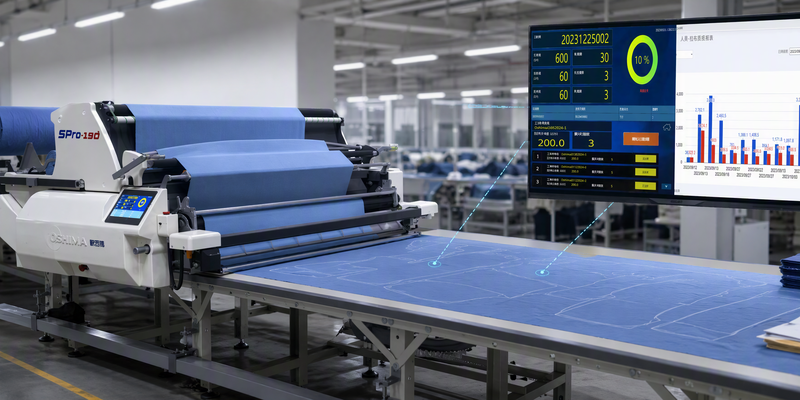
Sustainability in garment manufacturing is often associated with recycled fibers, regenerated materials, eco-friendly packaging and garment recycling. These are important parts of the discussion, but garment factories also have much more immediate control over what happens to fabric before it becomes a finished product.
A roll arriving at the cutting room is not necessarily ready to be spread and cut. Knitted and stretch fabrics may still carry residual tension, some materials have measurable shrinkage, and defects or usable-width variations can affect how the fabric is eventually laid and consumed. These conditions influence the difference between the fabric utilization calculated during planning and what the factory actually uses in production.
For garment manufacturers, this is where sustainability becomes a production issue. Reducing fabric waste depends on how well the material is prepared, how clearly its condition is understood, and whether that information can continue into spreading and cutting instead of being separated between different processes.
Fabric Utilization Starts with the Condition of the Material
Before discussing marker efficiency or cutting accuracy, the fabric itself needs to be in a suitable condition for production.
This is particularly important with knitted and stretch fabrics. Tension can remain in the material after previous processing, rolling, storage and transportation. Once the roll is opened, the fabric may continue to recover toward its natural condition. When this movement continues after spreading or cutting, the dimensions assumed during cutting may no longer match the fabric later in production.
Fabric relaxing is used where residual tension needs to be released before spreading. Preshrinking deals with a different condition: measurable dimensional change that should be addressed before bulk cutting.
The appropriate treatment depends on the fabric. Some materials need time to relax, others require controlled preshrinking, while stable fabrics may require little additional preparation. The decision should follow material behavior and test results rather than applying the same process to every roll.
From a cutting-room perspective, this preparation establishes the conditions for everything that follows. A good marker and an accurate cutting system can only work with the material that actually reaches the table.
Inspection Should Help Decide How the Roll Is Used
Once the fabric is sufficiently stable, the factory also needs a clear picture of the actual roll condition.
Fabric inspection can identify surface defects, stains, holes, shade issues and other abnormalities before the material is spread. Traditional inspection may rely on manual marking and experienced judgement, while digital or AI-assisted inspection can retain more structured information about defect type and location.
That information becomes most useful when it can support the next production decision.
For example, a production team preparing several rolls for one lay needs to decide which rolls to use and in what sequence. A recorded defect position may also affect whether a particular part of the roll is suitable for the planned marker.
When these decisions rely only on separate inspection reports and manual comparison, the connection between fabric quality and actual material use can be difficult to see. The more clearly the cutting room understands each roll before spreading, the more options it has when arranging the material.
This is also the direction in which digital inspection data is developing. Instead of serving only as a quality record, roll information can increasingly be used as part of spreading and cutting preparation.
Spreading Is Where the Plan Meets the Actual Fabric
Marker planning provides the factory with an expected utilization rate, but the calculation is based on planned conditions. Actual production has to work with the real rolls that arrive at the spreading table.
Usable width may differ from the expected width. Defects can fall in inconvenient positions. Roll lengths vary, and spreading tension, alignment and layer stability all influence the condition of the lay before cutting begins.
This makes spreading an important part of material utilization rather than simply a step between inspection and cutting.
Automatic spreading can reduce repetitive manual handling and help maintain more consistent spreading conditions according to the material and order requirements. IoT-connected spreading equipment can also retain production information and form part of a broader data flow between planning and the cutting room.
For some production setups, an optional projection system can provide another layer of information directly on the spreading table. The cut file can be projected onto the fabric while spreading is taking place, allowing the operator to compare the actual material with the planned layout.
Where compatible fabric-inspection data is available, recorded defect positions can also be displayed. The operator can then see whether a defect falls within an important cut area or whether the actual fabric position requires adjustment before continuing.
The projector itself is only the display point. Its practical value depends on the information available behind it: the cut file, fabric records and actual spreading conditions.
Planned Fabric Utilization and Actual Fabric Use Are Not Always the Same
Marker efficiency remains an important measure in garment production, but it represents how efficiently the pattern pieces are arranged in the planned marker.
Actual fabric consumption includes more variables.
A production order may use several rolls with different lengths, widths and defect distributions. Some fabric sections may need to be avoided. Roll changes and overlaps need to be arranged, while additional material may be required when the actual roll condition differs from the original assumptions.
A factory can therefore have a strong marker efficiency and still use more fabric than expected.
This difference is worth measuring because it shows where production improvement may actually be needed. The issue may come from fabric condition, defect distribution, spreading arrangements, inaccurate roll information or material that remains after the order but is difficult to identify and use again.
Leftover fabric is a good example. A usable remnant is not automatically waste. It becomes much harder to recover when the factory cannot clearly identify its material, color, remaining quantity or previous production use.
Looking at planned requirements together with actual rolls used, production adjustments and remaining material gives management a more realistic picture of fabric utilization than marker efficiency alone.
Production Data Makes Material Savings Easier to Verify
Garment factories have always tried to reduce fabric consumption. The difference today is that more of the information behind that consumption can be retained.
Fabric preparation tells the factory whether the material is ready for production. Inspection records what is contained in the roll. Marker planning provides the expected material requirement. Spreading and cutting determine how that plan is carried out on actual fabric.
When these records remain separate, management may know that an order used more fabric than expected without knowing exactly where the difference occurred.
Connecting the information makes the result easier to trace.
These production records become more useful when they can continue into the next stage rather than staying with individual machines. Within OSHIMA's garment-production workflow, fabric relaxing and shrinking equipment prepares the material, EagleAi® records fabric inspection data, and IoT spreading and cutting-room equipment carry production information further into the process. Where needed, an optional projection system can also display the cut file and recorded defect positions directly on the fabric during spreading.
The same fabric data is also beginning to support planning before spreading starts. A newer function within OSHIMA's IoT Dashboard uses recorded defect information to review how known defects may affect the planned lay, giving the production team an opportunity to adjust the arrangement before fabric is spread. We will cover this workflow in more detail in a separate article.
The important development is broader than any individual software function. Fabric information can increasingly remain connected as the material moves through production.
Sustainable Manufacturing Needs More Than a Sustainability Label
Recycled materials, recycling systems and lower-impact production technologies will continue to play an important role in garment sustainability. Inside the factory, however, improvement still needs to be visible in everyday production.
How much fabric was planned for an order? How much was actually used? Which rolls were selected? Where did material loss occur? How much usable fabric remained?
Without these records, it is difficult to know whether a process change actually reduced waste or simply moved the problem somewhere else.
This is why data and equipment connectivity matter. Machines handle different parts of the production process, but the information created at one stage should be available where it can support the next decision.
The tools will continue to change, while the manufacturing objective remains familiar: keep the fabric stable, understand what is being used, reduce unnecessary loss and use production records to improve the next order.
For garment factories, sustainable manufacturing becomes much more practical when material savings can be measured in the production process rather than described only as a target.


Article Classification
Recent Articles
- What Changes When Fabric Defect Data Reaches the Cutting Plan?
- How Can Food Factories Catch Problems Before Shipping?
- From Metal to Bones: How to Pick the Right Food Safety Machine
- From Nonwovens to Automotive Interiors: Choosing the Right Fabric Spreading Machine
- How Garment Factories Can Prepare for Smaller Orders?