
 0
0



- Home
- Blog
- Smart Manufacturing
- From Needle Safety to Digital Product Identity: Smart Footwear Inspection
From Needle Safety to Digital Product Identity: Smart Footwear Inspection
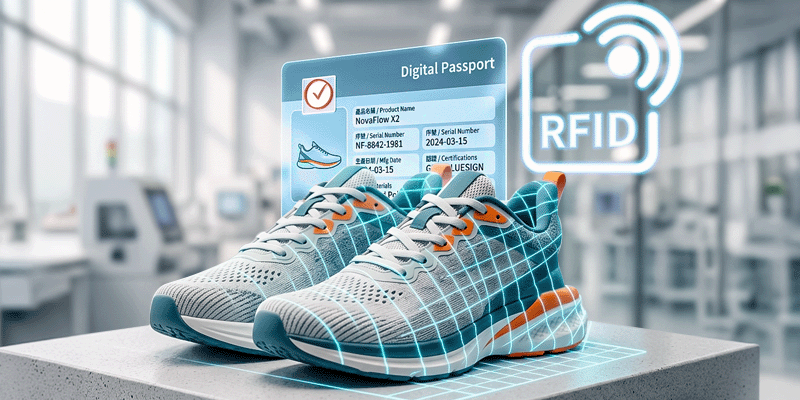
In footwear manufacturing, quality control does not begin at the final inspection. It starts when materials enter the factory and continues through cutting, stitching, forming, packing and shipment. A pair of shoes may look like a simple everyday product, but it must withstand bending, friction, pulling, slippery surfaces and long hours of wear. If material performance is unstable, left and right shoes are inconsistent, bonding is weak or broken needles and metal fragments remain inside the product, the result may be returns, complaints, loss of brand trust or even consumer safety risks.
In 2026, footwear factories are facing more than traditional inspection requirements. Export markets and brand customers are placing more emphasis on traceability, chemical substance control, supply chain transparency and digital product information. This means footwear quality control is gradually moving from traditional manual visual inspection toward needle detection, RFID, barcode systems, digital records and traceable quality data.
Why Modern Footwear Factories Need a More Complete QC Process
Footwear quality problems usually do not come from one single step.
Some problems come from materials. Some come from stitching. Some come from bonding. Others come from packing and logistics. If the factory does not have a structured quality control process, many issues may only be discovered after shipment, when the cost of handling them is much higher.
Common footwear QC pain points include broken needle fragments left inside shoes, inconsistent left and right shoes, weak outsole flex resistance, poor bonding, weak slip resistance, restricted chemicals in materials, packaging damage during transport, and product data that cannot be traced by batch or carton.
For brand customers, unstable quality is not only a manufacturing issue. It becomes a supply chain management risk. This is why professional footwear factories need repeatable, recordable and traceable quality control standards.
Hidden Safety Risks: Broken Needles and Metal Contamination
Footwear production uses stitching machines, metal accessories, tools and different types of equipment. If a needle breaks during stitching, small fragments may remain in the lining, tongue, insole, padding or stitched layers.
These fragments may not be visible during manual inspection. But if they reach the market, they may cause cuts or puncture injuries and lead to customer complaints or product investigations.
This is why needle detectors play an important role in footwear quality control. They are usually suitable for the final quality control stage before packing, helping factories reduce the risk of metal contamination before products enter shoeboxes or cartons.
For children’s shoes, sports shoes, work shoes, export footwear and high-standard brand orders, needle detection is especially important.
Material and Structural Performance Cannot Be Judged by Appearance Alone
Shoes face harsher use conditions than ordinary garments.
Outsoles need abrasion resistance, slip resistance and flex resistance. Uppers need to withstand pulling and friction. Bonding areas need to resist moisture, temperature changes and long periods of wear. If material or structural testing is insufficient, problems may not appear immediately during production. They may appear during transport, storage or consumer use.
Common structural issues include outsole cracking, sole separation, upper tearing, heel distortion, insole shifting and different fit between left and right shoes.
Therefore, footwear factories should not rely only on appearance checks. Depending on product type, they should build testing processes for flex resistance, slip resistance, bonding, symmetry, inner hand feel and packaging.
Chemical Safety and Brand Audits Are Becoming More Important
Footwear exported to Europe and the United States often needs to meet brand standards and chemical safety requirements. REACH, RoHS, ASTM, ISO or customer-specific testing requirements may all appear in footwear quality and compliance management. In recent years, PFAS, restricted substances and Digital Product Passport discussions have also made material information, chemical records, product origin and digital traceability more important.
This means future quality control is not only about testing whether a product passes. Factories also need to answer:
What materials were used in this pair of shoes?
Did this batch pass safety inspection?
Can the test records be checked?
Can the product be linked to its batch number?
If a problem occurs after shipment, can the source be traced quickly?
These questions require more complete digital records and traceability management.
What Should a Professional Footwear QC Checklist Include?
Footwear quality control should not rely only on one final manual inspection. A more complete approach is to build multiple inspection stages according to product type and customer requirements.
The first is safety inspection. Needle detectors help check whether broken needles or metal fragments remain inside shoes. If detection records can be saved, the factory can keep batch-level inspection results for brand audits and internal management.
The second is structural inspection. Left and right shoes must be consistent in length, width, height, toe shape, heel angle and internal space. If the two sides differ noticeably, consumers will feel it immediately.
The third is durability inspection. Flex and fatigue testing can simulate walking or repeated bending, helping factories find potential problems in soles, uppers or bonding areas earlier. This is especially important for sports shoes, work shoes, outdoor shoes and children’s shoes.
The fourth is appearance inspection. A first sample or golden sample remains an important reference for mass production. Inspectors should check toe shape, heel alignment, stitching position, glue overflow, material color and logo placement.
The fifth is inner hand feel inspection. A shoe may look acceptable from the outside but still feel uncomfortable inside. Stitching lumps, thread balls, shifted insoles, wrinkled lining, raised areas or foreign objects can all cause discomfort.
The sixth is slip resistance and performance testing. Slip resistance is especially important for work shoes, sports shoes, outdoor shoes, food service shoes and medical work shoes. Poor grip may create injury risk and brand liability.
The seventh is chemical safety inspection. Footwear may contain leather, fabric, adhesive, dye, coating, rubber, plastic and metal parts. Factories should keep supplier information, test reports, restricted substance lists and batch records.
The eighth is packaging testing. Even if shoes pass inspection in the factory, they may be damaged during transport. Carton drop testing helps confirm whether packaging can protect shoeboxes and products, especially for export and e-commerce orders.
The ninth is digital traceability. RFID or barcodes can connect product model, size, color, batch number, production line, inspection record, carton number and shipment data. This gives every pair or every batch a clearer digital identity.
Why Automated Inspection Is Becoming Important in Footwear Factories
Manual inspection remains important, especially for appearance, glue overflow, stitching, symmetry and hand feel. But manual inspection has limits. Human eyes cannot see metal fragments hidden deep inside the shoe. It is also difficult to record every inspection result consistently during large-volume shipment. Automated inspection helps reduce missed detection risk, improve inspection consistency, speed up quality control, reduce paper record errors and create traceable data records.
This is why needle detectors, RFID, barcode scanning, sorting systems and digital dashboards are gradually becoming important parts of footwear QC and shipment management. They do not replace all human judgement. Instead, they create a clearer division of work. People handle appearance, hand feel, structural judgement and abnormal decisions. Machines handle repetitive, safety-related and recordable inspection processes.
Needle Detectors Are the Safety Gatekeepers of Footwear Lines
In footwear factories, needle detectors are most suitable at the final inspection stage before packing. A conveyor needle detector allows shoes to pass through the detection zone and helps scan for metal contamination. When an abnormality is detected, the equipment can trigger an alarm, stop the machine or work with a sorting mechanism to prevent problem products from entering the packing process. For factories, needle detectors are not only for meeting brand requirements. They are basic equipment for reducing safety risk and brand responsibility. If connected with digital records, factories can also build batch-level inspection histories and improve audit readiness.
RFID and Barcodes Give Shoes a Clearer Product Identity
The value of RFID and barcodes is that product information no longer stays only on paper labels or manual records. Through RFID or barcodes, factories can connect product data with inspection data. When shoes pass different processes or inspection stations, the system can read and update records. For example, after needle detection, the system can record the inspection result. After packing, the system can link the product to the carton number. Before shipment, the system can confirm quantity and style. If a complaint occurs later, the factory can trace the batch and inspection data. This kind of digital identity management reduces handwritten errors and helps factories respond faster to brand customers.
Digital Dashboards Help Managers See QC Conditions Earlier
When data from needle detectors, RFID, barcode scanning and sorting equipment can be displayed together, digital dashboards become useful QC management tools for footwear factories. Managers can check daily inspection quantity, pass rate, abnormal count, equipment status, downtime reason, batch progress and shipment status. This information helps managers find problems earlier instead of waiting for monthly reports or customer complaints. The value of a digital dashboard is not having more data. It is seeing problems earlier on the production floor.
From Single-Point Inspection to Smart QC Workflow
Footwear quality control has moved beyond traditional visual inspection. Safety inspection, performance testing, chemical management and digital traceability are all becoming more important.
For modern footwear factories, manual inspection remains important, but it is no longer enough to support high-standard export, brand audits and future digital product information requirements.
Needle detectors help reduce the risk of broken needles and metal contamination. RFID and barcodes help build product identity data. Digital dashboards help managers see inspection conditions faster. When these tools are connected, footwear factories can build a more complete, transparent and audit-ready smart QC workflow.
OSHIMA can help footwear factories evaluate conveyor needle detectors, RFID or barcode identification, automatic sorting, inspection data recording, digital dashboards and pre-shipment QC workflow planning according to actual production needs.
Future quality management is not only about deciding whether a product passes or fails. It is about clearly showing where the product came from, which tests it went through, whether it passed inspection and how to trace the source quickly if a problem occurs.
For footwear factories, smart QC does not mean introducing every system at once. It starts by identifying the processes that create the highest safety risk, shipment error or audit pressure, then gradually building a quality management process that is detectable, recordable and traceable.


Article Classification
Recent Articles
- If Every Machine Is Running, Why Does the Factory Still Feel Stuck?
- AI Fabric Inspection: Turning Fabric Defects into Cutting Room Decisions
- Where Does a Garment Factory Lose Energy During Production?
- What Changes When Garment Factory Data Becomes Connected?
- How Garment Factories Can Boost Fabric Utilization and Cut Waste?