
 0
0



- Home
- Blog
- Equipment Knowledge
- Fabric Spreading Machine Guide: Spreading Methods, Fabric Types, and Machine Selection
Fabric Spreading Machine Guide: Spreading Methods, Fabric Types, and Machine Selection
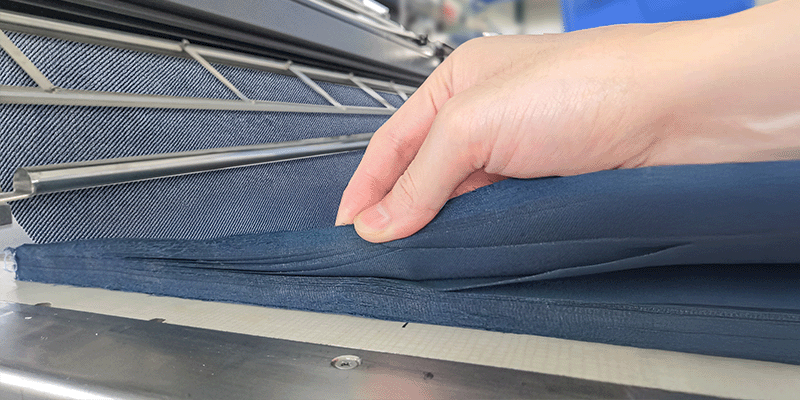
Since the late 1960s, automatic fabric spreading machines have gradually been introduced into garment manufacturing, changing how factories prepare fabric before cutting. In the past, fabric spreading often required 2 to 6 workers to manually pull and lay fabric on the cutting table. This process was time-consuming and heavily affected by operator experience, physical strength, and on-site working conditions.
The introduction of automatic fabric spreading machines helped factories make fabric laying more stable, consistent, and efficient. Today, fabric spreaders are widely used in garment factories, textile processing plants, and high-volume cutting rooms.
However, choosing a fabric spreading machine is not only about speed or basic specifications. Different fabrics require different levels of tension control, feeding stability, load capacity, edge alignment, and spreading layers. If the machine type does not match the material, factories may still face problems such as size variation, edge misalignment, fabric distortion, or material waste during cutting.
For this reason, machine selection should be based on fabric type, production volume, spreading method, and future management needs. This guide explains how fabric spreading machines work, common spreading methods, key benefits, industry trends, and how OSHIMA K5, T5, SPro, F2, and J3 support different production requirements.
How Does a Fabric Spreading Machine Work?
The main function of a fabric spreading machine is to automatically unroll fabric and lay it layer by layer on the cutting table according to the required length and number of plies.
During operation, the machine controls fabric feeding, spreading speed, tension, and edge alignment. This helps reduce wrinkles, stretching, and fabric edge deviation before cutting.
A typical process starts with loading the fabric roll onto the machine. The operator then sets the spreading length, number of layers, and spreading method. The machine spreads the fabric according to these settings, either in one direction or in a back-and-forth motion. Operators mainly monitor the fabric surface, check fabric joining, inspect spreading quality, and make adjustments when needed.
In actual production, a fabric spreading machine helps shorten preparation time before cutting and keeps each fabric lay more consistent. Some models can reach spreading speeds of up to 90 meters per minute, depending on the fabric type, machine configuration, and cutting room requirements.
Still, speed is not the only factor. For garment factories, the more important question is whether the machine can keep the fabric flat, maintain suitable tension, align fabric edges, and support the next cutting process.
Looking for spreading equipment for your cutting room? Explore OSHIMA fabric spreading machines →
Why Fabric Spreading Quality Affects Cutting Results
Cutting quality does not depend only on the cutting machine. It also depends on whether the fabric layers are properly prepared before cutting.
If the tension is too high during spreading, knitted or elastic fabrics may shrink back after cutting, causing size variation. If edge alignment is unstable, different layers may shift during cutting. If the fabric surface has wrinkles, waves, or uneven areas, the shape of the cut pieces may also be affected.
This is why a fabric spreading machine should not be viewed simply as a machine that “lays fabric.” It is a key part of pre-cutting preparation that affects cutting quality, fabric utilization, and production rhythm.
For high-volume garment factories, stable spreading quality can reduce correction work after cutting. For factories handling special materials such as automotive fabrics, heavy fabrics, nonwoven materials, or medical-use materials, feeding structure and load capacity become even more important when choosing the right machine.
Common Fabric Spreading Methods
Choosing the right spreading method helps maintain product quality, reduce fabric waste, and improve cutting room efficiency. Common spreading methods include one-way spreading, zigzag spreading, and multiple-length spreading.
1. One-Way Lay
One-way lay means that every fabric layer is spread in the same direction. After one layer is completed, the machine cuts the fabric and returns to the starting point without spreading.
This method is suitable for directional fabrics, such as printed fabrics, corduroy, fabrics with nap, or materials where pattern direction and color shade must remain consistent.
One-way spreading helps reduce the risk of shade difference, nap direction mismatch, and pattern direction errors. Compared with zigzag spreading, it is usually less efficient because the machine needs to return to the starting position after each layer. However, for directional fabrics or orders with higher quality requirements, one-way spreading remains a more stable choice.
2. Zigzag / Face-to-Face Lay
Zigzag spreading means the machine spreads fabric back and forth. The first layer faces upward, the second layer faces downward, and the process continues in alternating directions.
This method is suitable for fabrics with little difference between the face and back sides, fabrics with lower directional requirements, or symmetrical patterns. It is commonly used for certain solid-color fabrics, general woven fabrics, or symmetrical checked fabrics.
The main advantage of zigzag spreading is higher efficiency, making it suitable for mass production. However, it is not suitable for all materials. If the fabric has one-way nap, asymmetrical prints, or clear face/back differences, zigzag spreading may not be appropriate. The marker layout must also be checked to ensure that mirrored placement is acceptable.
3. Multiple-Length Lay
Multiple-length lay means spreading different lengths or different numbers of layers on the same cutting table. For example, one section may be spread at 250 cm, another at 200 cm, depending on size, style, or order quantity.
This method is useful for multi-size, multi-style, and small-batch mixed orders. It allows more flexible production planning and can help reduce unnecessary fabric waste.
However, multiple-length spreading requires clear on-site management. Section marking, lay separation, and cutting sequence must be well organized to avoid confusion during cutting.
Fabric Type Should Guide Machine Selection
Spreading method is only one part of the decision. In real production, factories also need to evaluate fabric type, roll weight, fabric width, tension requirements, production volume, and cutting room workflow.
For knitted or elastic fabrics, tension control is one of the most important factors. Knitted fabrics can easily stretch during spreading. If the fabric is pulled too tightly, it may shrink back after cutting and affect size stability. For this reason, factories handling knitted fabrics should prioritize low-tension spreading and stable fabric surface control.
For general woven fabrics or standard garment fabrics, the main requirements are stable edge alignment, flat spreading, and operating efficiency. These applications are usually suitable for mature and versatile fabric spreading machines.
For heavy fabrics, automotive materials, or composite materials, factories should not evaluate the machine using the same standard as ordinary garment fabrics. These materials usually require stronger feeding stability, better load capacity, and a machine structure suitable for heavier material handling. In this case, a dual-flow spreading system may be more suitable than a standard single-roll spreading machine.
For nonwoven materials, medical-use materials, or home textile fabrics, the main requirements are usually high production volume, continuous operation, and material handling capacity. These applications may be better supported by multi-roll spreading machines, especially when the factory needs to process several rolls at the same time or improve overall spreading output.
Working with medical nonwovens, home textiles, automotive interiors or other technical materials? See how spreading requirements differ across industries →
Single, Dual-Flow, and Multi-Roll Spreading: What Is the Difference?
Automatic fabric spreading machines are not all the same. Depending on the material and production needs, they can generally be divided into single spreading, dual-flow spreading, and multi-roll spreading.
A single spreading machine is suitable for general garment fabrics. It is commonly used for knitted and woven fabric production, daily cutting room operations, and factories that handle multiple fabric types without requiring heavy-duty material handling.
A dual-flow spreading machine is designed for heavy fabrics, composite materials, and automotive applications. The purpose is not only to increase speed, but to keep thicker, heavier, or more difficult materials stable during feeding and spreading. OSHIMA F2, for example, is suitable for automotive and industrial material applications, including automotive interior fabrics, composite textiles, and heavier materials.
A multi-roll spreading machine is suitable for high-volume and continuous production. When a factory needs to handle multiple fabric rolls at the same time, or when production involves heavy fabrics, nonwoven materials, medical-use materials, or home textiles, a multi-roll spreader can improve spreading efficiency. OSHIMA J3 supports up to six fabric rolls, making it suitable for production environments with higher capacity and material handling requirements.
There is no single machine type that is best for every factory. The right choice depends on the fabric, production volume, and application. General garment fabrics may not require a high-capacity multi-roll system. However, if the factory handles heavier materials, larger output, or special applications, a standard machine may not fully meet the production requirements.
How to Choose an OSHIMA Fabric Spreading Machine
The right spreading machine depends on fabric form and characteristics, roll weight, production volume, spreading method and whether digital production management is required.
| Production Requirement | Recommended Direction | Machine |
|---|---|---|
| General knit and woven fabrics | Versatile spreading for daily garment cutting-room production, with tension adjustment, edge alignment and multiple spreading methods. | K5 Knit/Woven Fabric Spreading Machine → |
| Tubular knit fabrics | Dedicated handling for tubular knit materials used in T-shirts, underwear, sportswear and related garment production. | T5 Tubular Knit Fabric Spreading Machine → |
| Knit / woven spreading with IoT management | Automatic spreading with production records, machine-status monitoring and fabric-usage data for cutting rooms moving toward digital management. | SPro Smart Fabric Spreading Machine → |
| Automotive interiors and technical materials | Dual-flow feeding for woven fabrics, nonwovens, foam and multilayer materials requiring controlled feeding and lower tension. | F2 Dual-Flow Fabric Spreading Machine → |
| Multi-roll and high-volume production | Multi-roll spreading for medical materials, nonwovens and production environments requiring higher capacity and heavier roll handling. | J3 Multi-Roll Fabric Spreading Machine → |
To compare the complete OSHIMA spreading range, view all fabric spreading machines →
Five Key Benefits of Fabric Spreading Machines
1. Higher Production Efficiency
Automatic fabric spreading machines can spread fabric continuously according to the required length and number of layers. This reduces the time needed for manual spreading and helps improve cutting room workflow, especially in high-volume production.
2. Lower Labor Requirement
Manual spreading often requires several workers, especially when the fabric is long, the roll is heavy, or the number of layers is high. Automatic spreading reduces repetitive manual work and allows operators to focus more on monitoring, quality checking, and production control.
3. More Stable Fabric Laying
With tension control, speed control, and edge alignment, fabric spreading machines help keep fabric layers more consistent. This supports cutting quality, cut-piece consistency, and size stability.
4. Improved Workplace Safety
Manual spreading often involves bending, lifting, and repetitive pulling. Automatic spreading equipment can reduce part of this physical workload and improve the working environment in the cutting room.
5. Less Waste and Better Fabric Utilization
Stable spreading and edge alignment help reduce fabric edge deviation, layer misalignment, and correction work before cutting. When combined with the right spreading method and marker planning, fabric utilization can also be improved.
The Value of Smart Spreading and IoT Functions
For factories that want to improve cutting-room management, an IoT-enabled spreading machine can provide more production visibility. SPro smart fabric spreading machine connects spreading operations with machine-status monitoring, production records and fabric-usage data.
The value of SPro is not only that it provides data. More importantly, it helps connect fabric spreading operations with on-site management.
By recording machine status, production data, and operation information, managers can better understand the cutting room situation instead of relying only on manual reporting. When a factory operates multiple machines, multiple shifts, or plans to gradually introduce smart manufacturing, IoT functions can become a starting point for cutting room digitalization.
For some factories, a traditional fabric spreading machine may already be sufficient. However, if the factory wants better production visibility, capacity tracking, or future integration with inspection, spreading, and cutting data, a machine with a data foundation will offer more room for future development.
Market Trends in Fabric Spreading Machines
As labor costs increase, quality standards become higher, and factories seek better production efficiency and management visibility, automatic fabric spreading machines continue to play an important role in garment and textile manufacturing.
In the past, factories mainly adopted spreading machines to reduce labor and improve spreading speed. Today, factories also care whether the machine can support different fabrics, different production types, and the following cutting process.
For larger factories or multi-line production environments, fabric spreading equipment is gradually moving from being a single mechanical machine to becoming part of cutting room management and production data collection.
With the development of smart manufacturing, machine visibility, IoT connection, production data recording, and process integration will become more important when factories upgrade their cutting rooms. This means fabric spreading machine selection is no longer only about whether the machine can spread fabric. It is about whether the machine can support fabric requirements, production capacity, quality control, and management needs.
Questions to Ask Before Choosing a Fabric Spreading Machine
Before selecting an automatic fabric spreading machine, factories should first confirm several key conditions.
First, identify the main fabric type. Is the factory mainly handling knitted fabrics, woven fabrics, or heavy materials? Different materials require different levels of tension control, feeding stability, and load capacity.
Second, check whether the fabric is easy to stretch, slip, curl, or deform. If the fabric is sensitive, factories should not focus only on speed. Tension control and stable spreading should be prioritized.
Third, confirm fabric roll weight, fabric width, and daily spreading volume. If the roll is heavy, the fabric is wide, or the output requirement is high, machine structure and load capacity become more important than basic functions.
Fourth, confirm the common spreading methods used in the factory. Directional products may require one-way spreading. If efficiency is the priority and the fabric allows it, zigzag spreading may be used. For mixed orders, multiple-length spreading may be necessary.
Fifth, consider whether production data management will be needed in the future. If the factory is planning smart manufacturing, machine connectivity, or cutting room digitalization, an IoT-enabled model such as SPro may provide better long-term value than a traditional model.
Next Step
Whether a factory handles woven fabrics, knitted fabrics, heavy fabrics, nonwoven materials, medical-use materials, or home textile fabrics, choosing the right spreading method and machine type is an important foundation for stable pre-cutting preparation.
For general garment production with knitted and woven fabrics, a mature and versatile model such as K5 can be considered. For factories with a high proportion of knitted fabrics and a need for low-tension spreading, T5 may be more suitable. For factories that want better data management and machine visibility in the cutting room, SPro provides a stronger foundation for long-term upgrading.
For automotive materials, heavy fabrics, or composite materials, F2 dual-flow spreading can better support material control. For heavy fabrics, nonwoven materials, medical-use materials, home textiles, or high-volume continuous production, J3 multi-roll spreading provides stronger production support and can handle up to six fabric rolls.
Choosing the right fabric spreading machine is not only about improving spreading efficiency. It also helps build a more stable foundation for cutting quality, fabric utilization, and on-site management. By confirming fabric type, production volume, spreading method, and future management needs before machine selection, factories can make a more practical decision for their production line.
For machine selection, factories can evaluate fabric type, fabric width, roll weight, production volume, spreading method, and cutting room workflow. OSHIMA supports garment, textile, home textile, medical material, and automotive material manufacturers with automatic fabric spreading solutions designed for different production needs.

Article Classification
Recent Articles
- The 30-90-180 Day Rule for Industrial Boiler Maintenance
- How Garment Machinery Supports Safety, Compliance and Environmental Management?
- What Happens Before Fabric Goes to the Cutting Table?
- Industrial Iron & Vacuum Table Care: How to Extend Their Lifespan
- Cutting Floor ROI: How the M8s and TAC Save $100K Annually