
 0
0



- Home
- Blog
- Industry Insights
- When Brands Grow Slowly, Garment Factories Feel the Pressure
When Brands Grow Slowly, Garment Factories Feel the Pressure
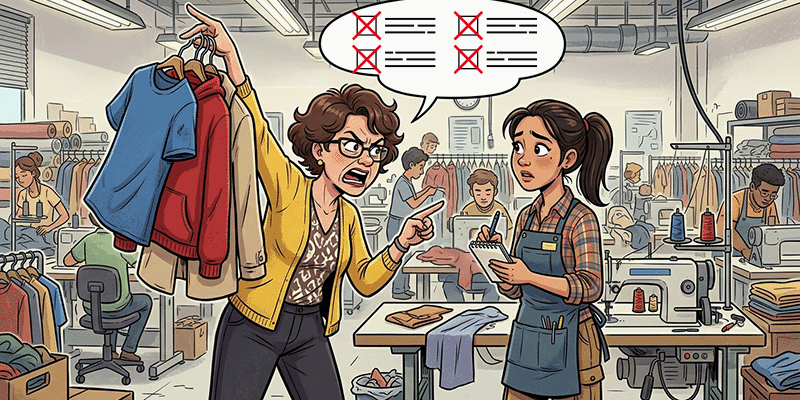
In the last few years, many garment factories have felt the same pressure: orders are not always easier to win, but customer requirements are not getting lighter.
Prices need to stay competitive. Delivery cannot be delayed. Quality must be stable. Styles are more varied, order quantities are often smaller, and last-minute changes still need to be handled.
Brands may be placing orders more carefully, but their expectations for suppliers are becoming higher.
This is not only the feeling of one factory. It reflects the market that the fashion industry is facing.
McKinsey / BoF’s State of Fashion 2026 report says the global fashion industry is expected to remain in low single-digit growth. Consumers are more cautious and more value-conscious. For brands, slower growth means every cost, inventory decision, discount, return and delivery mistake matters more.
When brands face more pressure, that pressure often moves down the supply chain.
For garment factories, the question is not only whether brands will ask for lower prices. The more practical question is whether brands will ask for better prices, faster response, steadier quality and fewer mistakes all at the same time.
In a low-growth market, factories cannot simply wait for orders to come back. They need to understand where time, fabric, labor and margin are being lost inside the factory.
When Brand Growth Slows, Factory Pressure Does Not Always Slow Down
When the market grows quickly, brands are usually more willing to place orders. They may also have more room to absorb cost changes. As long as sales momentum is strong, some inefficiencies inside the supply chain may not be immediately exposed. But in a low-growth environment, the situation changes.
Brands become more careful with inventory. They pay closer attention to sourcing costs. They worry more about demand forecast mistakes. Instead of placing large orders at once, they may buy more conservatively, split orders into smaller batches or adjust orders more often. For factories, this is not necessarily easier.
It means shorter response time, more frequent style changes, stricter delivery control and less room for error.
The old model of using large orders to spread cost may become harder to rely on. Future profitability will not depend only on order volume. It will also depend on whether the factory can reduce waste, waiting, rework and quality instability.
“Improving Efficiency” Cannot Stay as a Slogan
Most factories know they need to improve efficiency. The harder question is: where is efficiency actually being lost?
Some factories do not lack workers. They lose time waiting. Fabric is not ready, so later processes wait. Cutting is delayed, so sewing lines do not receive cut pieces on time. Quality problems are found too late, so the factory has to rework or rush before shipment.
Some factories do not lack machines. The problem is that machines are not used consistently. Equipment has been purchased, but workflows are not adjusted. Data is recorded, but no one uses it to make decisions. The factory floor looks busy, but too much time is spent looking for fabric, waiting, confirming, correcting and recovering from mistakes.
For other factories, the biggest problem is not output, but unstable quality. Fabric defects are not recorded early enough. Problems are found during cutting or sewing. Final inspection becomes the place where earlier mistakes must be fixed. These problems cannot be solved by saying “improve efficiency.” Real improvement should begin with the problems that happen most often, delay later processes most easily and create the highest rework cost.
The Cutting Room Is Often the First Place to Check
If a garment factory wants to improve efficiency, the cutting room is usually one of the best places to start. The reason is simple: the cutting room is a front-end process. If this area is unstable, later processes are hard to keep stable.
Fabric inspection, relaxing, spreading, cutting and cut-piece handling all affect sewing efficiency. If fabric defects are not found early, problems may appear after cutting and lead to replacement pieces, recutting or schedule changes. If spreading is unstable, layer control and cut accuracy may be affected. If cutting accuracy is inconsistent, sewing lines will spend more time adjusting.
In a low-growth market, brands are more sensitive to cost. Factories cannot afford to let fabric waste and rework become normal. Automatic spreading, automatic cutting and AI fabric inspection are not about making a factory look more advanced. They help factories make the front-end process more stable. When the front end is stable, later processes have a better chance of staying stable.
For many factories, efficiency does not begin on the sewing line. It begins when fabric first enters the production process.
The Later a Quality Problem Is Found, the More Expensive It Becomes
In a slow-growth market, brands focus more on cost. But cost does not come only from labor and materials. It also comes from mistakes.
If a quality issue is found during fabric inspection, the factory may still be able to mark it, avoid it or adjust the cutting plan. If the problem is found during sewing, it may already affect cut pieces, labor time and scheduling. If it is found before shipment, the cost becomes even higher. The factory may need to reinspect, rework, delay shipment or face complaints and returns.
This is why factories cannot place all quality control at the end. AI fabric inspection, in-process checks, needle detection, barcode scanning and pre-shipment inspection all help move problem detection earlier. The earlier a problem is found, the easier it is to control. The later it is found, the more easily it becomes a cost.
When brands ask for more stable quality, factories cannot depend only on final inspection to fix problems. A better approach is to let quality data begin earlier in the process, before small issues become larger ones.
Small Batches and Urgent Orders Make Internal Confusion More Visible
When consumers become more cautious, brands become less willing to carry too much inventory. This often means factories face more small-batch orders, more styles, split deliveries or last-minute changes.
For brands, this reduces inventory risk.
For factories, it increases management difficulty.
Small batches are not always simpler. More styles mean more changeovers. The factory floor becomes more exposed to confirmation mistakes, material waiting, cut-piece mix-ups, packing label errors and schedule changes. If factory workflows still depend heavily on verbal confirmation, paper records and manual tracking, the floor can become disorganized as orders become more complex.
At this point, the factory may not need only larger capacity. It needs clearer processes.
Which fabric roll has passed inspection? Which order is being spread? Which cut pieces are finished? Which process is stuck? Which batch is ready for shipment?
When this information can be seen earlier, managers do not need to wait until problems become delays before they respond.
Data Is Not Just a Report for Management
When factories hear the word digitalization, many think it means more reports. But useful data is not about giving management more numbers. It is about helping the production floor make fewer guesses.
Machine status data can show which equipment is running, which is stopped and when output drops. Production data can compare actual progress with the schedule. Abnormal records can show whether the same issue keeps happening in the same process. Fabric use data can help the factory understand material loss more clearly.
If this information stays on paper, or is scattered across different people, managers cannot respond quickly. By the time the monthly report is completed, the problem has already happened.
In a low-growth market, factories need to know problems earlier, not only review results later. This is the value of smart equipment and digital dashboards. They are not meant to make the factory look high-tech. They help make shop floor conditions visible sooner.
Automation Does Not Have to Replace People All at Once
When factories think about automation, they may first think of high cost, complicated implementation or whether machines will replace workers. A more practical way to think about automation is this: factories do not need to automate everything at once. They can begin with the processes that are most repetitive, physically demanding, error-prone or likely to delay later stages.
Spreading is repetitive and requires consistency. Automatic spreading can reduce manual variation and make spreading progress easier to record. Cutting requires accuracy and efficiency. Automatic cutting can reduce cut-piece errors and manual dependency. Fabric inspection depends heavily on human experience and attention. AI fabric inspection can help build more consistent defect records. These machines are not meant to turn factories into fully unmanned production sites. They help workers spend less time on repetitive, tiring and error-prone tasks.
When repetitive workload is reduced, people can focus more on the work that needs judgement: abnormal handling, quality confirmation, schedule coordination and equipment management.
What Should Factories Improve First?
If a factory does not know where to start, I would suggest looking at four areas.
First, look at waste. Fabric waste, time waste, waiting waste and rework waste all reduce margin. If the factory does not know where waste happens most often, efficiency improvement can easily become a slogan.
Second, look at the front end. If fabric inspection, spreading and cutting are unstable, later processes will be affected. Many delivery problems do not begin at the end. They begin earlier and accumulate over time.
Third, look at data. A factory does not need to install a full system from the beginning. But it should at least understand output, downtime, abnormalities, fabric use and schedule gaps.
Fourth, look at quality. The later a quality problem is found, the more expensive it becomes. Quality management should begin earlier in the process, not only at final inspection.
These improvements may not sound glamorous, but they determine whether a factory can protect margin and delivery in a low-growth market.
From Equipment Upgrade to Process Upgrade
OSHIMA has long served the garment and textile industry and understands the practical pressures factories face in cost, delivery and quality management.
In a low-growth market, factories do not always need to begin with a large system. They can start from the process that has the biggest impact on efficiency. AI fabric inspection can help factories identify fabric defects earlier. Automatic spreading and smart spreading equipment can improve spreading stability while recording work progress and fabric use. Automatic cutting can support cut-piece accuracy and front-end efficiency. Needle detection, barcode scanning, sorting and pre-shipment QC equipment can help reduce errors before shipment.
The purpose of these machines is not simply to replace labor. It is to help factories stabilize workflows, keep useful records and see problems earlier.
When market growth slows, the most competitive factories are not always the biggest, the cheapest or the ones with the most machines. They are the factories that can complete orders with less waste, steadier quality and clearer shop floor visibility.
Low growth does not mean there are no opportunities. It means factories can no longer wait for orders to return while operating in the same old way. The factories that stay competitive will be the ones that improve efficiency, quality and process stability before the pressure becomes even heavier.


Article Classification
Recent Articles
- When Brands Grow Slowly, Garment Factories Feel the Pressure
- Why Scale and Low Cost Are No Longer Enough for Bangladesh Apparel Manufacturing?
- Why Extreme Heat Is Becoming a New Risk for Apparel Supply Chains?
- Apparel Supply Chains Are Harder to Manage. Which Process Should Factories Fix First?
- How to Choose an Industrial Boiler: Start with Fuel, Steam Demand and Long-Term Cost