
 0
0



- Home
- Blog
- Industry Insights
- Why Climate Risk Is Now a Factory Productivity Issue?
Why Climate Risk Is Now a Factory Productivity Issue?
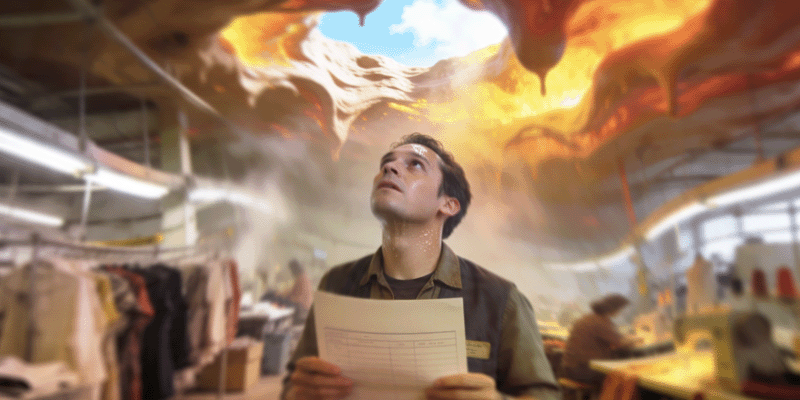
When the apparel industry talks about climate change, the discussion often turns to carbon emissions, sustainable materials, energy use or brand sustainability reports. But for factories, climate change is becoming something more immediate: when factories get too hot, production becomes harder to keep stable.
Recent reports say that some Indian garment factories supplying international brands have experienced productivity losses of up to 10% because of extreme heat. This is not only a worker safety issue. It also affects output, scheduling, delivery and supply chain stability. India is not the only case. Research by Better Work / Cornell / IFC also suggests that by 2030, the apparel industries in Vietnam, Cambodia, Pakistan and Bangladesh could lose up to US$65.8 billion in potential export earnings and create 1 million fewer new jobs because of heat and flooding.
This means extreme heat is no longer only a weather story in one country. It is becoming a production risk for the apparel supply chain. For garment factories, extreme heat is no longer just a difficult summer condition. It can make planned capacity less reliable.
India Is a Warning Sign, Not an Isolated Case
The recent case of Indian garment factories reporting productivity losses of up to 10% because of extreme heat deserves attention from the apparel industry. The important point is not simply that India is hot. The important point is that climate risk has entered daily factory operations. When heat reduces worker speed, increases the need for breaks and creates more quality instability, planned capacity and delivery schedules can be affected.
The bigger issue is that many global garment production hubs are already located in hot or humid regions. Bangladesh, Vietnam, Cambodia and Pakistan are all important sourcing bases for international brands. When these regions face more extreme heat and flooding, the impact goes beyond one factory. It can affect brand sourcing plans, export capacity and supply chain stability.
For factories, this means heat should no longer be treated only as seasonal discomfort. It needs to be part of capacity, scheduling, quality and delivery management.
Why Does Heat Affect Garment Factory Output?
Garment manufacturing still depends heavily on people on the production floor.
From fabric inspection, relaxing, spreading and cutting to sewing, pressing, quality checking and packing, many processes require workers to stand, operate, carry, judge and repeat tasks for long hours. When factory temperatures rise, comfort is not the only issue. Workers may become tired more easily. Attention can drop. Operation speed may slow down. Mistakes may increase.
A quantity that could normally be completed in one day may be affected by longer breaks, worker discomfort, slower shop floor rhythm or high temperatures around certain production areas. These changes may look small at first, but together they can affect output, quality and delivery. This is why heat is moving from a workplace comfort issue to a production management issue.
Heat Affects Quality, Not Only Speed
When people talk about heat, they often think first about lower productivity. But for garment factories, heat can also affect quality stability.
When workers spend long hours in a hot and poorly ventilated environment, attention, judgement and hand stability may be affected. On sewing lines, this can increase the risk of stitching errors, unstable seams or rework. For fabric inspection and quality control workers, fatigue can also increase missed defects or inconsistent judgement.
Heat can also affect the working environment itself. Sweat, dust, humid air and material storage conditions may make fabric handling, cut-piece management, pressing and packing more difficult.
This means factories should not only look at daily output. They should also watch whether rework, abnormal rates, quality complaints, missed inspection issues and packing errors increase during hotter periods. Extreme heat does not only slow the production line. It can make quality less stable.
Delivery Deadlines Do Not Automatically Change When the Weather Gets Hotter
Brand orders usually come with clear deadlines. Shipment schedules are often arranged in advance. Even when factories enter the hottest season, delivery expectations may not change. The problem is that many factories still plan production based on standard capacity, manpower and past experience. If heat-related efficiency changes are not considered, the schedule may look reasonable on paper while the production floor slowly falls behind.
Cutting rooms, pressing areas, boiler surroundings, warehouses and packing areas can be especially affected by heat, poor ventilation or high humidity. When front-end processes slow down, sewing, finishing, packing and shipment may also be affected.
In the past, factories may have described these situations as a slow production day, unstable worker condition or lower line efficiency. But when hot days become more frequent, this is no longer just an occasional problem. It becomes a capacity risk that factories need to manage.
Why Are Garment Factories Especially Vulnerable?
The garment industry is different from many highly automated industries. A large amount of work still depends on people. Even when factories introduce some automation, many key processes still require workers to load, unload, inspect, organize, judge and handle abnormalities.
Garment factories also have many connected processes, dense production areas and short lead times. If one process slows down, later processes can be affected.
If the cutting room slows down because of heat, sewing lines may wait for cut pieces. If pressing areas become hotter, worker fatigue and quality instability may increase. If packing slows down before shipment, the final delivery schedule may be affected.
Many garment manufacturing hubs in South Asia and Southeast Asia are already located in hot and humid environments. As extreme heat becomes more frequent, factories can no longer treat it only as seasonal discomfort. They need to consider how it affects output, quality and workforce management.
Heat Also Affects Management Decisions
Heat-related capacity changes are not always immediately visible to managers. Sometimes the production floor only feels slower. Afternoon output may be lower. Workers may look more tired. A certain area may report more abnormalities. But without data records, it is difficult to know whether the issue comes from manpower shortage, machine waiting, fabric conditions, workflow bottlenecks or heat-related efficiency loss.
This is one reason why factory schedules become inaccurate. Production plans are often based on standard capacity, while the shop floor faces temperature, humidity, worker condition, machine status, fabric differences and unexpected problems every day.
If these changes are not recorded, factories cannot easily analyze why certain time periods are slower, why some areas delay more often, or why the same manpower produces different output in different seasons. That is why factories need more than better ventilation or cooling. They also need clearer shop floor data. Hourly output, machine status, downtime, abnormal records, waiting time and manpower allocation can help managers understand whether heat is affecting production rhythm.
Scheduling Can No Longer Depend Only on Average Capacity
Many factories schedule production based on annual average output, standard working hours or past experience. But under high temperatures, capacity may vary by season, time of day and production area. Morning and afternoon productivity may differ. Summer output may differ from cooler seasons. Different floors, areas and processes may also be affected differently.
If factories continue to use one standard capacity assumption, the problem can be hidden.
At first, one process may only slow down slightly. Then half a day of progress may be lost. Later, a whole line may begin waiting. Finally, the delay appears as shipment pressure. This is why garment factories need to pay more attention to actual production data. The question is not only how much a factory can produce under ideal conditions, but how much it can produce under real conditions in different seasons, time periods and areas. This data helps managers plan more realistically and see delivery risks earlier.
Factories Do Not Need to Start with a Big Upgrade, But They Need to Know What Is Changing
When facing heat risk, factories do not always need to begin with a large-scale upgrade. But they should at least know which numbers are changing on the production floor.
Does hourly output drop during hotter months? Are afternoon hours more likely to fall behind than morning hours? Do cutting rooms, pressing areas or packing areas show higher abnormal rates? Are machine downtime and waiting time concentrated in certain areas? Do rework, missed inspections or quality abnormalities become more obvious during hot periods?
If these observations depend only on human feeling, they are difficult to record consistently. When machine status, output, downtime and abnormalities are digitalized, managers can more easily understand whether problems come from heat, manpower allocation, machine waiting or workflow bottlenecks.
In other words, the first step in heat management is not always buying more cooling equipment. It is making shop floor changes visible.
Where Can Factories Start?
Factories may not be able to solve every heat-related issue at once, but they can start with a few practical management steps.
First, identify the hottest areas that most affect efficiency. Pressing areas, boiler surroundings, cutting rooms, warehouses, packing areas and high-density sewing lines may need closer review. Different areas have different heat sources, so improvement methods should also be different. The factory needs to know where the problem is before deciding where to place resources.
Second, review summer scheduling assumptions. If afternoon output clearly drops during the hottest season, the factory should not use the annual average capacity for all planning. Breaks, shift arrangements, production targets and physically demanding processes may need to be adjusted according to real conditions.
Third, reduce physically demanding and highly repetitive work. Automatic spreading, automatic cutting, conveying, barcode scanning and automated inspection cannot solve every heat problem, but they can reduce some manual carrying, repetitive operation and long hours of manual recording. When workers spend less energy on repetitive tasks, production management becomes more stable.
Fourth, use data to see changes on the production floor. If machines can record output, status, downtime and abnormalities, managers can compare different seasons, time periods and lines instead of depending only on feeling.
Fifth, include heat risk in supply chain communication. When brands and factories discuss delivery, they should not only look at ideal capacity. If high-temperature seasons reduce efficiency, factories need data to explain capacity changes and help customers understand delivery risk.
How Equipment Data Helps Managers See Problems Earlier
Heat problems cannot be solved by equipment alone. But when production conditions become more unstable, factories need to know what is actually happening on the shop floor. If equipment can record running status, work progress, output, downtime and abnormalities, managers can see changes in production rhythm earlier.
For example, smart spreading equipment can help record spreading progress, fabric use and machine status. When managers can see actual output across different time periods and processes, they can more easily judge whether delays come from heat, manpower allocation, machine waiting or workflow bottlenecks.
AI fabric inspection, automatic spreading, automatic cutting and pre-shipment inspection equipment can also help reduce some highly repetitive work that depends on long hours of manual attention. These machines are not meant to solve every climate issue. Their value is helping factories keep processes clearer and more manageable in a less stable production environment.
For garment factories, smart manufacturing does not need to begin with a full system. It can begin by making key process data visible. When shop floor data becomes clearer, factories can identify problems, adjust schedules and respond before small issues become larger delays.
Heat May Become Part of Supplier Evaluation
In the past, brands usually evaluated suppliers based on price, quality, delivery, capacity and compliance. But as extreme weather begins to affect factory operations, heat management may also become part of supply chain risk evaluation.
For brands, whether a factory can maintain stable production during hot seasons affects more than one order. It affects overall supply chain stability. If a factory often faces lower output, unstable quality, attendance issues or delivery delays during summer, the brand carries higher delivery risk.
This is why factories will not be able to explain capacity only by saying how many workers, machines or daily pieces they have. What matters more is whether the factory can use data to show how actual capacity changes across different seasons, times of day and production processes.
Does output drop during hotter months? Are afternoon hours slower than morning hours? Do pressing areas, cutting rooms or packing areas show higher abnormal rates? Are machine downtime, waiting time or quality issues concentrated in certain areas?
This data is not only useful for internal management. It can also become an important basis for communication with brand customers about delivery, capacity and improvement plans.
As climate becomes less stable, the most competitive factories may not simply be the lowest-cost factories. They will be the factories that can maintain quality, delivery and shop floor visibility in a changing production environment.
Conclusion
Extreme heat does not happen every day. But when it does, it can make already tight production plans even more unstable. For workers, heat is a health and workplace condition issue. For factories, heat is an output, quality, attendance and scheduling issue. For brands, heat is a supply chain stability issue.
That is why garment factories should not only ask whether they need cooling. They should also ask whether they can see how heat is affecting the production floor. Future factory management will need to face climate change more practically. Better ventilation, adjusted schedules, reduced repetitive manual burden and clearer equipment and output data will all become important foundations for stable delivery and quality. Extreme heat is not only a weather problem. For garment manufacturing, it is already becoming a production problem. For global fashion supply chains, it is also becoming the next risk that cannot be ignored.


Article Classification
Recent Articles
- Why Climate Risk Is Now a Factory Productivity Issue?
- How Apparel Supply Chains Can Adapt to Economic Pressure and Sustainability Challenges?
- How to Choose an Industrial Boiler Based on Fuel, Steam Demand and Long-Term Cost?
- 8 Ways Garment Factories Can Stay Competitive in an Unstable Economy
- How Solving the Deadstock Problem Can Cut 92 Million Tons of Textile Waste Yearly?