
 0
0



- Home
- News
- News & Updates
- OSHIMA Showcases AI Fabric Inspection Prototype at User Experience Day
OSHIMA Showcases AI Fabric Inspection Prototype at User Experience Day
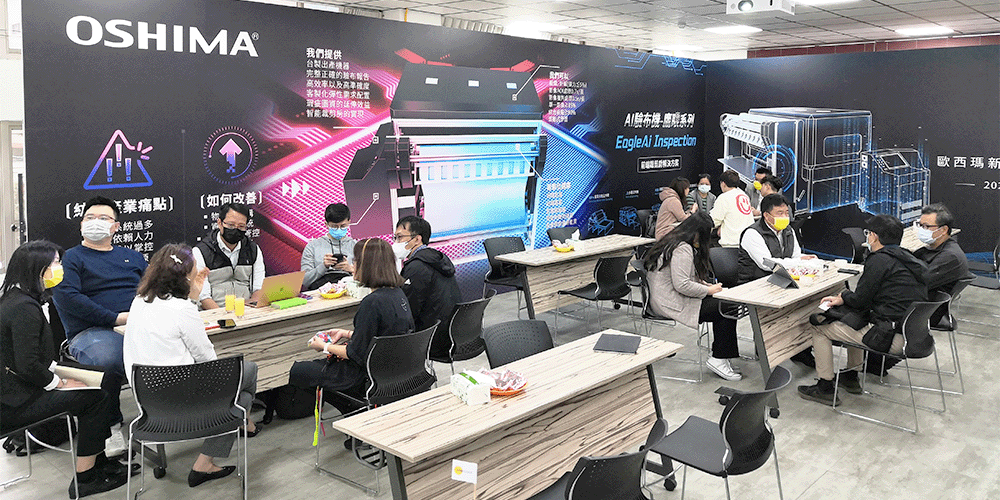
Advancing AI Fabric Inspection in Taiwan
Taiwan-based machinery manufacturer OSHIMA recently showcased the prototype of its AI Fabric Inspection System during an industry User Experience Day, held in collaboration with textile manufacturers, Taiwan’s Industrial Technology Research Institute, and related industrial development initiatives.
The event marked an important milestone in Taiwan’s development of locally engineered AI-assisted fabric inspection technology, designed to help textile manufacturers improve quality control efficiency through automated defect detection and digital inspection workflows.
Designed for Modern Fabric Inspection
The prototype system was developed to support a wide range of textile inspection needs, including:
- knit fabric inspection
- woven fabric inspection
- automated defect detection
- digital defect mapping
- inspection data reporting
- continuous AI model improvement through data feedback loops
The machine generates digital inspection reports that include:
- fabric defect distribution maps
- defect category records
- inspection history data
- traceable quality documentation
This allows manufacturers to move beyond traditional visual inspection toward more data-driven quality management.
From Manual Inspection to Intelligent Quality Control
Unlike conventional inspection systems that mainly capture images for manual review, OSHIMA’s EagleAi Fabric Inspection platform is designed to integrate machine vision, AI-assisted recognition, and ongoing model optimization into the inspection workflow.
By combining image capture, defect analysis, and database learning mechanisms, the platform aims to help manufacturers:
- reduce repetitive manual inspection workload
- improve inspection consistency
- digitize fabric quality records
- create structured defect databases for future model refinement
This reflects a broader shift in textile manufacturing, from manual inspection processes toward intelligent quality systems.
Continuing Development
Prototype testing and industry feedback remain important parts of the development process.
OSHIMA stated that it will continue investing in AI model training, defect recognition improvement, and production-ready system refinement to further enhance practical application in real manufacturing environments.
The long-term goal is to help textile manufacturers build smarter, more efficient, and more connected quality control workflows.

