
 0



- Home
- Blog
- Equipment Knowledge
- Fabric Cutting Machine Selection Guide: Types, Layers and Applications
Fabric Cutting Machine Selection Guide: Types, Layers and Applications
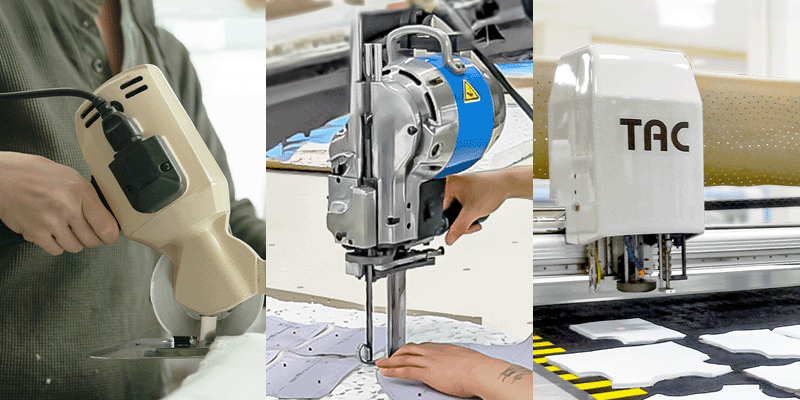
Fabric cutting is a critical stage in garment and textile manufacturing. It directly affects production efficiency, material costs, cutting accuracy and the consistency of downstream sewing operations.
For many factories, the cutting room is also where hidden production costs occur. Even a small amount of fabric waste can become significant at high production volumes. Slow cutting operations may delay orders, while inconsistent cutting quality can lead to dimensional errors, rework and rejected pieces.
Choosing the right fabric cutting machine therefore involves more than comparing equipment prices or cutting speeds. Manufacturers should evaluate fabric characteristics, production volume, cutting layers, labor requirements, CAD integration and future production needs. The right equipment should fit the factory's workflow rather than simply offer the highest specifications.
Why Does Fabric Cutting Machine Selection Matter?
Fabric cutting takes place after material preparation and before sewing or other downstream processes. If the cutting operation is unstable or inefficient, it can affect the entire production schedule.
When cutting is too slow, the sewing line may not receive cut components on time. When cutting accuracy varies, operators may need to correct or replace pieces. When production depends heavily on experienced cutters, output and quality may also vary between operators.
A suitable cutting machine can improve productivity, support consistent cutting quality and reduce certain manual operations. However, no single machine is suitable for every factory. Sampling rooms, small-batch manufacturers, high-volume garment factories and automotive textile suppliers often have very different requirements.
What Are the Main Types of Fabric Cutting Machines?
Fabric cutting equipment can be classified according to its operating method and level of automation. Common categories include manual cutting tools, manually guided electric cutting machines and CNC automatic cutting systems.
Manual Cutting Tools: Flexible for Sampling and Small Orders
Manual cutting tools include scissors and handheld cutting equipment. They are commonly used for sampling, garment alterations, small components, customized orders and special material handling.
Their main advantages are flexibility and relatively low initial investment. They remain useful for applications involving frequent design changes, limited quantities or detailed manual adjustments, such as made-to-measure garments, bridalwear and sample development.
However, manual cutting relies heavily on operator experience. Cutting speed and consistency may vary, and manual operations can become a production bottleneck as order volumes increase.
Straight Knife and Round Knife Cutting Machines
A straight knife cutting machine uses a vertically reciprocating blade to cut fabric. It is widely used in garment manufacturing and can process stacked fabric layers within the machine's cutting capacity.
A round knife cutting machine uses a rotating blade and is generally suitable for selected lightweight materials, shorter cutting paths and smaller cutting tasks.
Both are powered cutting tools that still require an operator to guide the cutting path. They should therefore be distinguished from fully automatic CNC systems that follow digitally programmed cutting instructions.
For factories that need to improve cutting capacity while maintaining manual operating flexibility, straight knife and round knife equipment can be practical solutions.
Band Knife Cutting Machines: Suitable for Curves and Detailed Shapes
A band knife cutting machine uses a continuously moving blade while the operator guides the material through the cutting area. It is useful for smaller components, curved outlines, irregular shapes and detailed cutting work.
Some band knife machines include an air-float table that reduces friction when moving materials. These systems can be used for garment components, upholstery, foam and selected technical materials.
Automatic Fabric Cutting Machines: Digital and Repeatable Cutting
An automatic fabric cutting machine uses digitally controlled cutting paths, typically based on CAD patterns and cutting files. CNC cutting systems reduce the need for manual blade guidance and support repeatable cutting operations.
Depending on the machine configuration, automatic cutting systems can process single-ply, low-ply or high-ply materials. They are used for sampling, small-batch production, mass garment manufacturing, automotive interiors, upholstery and technical textiles.
However, automatic cutting requires consideration of investment costs, material compatibility, operator training, maintenance and software integration. Automation should be selected according to actual production requirements rather than production volume alone.
Fabric Cutting Machine Types Compared
| Machine Type | Typical Applications | Main Advantages | Selection Considerations |
|---|---|---|---|
| Manual Cutting Tools | Sampling, alterations, customized pieces | Flexible, low initial investment | Operator skill and limited capacity |
| Straight / Round Knife | General garment and manually guided cutting | Flexible powered cutting | Cutting layers and operator experience |
| Band Knife | Small components, curves and irregular shapes | Suitable for detailed shape cutting | Material handling and working area |
| Low-Ply Automatic Cutting | Sampling, short runs, leather and technical textiles | Digital cutting and production flexibility | Material thickness, tools and table configuration |
| High-Ply Automatic Cutting | Mass garment production and multilayer cutting | Automated multilayer processing | Compressed cutting height, density and output |
This comparison provides an initial selection framework. Final equipment suitability depends on the actual material, cutting patterns and machine specifications.
Single-Ply, Low-Ply or High-Ply Cutting: Which Is Suitable?
Cutting layers are among the most important factors when selecting a fabric cutting machine. However, the number of layers alone does not determine equipment suitability. Material thickness, density and stacking stability must also be considered.
Single-Ply Cutting: Flexibility and Material Positioning
Single-ply cutting processes one material layer at a time. It is commonly used for sampling, customized products, leather, printed materials and technical textiles that cannot be stacked reliably.
It is particularly useful when each material piece requires individual positioning or when cutting patterns change frequently.
Low-Ply Cutting: Small Batches and Technical Materials
Low-ply cutting processes a limited number of material layers. It is suitable for selected automotive interiors, upholstery, industrial textiles, leather and thicker materials. It can also support garment sampling and short-run production.
Low-ply automatic systems are often selected for digital cutting flexibility, material versatility and frequent order changes. They are not simply an intermediate solution between manual and high-ply cutting.
High-Ply Cutting: Stable Multilayer Production
High-ply automatic cutting machines are designed for stacked fabric cutting and are commonly used in high-volume garment production. Processing multiple fabric layers in a single cutting operation can increase output per cutting cycle.
However, higher cutting capacity does not automatically mean better suitability. Maximum cutting height should be evaluated based on compressed lay height, material density, blade resistance and actual cutting tests.
| Cutting Method | Best-Suited Needs | Key Evaluation Factors |
|---|---|---|
| Single-Ply | Sampling, custom orders, non-stackable materials | Positioning, material dimensions, accuracy |
| Low-Ply | Small batches, technical materials, limited stacking | Thickness, cutting tools, stability |
| High-Ply | Multilayer garment cutting, volume production | Compressed height, density, throughput |
How Does Fabric Type Affect Cutting Machine Selection?
Different fabrics behave differently during cutting. Manufacturers should evaluate thickness, density, stretch, surface characteristics and stackability before selecting equipment.
Woven Fabrics: Cutting Layers and Lay Stability
General woven fabrics are widely used for shirts, uniforms, workwear and other garments. When they can be stacked consistently, factories may evaluate straight knife cutting or high-ply automatic cutting according to production requirements.
Fabric construction, surface friction and thickness can still affect cutting results, making spreading stability an important consideration.
Knitted and Stretch Fabrics: Tension and Dimensional Stability
Knitted and stretch fabrics may extend, curl or recover during spreading, handling and cutting. If fabric tension is not properly controlled, cut-piece dimensions may vary even when a precise cutting system is used.
Manufacturers should therefore evaluate fabric relaxation, spreading and cutting as a complete process. An appropriate automatic fabric spreading solution can help support consistent material handling before cutting.
Denim and Heavy Materials: Blade Resistance and Cutting Height
Denim, heavy woven fabrics and dense textiles can create greater cutting resistance, particularly when multiple layers are compressed into a single lay.
For these materials, cutting machine selection should consider blade performance, cooling design, compressed cutting height and continuous cutting requirements rather than maximum speed alone.
Leather, Automotive Interiors and Technical Textiles
Leather, synthetic leather, upholstery, automotive interior materials and composites vary in thickness, surface properties and processing requirements. Some materials are unsuitable for high-layer stacking, making single-ply or low-ply cutting more appropriate.
When materials are expensive, accurate positioning, nesting and cutting consistency become especially important in controlling waste.
Printed and Directional Fabrics: Alignment Requirements
Printed fabrics, stripes, checks and directional materials may require pattern matching or specific cutting orientations. In addition to CAD nesting, factories should verify the positioning method and available registration functions.
Not every automatic cutting machine includes printed-pattern recognition or automatic alignment. These functions should be confirmed according to the selected configuration.
Choosing Fabric Cutting Equipment by Production Requirements
Machine selection also depends on order volume, style variation, daily throughput and labor availability. Different production environments may require different cutting approaches even when processing similar materials.
| Production Scenario | Equipment to Evaluate | Main Selection Priority |
|---|---|---|
| Sampling and Product Development | Manual or low-ply automatic cutting | Flexibility and pattern changes |
| Small-Batch and Customized Orders | Manually guided or low-ply automatic cutting | Changeover time and repeatability |
| General Garment Manufacturing | Straight knife or high-ply automatic cutting | Output, labor and cutting layers |
| High-Volume Lightweight Fabrics | High-ply automatic cutting for light materials | Stable multilayer processing |
| Denim and Heavy Materials | Heavy-duty high-ply automatic cutting | Blade resistance and cutting height |
| Upholstery, Automotive and Technical Textiles | Single-ply or low-ply automatic cutting | Material properties and tool selection |
Small-batch production does not necessarily require manual cutting. Low-ply automation can be suitable when frequent pattern changes, digital cutting files and consistent repeatability are important.
Which OSHIMA Fabric Cutting Machine Should You Choose?
OSHIMA provides cutting equipment for sampling, low-ply automation, lightweight high-ply cutting and heavy-duty multilayer applications. Machine selection should be based on the manufacturer's actual fabric and production requirements.
OneCut: Low-Ply Automatic Cutting for Sampling and Technical Materials
OSHIMA OneCut is designed for sampling, product development, small-batch production and selected materials including fabrics, leather, upholstery, automotive interiors and technical textiles.
OneCut offers fixed-table and conveyor-table configurations, with cutting tools selected according to material and application requirements. It is suitable for factories seeking digital cutting capability while maintaining production flexibility.
TAC: High-Ply Automatic Cutting for Lightweight Fabrics
OSHIMA TAC is designed for multilayer cutting of thin and lightweight fabrics, making it suitable for garment factories requiring consistent processing of stacked light materials.
Selection should consider fabric properties, compressed cutting height and daily production requirements.
M8S: Heavy-Duty High-Ply Cutting for Thick Materials
OSHIMA M8S is developed for denim, heavy woven fabrics, dense multilayer materials and demanding cutting conditions.
Its blade-cooling system supports applications involving higher cutting resistance and continuous cutting operations. The actual cutting capacity should be verified with production materials.
Manual Cutting Equipment: Flexible Production Options
Factories that do not require CNC automation may consider straight knife, round knife and air-float band knife equipment. These systems remain practical for manually guided cutting, detailed components, curves and special shapes.
Explore the complete OSHIMA fabric cutting machine range for available models and specifications.
In a real-world application, Polish lingerie manufacturer Babell implemented OSHIMA automatic cutting equipment to improve cutting consistency and reduce recutting and fabric waste. This case illustrates why cutting machine selection should consider production workflows and quality requirements alongside fabric type and cutting layers. Read the Babell lingerie automatic cutting case study for more details.
CAD Nesting and Cutting Room Integration
Automatic cutting machines typically use CAD patterns and digital cutting files. CAD systems support pattern development and management, while nesting software helps arrange pattern pieces according to material width, shape and placement constraints.
However, fabric utilization depends on more than the cutting machine. Marker efficiency, fabric quality, pattern design and spreading accuracy all influence material consumption.
Before purchasing, manufacturers should confirm compatibility with existing CAD files, nesting software and data-transfer methods, as well as any requirements for ERP, MES or other factory management systems.
Integration capabilities and optional features vary by machine and configuration. Compatibility should be confirmed before equipment procurement.
Fabric Cutting Machine Buying Checklist
Before requesting a quotation, factories should prepare the following information to help identify suitable equipment and avoid specification mismatches.
| Selection Item | Questions to Confirm |
|---|---|
| Fabric Type | Woven, knitted, denim, leather or technical materials? |
| Material Dimensions | What are the maximum fabric width, cutting length and component size? |
| Cutting Layers | Single-ply, low-ply or high-ply? What is the compressed height? |
| Production Volume | How many lays, orders or pieces are processed daily? |
| Pattern Requirements | Are curves, small components or pattern alignment required? |
| Software Integration | Which CAD, nesting or production management systems are used? |
| Factory Layout | Are floor space, power supply and material flow suitable? |
| Maintenance and Service | What training, consumables and after-sales support are required? |
Where possible, manufacturers should request cutting trials using actual production materials and representative pattern files. Real-world testing often provides better evidence of suitability than comparing maximum cutting speed or cutting height alone.
Conclusion: Choose a Cutting Machine That Fits Your Production
The best fabric cutting machine is not necessarily the most expensive or fastest model. It is the equipment that fits the factory's materials, production volume, cutting layers, quality requirements and long-term manufacturing plans.
Manual and manually guided cutting equipment remain useful where flexibility and investment control are priorities. Low-ply automatic cutting supports sampling, small batches and selected technical materials, while high-ply automation is suitable for stable multilayer garment production.
If your factory is considering a transition from manual cutting, read When Should Garment Factories Use Automatic Cutting Machines? to evaluate when upgrading makes sense.
For more information about production performance, explore Automatic Cutting Machine Efficiency. To evaluate financial considerations, see Automatic Fabric Cutting Machine ROI: M8S vs TAC.
OSHIMA provides fabric cutting solutions for garment manufacturing, upholstery, automotive interiors and technical textile applications. Contact OSHIMA with your material type, cutting layers and production requirements to discuss suitable equipment options.
Frequently Asked Questions About Fabric Cutting Machines
What is the difference between manual and automatic fabric cutting?
Manual cutting requires an operator to guide the cutting tool, while automatic cutting follows digitally programmed cutting paths. The main differences involve operation, repeatability, equipment investment and workflow requirements. Automation is not necessarily the best option for every factory.
Is automatic fabric cutting suitable for small-batch production?
Yes. Low-ply automatic cutting systems can support sampling, small batches and frequent style changes. Whether automation is financially suitable depends on order characteristics, labor requirements and the existing cutting process.
How do I choose between low-ply and high-ply cutting?
Consider material stackability, compressed cutting height, production quantity and pattern variation. Low-ply systems emphasize flexibility and selected technical-material applications, while high-ply systems are generally used for stable multilayer production.
Which fabric cutting machine is suitable for denim?
The appropriate equipment depends on denim thickness, density and cutting layers. For high-volume multilayer denim cutting, a heavy-duty high-ply automatic cutting machine may be suitable, subject to actual material testing.
Can an automatic fabric cutting machine reduce fabric waste?
Automatic cutting can reduce some operational inconsistencies, but actual material savings depend on CAD nesting, fabric properties, cutting accuracy and the overall production process. A fixed waste-reduction percentage should not be assumed.


Article Classification
Recent Articles
- The 30-90-180 Day Rule for Industrial Boiler Maintenance
- How Garment Machinery Supports Safety, Compliance and Environmental Management?
- Fabric Shrinkage and Skewing: Causes, Testing and Prevention Before Cutting
- How to Maintain Industrial Steam Irons and Vacuum Ironing Tables
- Automatic Fabric Cutting Machine ROI: Cost Savings and Payback for M8S vs TAC