
 0
0



- Home
- Blog
- Industry Insights
- Garment Manufacturing Automation: What Can Be Automated at Each Production Stage?
Garment Manufacturing Automation: What Can Be Automated at Each Production Stage?
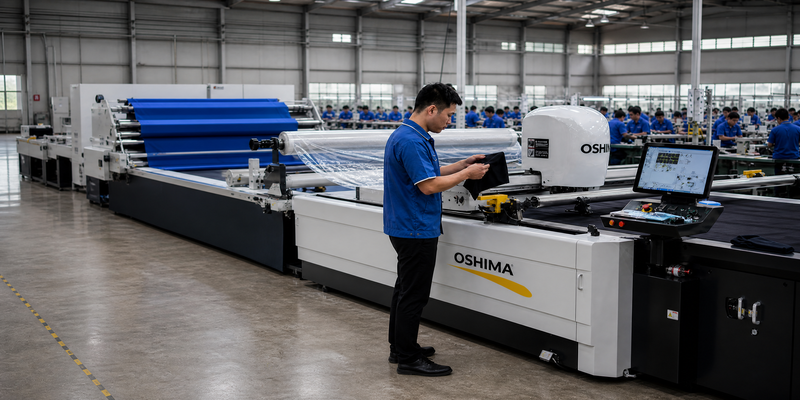
A garment factory does not become automated simply by adding more machines.
Garment manufacturing includes a series of connected processes, from fabric preparation and cutting to sewing, finishing, quality inspection and packing. Each stage handles different materials, production variables and quality requirements. Some processes can be repeated under clearly defined conditions and are therefore relatively suitable for automation. Others still depend heavily on fabric handling, production experience and human judgement.
This is why garment manufacturing automation usually develops process by process rather than through a single fully automated production line.
A practical way to understand automation is to follow the complete garment production process and ask three questions at each stage:
- What part of the work can be defined and repeated consistently?
- What production variation still requires human judgement?
- How does the result affect the next production process?
What Is the Garment Manufacturing Process?
Although the exact workflow varies according to product type and factory organisation, a typical garment manufacturing process can be simplified as:
These stages are connected.
A problem created before cutting may not become visible until sewing. A fabric defect that is missed during inspection may later appear on a cut panel. Excessive tension during spreading may affect garment dimensions after cutting. Incorrect identification during packing can create a shipment problem even when the garment itself is correctly manufactured.
For this reason, improving one machine or department does not automatically improve the entire garment factory.
Automation becomes more useful when each process creates a stable result that the next process can use.
Where Can Automation Be Used in Garment Manufacturing?
Different production stages have very different automation conditions.
| Production Stage | Automation Potential | What Equipment Can Support | Where People Remain Important |
|---|---|---|---|
| Pattern & marker planning | High | Calculation, grading, marker planning and revisions | Production feasibility and material decisions |
| Fabric inspection | Medium–High | Repeated inspection, defect records and digital reporting | Defect judgement and handling decisions |
| Fabric preparation | Medium–High | Relaxing, shrinking and controlled material preparation | Selecting conditions for different fabrics |
| Spreading | High | Repeated laying, tension control and edge alignment | Material setup, joining and abnormal handling |
| Cutting | High | Repeating digital cutting paths accurately | Machine setup, fabric conditions and process monitoring |
| Sewing | Low–Medium | Specific repetitive sewing operations | Feeding, positioning and complex assembly |
| Pressing / heat transfer | Medium–High | Temperature, pressure, time and repeated processing | Appearance and fabric judgement |
| Final quality control | Medium | Detection, measurement and verification | Acceptance decisions and root-cause analysis |
| Packing & shipment | Medium–High | Identification, checking, sorting and repetitive handling | Exceptions and shipment decisions |
The important point is that automation potential is not the same throughout the factory.
Fabric inspection, spreading and cutting can usually be defined through clearer operating parameters. Sewing is more difficult because flexible materials must continuously be positioned, guided, folded and adjusted.
This difference explains why many garment factories automate the cutting room earlier than the sewing floor.
1. Design and Pattern Making: Digital Tools Automate Repetition, Not Production Decisions
Garment manufacturing starts before fabric reaches the production floor.
CAD systems are widely used for pattern development, grading, marker planning and design revisions. Calculations that once required repeated manual work can now be completed and reproduced digitally.
This makes the development process faster and more consistent, but software does not determine whether a garment can actually be produced successfully.
Pattern makers and production teams still need to consider:
- fabric stretch and recovery;
- shrinkage;
- seam construction;
- fabric direction;
- garment movement;
- manufacturing tolerance;
- sewing difficulty;
- production equipment and factory capability.
The software can reproduce an instruction accurately.
People still need to determine whether that instruction is appropriate for the actual material and production process.
This distinction continues throughout garment manufacturing.
2. Fabric Inspection and Preparation: Control Problems Before They Reach Cutting
Fabric preparation is one of the most important upstream stages because problems created or missed here can continue through several later processes.
A defect discovered before cutting is usually easier to manage than the same defect discovered after hundreds of garment components have already been cut or sewn.
Traditional fabric inspection depends heavily on the operator identifying defects visually and recording their locations. This makes inspector experience important, but long inspection periods and different inspection standards can create variation.
AI-assisted fabric inspection provides another layer of support.
For example, OSHIMA's EagleAi / EagleAi Plus AI fabric inspection machine is designed for knit and woven fabric inspection before cutting. It can create defect maps and inspection reports and supports roll-to-roll, flat-to-flat, roll-to-flat and flat-to-roll operation. Depending on fabric type, inspection speed ranges from 10 to 40 m/min.
The value is not only finding a defect.
A digital defect record becomes more useful when the information can support the next production decision:
- Where is the defect?
- How severe is it?
- Will it affect the marker?
- Should that section be avoided?
- Should the roll be handled differently during spreading?
This is where inspection begins to move from a standalone quality-control activity toward production data.
Fabric Condition Matters as Much as Visible Defects
Inspection is only one part of fabric preparation.
Knitted, elastic and dimensionally sensitive materials may contain tension resulting from knitting, rolling, transportation or previous processing.
Relaxing or controlled preshrinking can help stabilise the material before spreading and cutting.
The machine creates controlled conditions.
The production team still determines which conditions are appropriate for the material being processed.
3. Fabric Spreading: One of the Most Automation-Ready Garment Processes
Spreading is a good example of a process where automation can replace a large amount of repetitive manual handling.
The purpose of spreading is not simply to place fabric on a cutting table. The fabric needs to be laid according to the required:
- spreading length;
- number of plies;
- fabric direction;
- tension;
- alignment;
- spreading method.
An automatic fabric spreading machine can repeat these settings while maintaining more stable feeding and edge alignment.
OSHIMA's fabric spreading machine range covers different material and production requirements, including general knit and woven fabrics, tubular knits, smart spreading applications, multi-roll production and specialised technical materials.
However, automatic spreading does not mean the operator becomes unnecessary.
Operators still need to monitor:
- fabric roll condition;
- joins and damaged sections;
- wrinkles;
- spreading tension;
- fabric behaviour;
- machine settings;
- abnormalities during operation.
Why Spreading Quality Affects Cutting
The cutting machine can only cut the material that has been prepared for it.
If fabric is stretched excessively while being spread, elastic or knitted material may contract after cutting.
If layers are misaligned, the cut pieces may not remain consistent across the complete lay.
If wrinkles or waves remain inside the spread, cutting accuracy can also be affected.
4. Automatic Cutting: High Automation Does Not Eliminate Process Control
Automatic cutting is another area where automation can be applied extensively.
Once the marker and cutting path are defined, an automatic cutting system can repeat the required path across the fabric lay more consistently than continuous manual cutting.
This can support:
- repeated cutting accuracy;
- production consistency;
- reduced manual cutting workload;
- digital marker workflows;
- large-volume cutting-room production.
But the cutting machine does not operate independently from material conditions.
Cutting results can still be affected by:
- fabric type;
- number of plies;
- material compression;
- vacuum condition;
- cutting speed;
- blade condition;
- tool selection;
- fabric movement.
This is why garment factory automation changes the type of skill required rather than eliminating skill completely.
The machine repeats the programmed cutting path.
The production team determines whether the conditions surrounding that path are suitable.
OSHIMA's cutting room solutions combine fabric inspection, spreading, cutting and digital production tools, with supported workflows allowing inspection information to move further into spreading and cutting decisions.
5. Why Is Sewing Harder to Automate Than Cutting?
Sewing is one of the most important differences between garment manufacturing and industries that handle rigid components.
Fabric is flexible.
It can:
- stretch;
- slip;
- fold;
- curl;
- compress;
- change shape while being handled.
At the same time, the sewing process in a garment factory does not consist of one repeated operation.
A garment may require collars, pockets, sleeves, waistbands, zippers, linings, hems and multiple seam constructions. Each component may need to be positioned, folded or guided differently.
Some sewing operations follow highly repeatable paths and can therefore use specialised automatic or semi-automatic equipment.
Others remain much more difficult to automate.
Feeding and Positioning Are Often Harder Than Stitching
The sewing machine may be able to form the stitch consistently.
The difficult part is frequently presenting the material to the machine correctly.
An operator may need to:
- align two flexible pieces;
- maintain seam allowance;
- compensate for stretch;
- control layers with different properties;
- follow a curve;
- reposition the garment;
- identify misalignment before it becomes a defect.
This explains why sewing automation is often introduced operation by operation rather than through complete replacement of an entire sewing line.
Stable, repetitive operations are easier to standardise.
Complex styles, frequent product changes and difficult materials continue to require greater operator involvement.
6. Sewing Automation Changes the Operator's Role
When an individual sewing operation becomes automated, the work does not necessarily disappear.
It changes.
Instead of controlling every movement of the garment, an operator may become responsible for:
- loading components;
- positioning material;
- selecting settings;
- monitoring multiple cycles;
- checking output;
- correcting abnormalities;
- changing styles;
- performing basic equipment adjustments.
This distinction is important when evaluating garment factory automation.
Machine speed alone does not determine factory productivity.
The complete production arrangement—including feeding, handling, waiting, quality checking and transfer between operations—determines how much usable output the factory actually produces.
7. Pressing, Fusing and Heat Transfer: Control Repeated Process Conditions
After sewing, garment production includes several processes where temperature, pressure and time may affect the final product.
These include:
- fusing;
- pressing;
- heat transfer;
- finishing.
These processes are generally more suitable for standardisation than complex garment assembly because the equipment can repeatedly control specific operating parameters.
However, material differences remain important.
The same temperature, pressure or processing time may not be appropriate for every fabric, interlining or decoration.
Production staff therefore remain responsible for:
- selecting suitable settings;
- confirming material compatibility;
- checking surface appearance;
- monitoring dimensional changes;
- identifying abnormal results.
Again, automation controls the repeatable part of the process.
Human judgement determines whether the result is acceptable.
8. Final Quality Control: Machines Can Detect, but People Still Decide
Quality control becomes increasingly important as the garment approaches shipment.
By this stage, mistakes are more expensive because production value has already been added through cutting, sewing and finishing.
Different equipment can standardise parts of final inspection.
For example:
- needle detectors can check for ferrous contamination;
- X-ray inspection can inspect for certain foreign objects;
- weighing systems can compare carton or product weight;
- barcode systems can verify identification;
- RFID systems can connect individual products with production or inventory information.
OSHIMA's garment and textile quality-control, packing and factory-support range includes needle detection, X-ray inspection, weight checking, barcode and RFID reading, sorting and packing equipment.
But machine inspection does not eliminate quality management.
If an item is rejected by a needle detector, someone still needs to determine:
- where the contamination is located;
- whether surrounding products need to be isolated;
- whether a broken needle procedure should be activated;
- whether additional inspection is required;
- whether the cause comes from sewing, handling or another process.
9. Packing and Shipment: Automation Connects Product Flow With Information Flow
Packing may appear to be one of the simplest parts of garment production, but shipment preparation combines physical products with order information.
The factory must make sure that:
- style is correct;
- size is correct;
- colour is correct;
- barcode is correct;
- quantity is correct;
- carton content is correct;
- customer identification is correct.
A garment can be manufactured correctly and still become a shipment error if the wrong product enters the wrong carton.
Automation can reduce repetitive checking through barcode scanning, RFID identification, weight checking, sorting, folding, bagging and conveyor systems.
This becomes particularly important as production volumes increase.
10. Automation Works Best When Production Stages Are Connected
A garment factory can contain many automatic machines without having an integrated production system.
This distinction is increasingly important.
Example 1: Fabric Inspection Without Downstream Use
An inspection system creates a detailed defect map.
If the information stays inside the inspection department and the cutting room never sees it, part of its production value is lost.
Example 2: Automatic Cutting With Unstable Spreading
A cutting system follows its digital path accurately.
If the fabric entered cutting with excessive tension, poor alignment or unstable laying conditions, cutting automation alone cannot remove the upstream problem.
The larger opportunity is therefore not simply:
but:
OSHIMA's digital-production development reflects this direction. Supported configurations can connect EagleAi inspection data with digital production tools, spreading and cutting-related workflows rather than leaving inspection as an isolated report.
11. Where Should a Garment Factory Automate First?
There is no single automation sequence suitable for every garment factory.
The correct starting point depends on the production problem.
Before purchasing equipment, factories should identify where they currently experience:
Repetitive Manual Work
Processes involving the same movement hundreds or thousands of times are usually stronger candidates for automation.
Production Variation
If the same process produces different results depending on the operator, controlled equipment may help create more stable conditions.
Physical Workload
Heavy rolls, repeated lifting, long-distance material handling or repetitive movements can indicate opportunities for mechanical assistance.
Quality Problems Discovered Too Late
Problems become more expensive as they move downstream.
If fabric defects are repeatedly discovered after cutting or sewing, improving upstream inspection may create more value than increasing downstream production speed.
Missing Production Information
Automation is increasingly connected with data.
Machines that generate usable production records can help teams understand equipment status, material usage, defects and production history.
Bottlenecks Between Processes
A machine should not be evaluated only by its own maximum speed.
If the following process cannot absorb the additional output, increasing machine speed may simply move the waiting time somewhere else.
12. Machine Efficiency and Factory Efficiency Are Not the Same
This is one of the most important points when evaluating automation.
A faster machine does not automatically create a faster garment factory.
Consider an automatic spreading machine.
Increasing spreading speed may reduce the time required to prepare a lay.
But total cutting-room output may not increase if:
- fabric loading takes too long;
- roll changes are inefficient;
- cutting capacity is already full;
- production waits for marker information;
- defects require repeated intervention;
- material is not prepared correctly;
- downtime interrupts production.
The same principle applies to sewing, inspection and packing.
Factories should therefore evaluate:
rather than machine speed alone.
Automation creates the greatest value when it removes instability from the complete production process.
13. The Future of Garment Manufacturing Is Not Simply a Factory Without People
Garment manufacturing continues to involve flexible materials, frequent style changes and complex quality requirements.
These characteristics make complete automation very different from industries that manufacture identical rigid products continuously.
Technology will continue to expand into:
- AI inspection;
- automatic material handling;
- spreading;
- cutting;
- specialised sewing operations;
- digital quality control;
- production monitoring;
- traceability;
- packing and sorting.
But people continue to play an important role in:
- understanding fabric behaviour;
- production planning;
- parameter selection;
- quality decisions;
- abnormal handling;
- maintenance;
- process improvement;
- communication between departments.
The question for garment factories is therefore not simply:
A more useful question is:
That approach makes automation part of production engineering rather than simply an equipment purchase.
Conclusion: Automate the Process, Not Just the Operation
Garment manufacturing automation works best when factories understand how each production stage affects the next.
Pattern software can improve repeated calculations, but production feasibility still requires experience.
Fabric inspection can identify and record defects, but people still determine how the material should be handled.
Automatic spreading and cutting can create more repeatable cutting-room conditions, but correct material preparation and machine settings remain essential.
Sewing automation can standardise selected operations, but flexible materials and changing garment construction continue to require extensive human control.
Quality-control and packing equipment can automate repetitive verification, but abnormal products still require investigation and production decisions.
The result is not a simple competition between people and machines.
For factories evaluating their next automation project, the starting point should therefore be the production flow:
Frequently Asked Questions
What is the garment manufacturing process?
The garment manufacturing process generally includes design and pattern making, fabric inspection and preparation, spreading, cutting, bundling, sewing, finishing, quality inspection, packing and shipment. The exact sequence depends on product type and factory organisation.
Which garment manufacturing processes are easiest to automate?
Processes with repeatable actions and clearly defined operating conditions are generally easier to automate. Fabric inspection, spreading, cutting, fusing, pressing, identification, quality checking and packing can often use higher levels of automation than complex sewing operations.
Why is sewing difficult to automate?
Fabric is flexible and can stretch, slip, fold and change shape during handling. Garments also contain many different seams and components. Although specific sewing operations can be automated, feeding, positioning and handling flexible fabric remain difficult in many applications.
Does garment factory automation replace workers?
Automation generally changes the division of work. Equipment can handle repetitive and controlled processes, while operators increasingly manage material preparation, settings, quality checks, abnormalities, equipment monitoring and production decisions.
Where should a garment factory start with automation?
The starting point should be the production problem rather than the machine. Factories should first identify repetitive work, unstable quality, physical workload, bottlenecks, late defect detection or missing production information and then determine which technology addresses that specific issue.
How are AI and IoT used in garment manufacturing?
AI can support applications such as visual fabric inspection and defect recording. IoT and digital production systems can collect machine and production information and, where systems are connected, make upstream data available for later production decisions. OSHIMA currently applies these technologies across fabric inspection, spreading and supported digital-production workflows.
Building a More Connected Garment Production Workflow
Garment factory automation is most effective when equipment, production conditions and information are considered as part of the same workflow.
Explore OSHIMA solutions for cutting-room automation, fabric inspection, fabric spreading, quality control and packing, and digital production solutions.


Article Classification
Recent Articles
- Why Are Garment Factories Struggling to Recruit Young Workers?
- What Does the World Cup Have in Common with Apparel Sourcing?
- Why Garment Factories Need Process Stability in a Slower Market?
- Why Scale and Low Cost Are No Longer Enough for Bangladesh Apparel Manufacturing?
- Why Extreme Heat Is Becoming a New Risk for Apparel Supply Chains?